A new tenant walks in with two bags, a lot of questions and no idea who to ask. They don’t know where the water filter is, how the WiFi works, when dinner is served or whether it’s okay to knock on the owner’s door. Many PGs treat this moment as admin: take the deposit, hand over the key, done.
A good PG tenant welcome process takes the same hour and changes how the whole stay feels. It builds trust early, prevents small misunderstandings and gives tenants a reason to stay when they have other options. This guide covers what to do before arrival, in the first hour, through the first week and beyond. If you use PG and hostel management software, most of the paperwork can sit in one place instead of in notebooks and chat threads.
The Short Answer
A strong PG tenant welcome process has five parts: get the room ready before they arrive, greet them personally, handle paperwork and payments clearly, walk them through the essentials and house rules, and check in during the first week. Keep it friendly, short and consistent, so every tenant gets the same good first impression.
Why Day One Matters So Much
A tenant forms an opinion about your PG within the first day, often within the first hour. Nobody sits down and decides this, it just happens. Is the room clean? Did anyone greet me? Do I know what I’m paying and why? Do I know who to call if something breaks?
If the answers are good, small problems later feel forgivable. If they’re bad, even small problems feel like proof that the PG doesn’t care.
First impressions also affect questions you’ll hear later. Tenants who feel looked after tend to raise issues early, while those who feel ignored often stay quiet and leave.
Before They Arrive: Get Ready
Most of a good welcome happens before the tenant walks through the door.
Prepare the room
- Clean it properly. Floors, bathroom, windows, cupboards, bed and mattress.
- Check that everything works. Lights, fans, plugs, locks, taps, geyser and AC if provided.
- Fix known issues first. Don’t hand over a room with a leaking tap and promise to fix it later.
- Make the bed. Fresh bedding, if you provide it.
- Clear leftover belongings from the previous tenant.
Confirm the arrival
Send a short message a day or two before:
- The expected arrival time and who will meet them
- The address and a landmark, or a pin location
- What to bring, such as ID documents and passport-sized photos if needed
- The rent and deposit amount, and accepted ways to pay
- A reminder of what’s provided and what isn’t
Share the paperwork early
If you can, send the agreement and house rules in advance. Tenants read more carefully when they aren’t standing in a doorway with luggage.
Decide who will welcome them
Make sure someone is actually there, whether it’s you, a manager or a caretaker. Nothing feels worse than arriving to find nobody who knows you’re coming.
The First 30 Minutes: Greet, Show and Settle
Greet them like a person
Say hello, use their name and offer water or tea if you can. Ask about their journey. It takes two minutes and sets the tone.
Hand over the room together
Walk through the room with the tenant and note its condition. This protects both of you.
- Open the cupboards, lights, fans and bathroom fittings together.
- Point out any existing marks or damage and note them down.
- Hand over keys and explain how the lock works.
- Show where their belongings go, and what’s shared and what’s theirs.
- Give them a few minutes alone to settle before moving on.
A simple condition note signed by both avoids arguments about deposit deductions later.
Paperwork Without the Pain
Paperwork is where many welcomes go wrong. Tenants are tired, people are waiting and the process feels like a form-filling session. Keep it organised and explain each step.
| Step | What to do | Tip |
|---|---|---|
| KYC and ID | Collect the documents you need and verify them | Collect copies in advance if possible, and store them securely |
| Agreement | Go through the key terms: rent, deposit, notice period, rules | Explain in plain language and let them ask questions |
| Deposit | Receive and record it, and give a receipt | State the refund process clearly |
| First rent | Record the amount and the date it covers | If they join mid-month, explain how it’s calculated |
| Rent due date | Confirm when rent is due each month | Tell them how and where to pay |
| Contact details | Share who to call for what | Give a manager number and a complaint route |
If your PG handles mid-month joining, explain it before they pay. Surprises about the first bill are one of the quickest ways to lose goodwill.
Where software helps
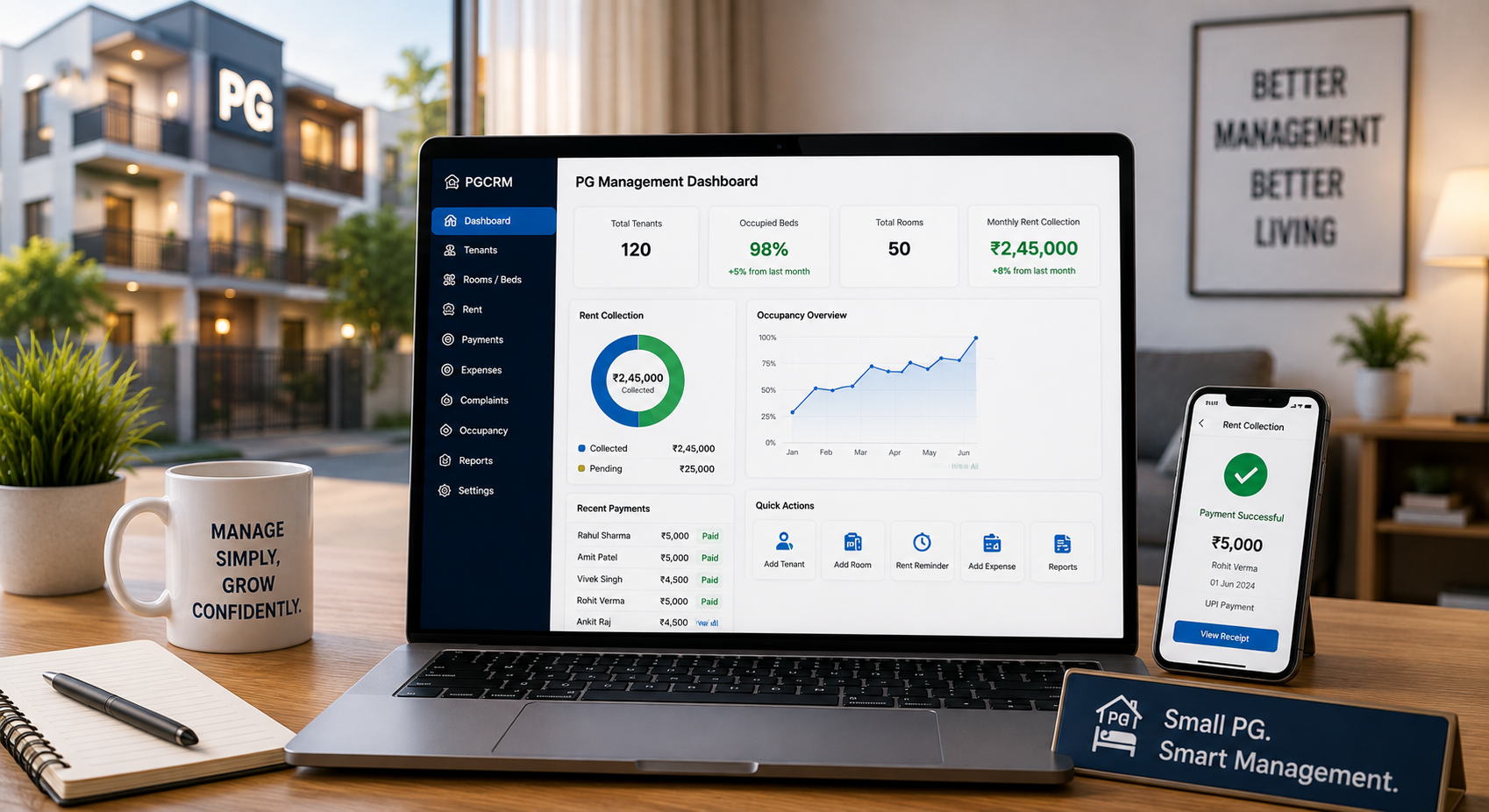
PGCRM lets you add each tenant with KYC documents and joining date, assign them a bed, take rent and deposits by cash or UPI, and support monthly or join-date billing cycles. Rent is saved in the app and reminders go out before the due date, so the tenant doesn’t have to remember a date they were told once in a rush. It’s a way to keep the process tidy, but the warmth still comes from the person at the door.
Treat KYC with care. These are personal documents, so store them in one secure place, share them only with people who need them and don’t leave copies in photo galleries or open chat groups. Also check local requirements for tenant verification in your area, since they vary.
Show Them the Essentials
Don’t assume tenants will figure things out. A ten-minute walkthrough saves dozens of questions later.
Cover these:
- Where to find drinking water and when hot water is available
- WiFi name, password and who to contact if it fails
- Laundry timings and how the washing machine works
- Kitchen or mess timings, and the menu if you serve meals
- Common areas: where they are and how they’re used
- Fire exits, first-aid kit and emergency contacts
- Where to put trash and how often it’s collected
- Where to park, if relevant
- Who is on duty and when
Explain how to raise a problem
Tell them plainly: “If anything isn’t working, here’s who to tell and how.” Mention how quickly you try to respond. A tenant who knows how to complain usually does it early and politely. A tenant who doesn’t know often stays silent until they’re angry.
PGCRM lets you log complaints, set priority and close them with a clear status, which gives the tenant a route that doesn’t depend on catching someone in the corridor.
Go Through the House Rules Kindly
Rules need to be explained, not just handed over. Go through the main points in a friendly way and give the reasons.
- Quiet hours and why they exist
- Visitor policy and the register
- Electricity use and any restrictions on appliances
- Common-area cleanliness
- Notice period and how deposits are settled
Ask if anything seems unclear. Don’t read every line aloud. Focus on the five or six things that cause the most confusion. If you haven’t already written a short rule sheet, our guide to PG house rules covers how to do it.
Make Introductions
Moving into a shared space is easier when you know at least one person.
- Introduce them to their roommate if they have one, and say a little about each person.
- Introduce them to a neighbour or senior tenant who can answer questions.
- Mention the manager and caretaker by name and what they handle.
If you can choose beds, think about sleep schedules and habits. A quick question about whether they’re an early sleeper or night owl helps you avoid roommate trouble down the line.
Small Touches That Cost Little
You don’t need gifts or grand gestures. Small, thoughtful details make a new tenant feel considered.
- A short welcome note with your name, the manager’s number and WiFi details
- A clean, ready room with a working light and a made bed
- A drinking water bottle or glass on the first evening
- A list of nearby essentials: grocery shop, pharmacy, ATM, laundry, bus or metro stop, and a few places to eat
- A warm check-in that evening: “Do you need anything?”
Some PGs also give a small welcome item. That’s optional. A clean room, a clear explanation and a friendly face usually matter more.
After Day One: The First Week and Month
A welcome doesn’t end when the tenant puts their bag down. The first weeks decide whether early doubts fade or grow.
A simple follow-up plan
| When | What to do |
|---|---|
| Evening of day one | Quick check: “Settled in? Anything you need?” |
| Day two or three | Ask about sleep, noise, food and WiFi |
| End of week one | Short chat about how it’s going and any problems |
| After one month | Check in on rent routine, roommates and general satisfaction |
Fix whatever they raise quickly, even if it’s small. Fast action on a minor complaint shows you listen and builds trust before a bigger issue comes along.
You can also gently ask them to share feedback later. A simple feedback routine helps you catch problems early and learn what new tenants appreciate most.
Common Mistakes in the PG Tenant Welcome Process
- Nobody is there when the tenant arrives. It’s the worst possible start.
- The room isn’t ready. Dirty rooms and broken fittings undo everything else.
- Paperwork feels like an ambush. Share terms in advance, and explain them.
- Rules are thrown at them. Explain the reasons and keep the list short.
- No tour. Tenants waste days asking basic questions.
- Hidden charges appear later. State every charge on day one.
- No follow-up. Silence after check-in suggests you only cared about the payment.
- Treating tenants differently. Give everyone the same welcome.
FAQ
How do I welcome a new tenant in my PG?
Prepare a clean, working room, confirm the arrival time and meet them in person. Walk through the room together, complete the paperwork clearly, show them the essentials and explain the house rules. Check in that evening and again during the first week.
What should a PG welcome checklist include?
Include a clean and tested room, a signed condition note, KYC and agreement, deposit and rent receipts, key handover, a tour of shared areas, WiFi and emergency details, house rules, contact numbers and a complaint route. Add a follow-up after a day, a week and a month.
What documents do I need from a new PG tenant?
This depends on your agreement and local requirements, but most PGs collect an ID proof, address proof, photographs and a signed agreement, along with emergency contact details. Check local rules on tenant verification and store documents securely, sharing them only with those who need them.
How can I make a new tenant feel comfortable in a shared room?
Introduce them to their roommate, ask about habits like sleep time and noise, and explain the shared-room rules on day one. Make it clear they can raise problems with you and request a room change if needed. Follow up after a few days.
Should I give new PG tenants a welcome kit?
It’s optional. A short welcome note with WiFi details, key contacts and nearby essentials is usually more useful than gifts. If you want to add a small item like a water bottle or snack, keep it modest and consistent for every tenant.
Can software help with onboarding PG tenants?
It can help with the admin. PGCRM lets you add tenants with KYC and joining date, assign beds, record rent and deposits, set billing cycles and log complaints. It doesn’t replace the personal welcome, but it keeps records tidy so you can focus on the person.
Conclusion
A good PG tenant welcome process isn’t expensive or complicated. Prepare the room, greet the tenant personally, keep paperwork clear, show them the essentials, explain the rules kindly and follow up in the first week. Small, consistent habits build trust long before the first complaint arrives.
Tidy records make onboarding smoother for you and the tenant. If you’d like tenant details, rent, deposits and complaints in one place, explore PGCRM to simplify your PG and hostel management.