Introduction
Many PG owners assume management software is only worth considering once they’re running a large property with dozens of tenants. In reality, even a small PG with 10–15 beds can benefit from moving off registers and spreadsheets, as long as the software fits the budget and the actual size of the operation. The challenge is figuring out what “affordable” really means for a PG business and which features are worth paying for versus which ones are unnecessary at a smaller scale.
This guide walks through how to evaluate affordable PG management software, what to prioritise as your PG grows, and the mistakes to avoid when choosing a tool. Platforms like PG and hostel management software are increasingly built with this exact scenario in mind – small PGs that want structure without unnecessary complexity.
What “Affordable” Really Means for PG Management Software
Affordability isn’t just about the lowest price. It’s about getting the features a small or growing PG actually needs, without paying for capabilities built for large, multi-property co-living chains.
A genuinely affordable PG management software should offer:
- Core features that match day-to-day PG operations, not generic property management tools
- Pricing that scales reasonably as bed count grows, rather than jumping sharply
- No unnecessary complexity that requires extensive training just to get started
- The ability to start small and add features as the PG expands
Owners often overpay in two ways: choosing a stripped-down free tool that lacks essentials like rent tracking, or choosing an enterprise-grade platform with features a single-property PG will never use.
Core Features Every Small PG Needs From Management Software
Before comparing specific tools, it helps to define what actually matters at a small or growing PG. Not every feature marketed by PG management software is equally important early on.
Rent Tracking and Collection
This is the foundation. Look for software that logs rent payments against each tenant, supports both cash and UPI, and shows at a glance who has paid for the current month.
Tenant and KYC Records
Centralised tenant records, including ID verification details, remove the need for separate physical files. This matters even for a 10-bed PG, since tenant turnover means new records every few months.
Room and Bed Management
Even a small property benefits from a clear view of which beds are occupied, vacant, or reserved. This becomes essential the moment a PG grows beyond a size the owner can track from memory.
Rent Reminders
Automated reminders reduce the time spent manually following up with tenants who are late on payment, which is often one of the most repetitive tasks for a PG owner.
Basic Reporting
Even simple reports – total rent collected, pending dues, occupancy rate – help owners understand whether the business is actually profitable, not just busy.
Features That Matter More as a PG Grows
Some features aren’t essential for a single small property but become valuable as a PG business scales.
| Feature | Small PG (Under 20 Beds) | Growing PG (Multiple Properties) |
|---|---|---|
| Rent tracking | Essential | Essential |
| Tenant KYC records | Essential | Essential |
| Room/bed management | Helpful | Essential |
| Rent reminders | Helpful | Essential |
| Multi-property reporting | Not needed yet | Essential |
| Expense tracking | Helpful | Essential |
| Complaint management | Optional | Helpful |
This progression matters when evaluating affordable PG management software: a tool that’s right-sized for a single property might not need every feature a multi-property operator requires, and paying for those extras too early adds unnecessary cost.
How to Evaluate Affordable PG Management Software
A structured evaluation process helps avoid picking a tool based on price alone or on the flashiest feature list.
- List your actual pain points – Is it late rent, disorganised tenant records, or lack of visibility into occupancy?
- Match features to those pain points – Avoid paying for features unrelated to your biggest challenges
- Check ease of setup – A tool that takes weeks to configure isn’t practical for most small PG owners
- Confirm support for cash and UPI – Since most PGs still use both payment methods
- Look for room to grow – Even if you’re managing one property now, consider whether the software can handle a second one later
This process keeps the focus on functional fit rather than choosing software simply because it’s the cheapest option available.
Common Mistakes When Choosing PG Management Software
Several recurring mistakes lead owners to pick the wrong tool, even when they’re trying to save money.
- Choosing based on price alone – the cheapest tool sometimes lacks basic features like rent tracking
- Overbuying features – paying for multi-property dashboards or advanced analytics that a single small PG doesn’t need yet
- Ignoring ease of use – complex software that staff or wardens struggle to operate defeats the purpose
- Skipping a trial or demo – committing to a tool without testing it on real day-to-day tasks first
- Not checking payment method support – some tools focus heavily on bank transfers and overlook cash and UPI, which most PGs still rely on
Avoiding these mistakes often matters more than finding the single cheapest option on the market.
Manual Tracking vs. Affordable Software: A Cost Perspective
It’s worth comparing the real cost of manual tracking against affordable software, since “free” manual methods aren’t actually free once time and errors are factored in.
| Aspect | Manual Tracking (Registers/Spreadsheets) | Affordable PG Management Software |
|---|---|---|
| Time spent on rent tracking | High, manual entry each month | Low, automated logging |
| Error risk | Higher, due to manual entry | Lower, centralised records |
| Rent reminders | Manual calls or messages | Automated |
| Reporting | Manual calculation, time-consuming | Generated automatically |
| Scalability | Difficult beyond one property | Easier to manage as PG grows |
Manual tracking has no direct software cost, but the time spent and the errors that follow often add up to more than a modest monthly software expense, especially as tenant turnover increases.
Where PGCRM Fits for Small and Growing PGs
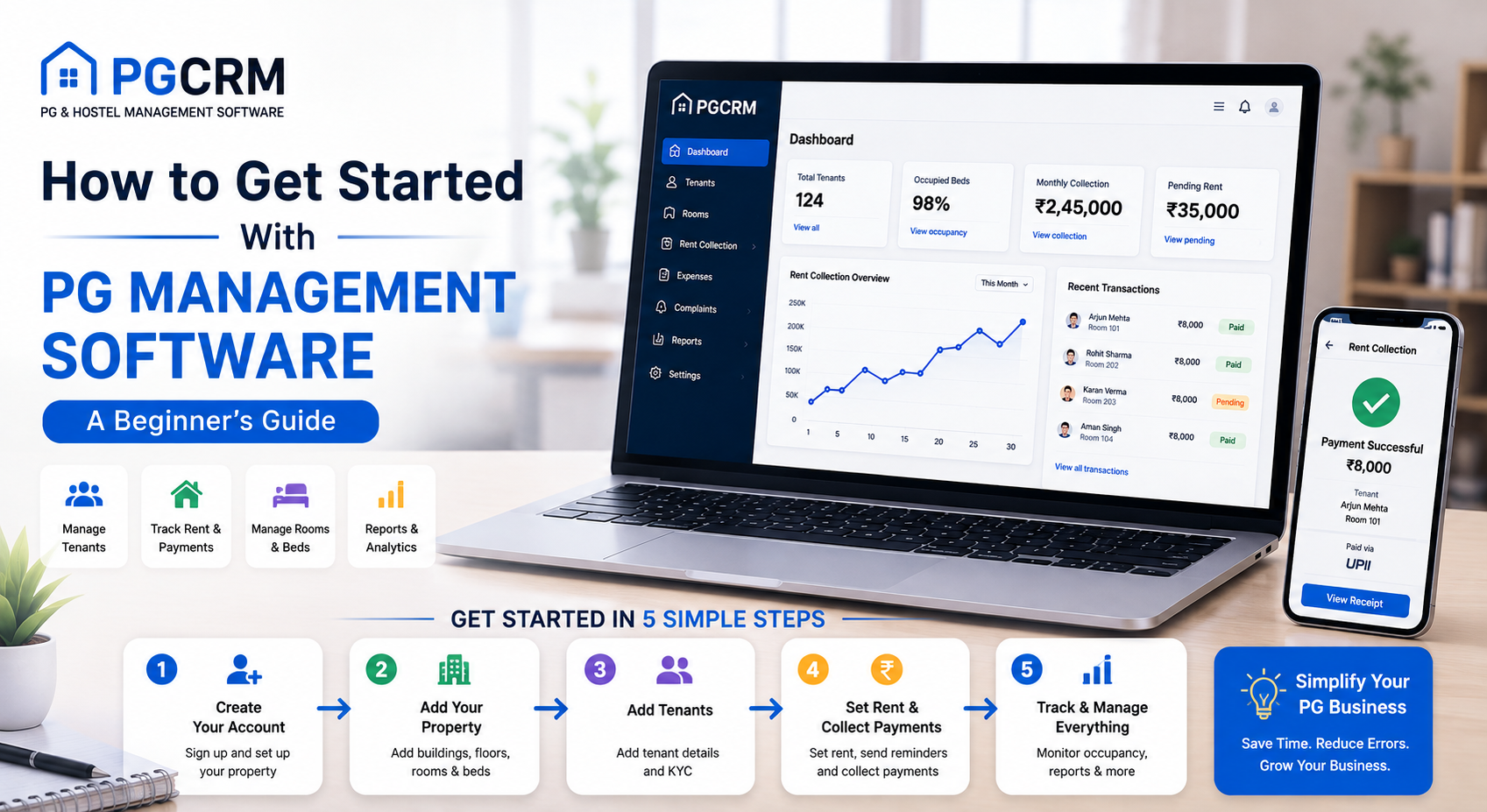
PGCRM is built around the core operational needs discussed above, rather than generic property management features aimed at commercial real estate.
Relevant capabilities include:
- Building, room, and bed management
- Rent tracking with cash and UPI support
- Tenant KYC management
- Rent reminders
- Complaint management
- Expense tracking and reports
This makes it a practical option for owners specifically looking for affordable PG management software that covers day-to-day essentials without unnecessary complexity and that can support additional properties as a PG business grows.
Frequently Asked Questions
What features should affordable PG management software include?
At minimum, it should offer rent tracking, tenant KYC records, room and bed management, and rent reminders. These cover the core daily tasks most PGs deal with. Reporting and expense tracking are also valuable, especially as a PG grows beyond a size the owner can track manually.
Is affordable PG management software suitable for a small PG with under 20 beds?
Yes. Even small PGs benefit from centralised rent tracking and tenant records, since manual tracking becomes error-prone as tenant turnover increases. The key is choosing software sized appropriately, rather than paying for multi-property features a single small PG doesn’t need yet.
How is affordable PG management software different from free tools?
Free tools often lack essential features like structured rent tracking, KYC management, or reminders, since they aren’t purpose-built for PG operations. Affordable paid software typically balances core functionality with reasonable pricing, without the unnecessary complexity of enterprise-grade platforms.
What’s the biggest mistake PG owners make when choosing management software?
Choosing based on price alone is a common mistake, since the cheapest option sometimes lacks basic features like rent tracking or cash and UPI support. It’s more effective to match software features to specific pain points, like late rent or disorganised tenant records, before comparing costs.
Can affordable PG management software scale as my PG grows?
Many affordable tools are designed to scale, letting owners start with core features for a single property and add capabilities like multi-property reporting later. It’s worth checking this upfront, since switching software after a PG has grown adds extra migration effort.
Do I need software if I only manage one small PG?
It depends on how manageable your current manual process is. If you’re frequently missing rent updates, losing track of tenant details, or spending significant time on manual reminders, even a single small PG can benefit from switching to structured PG management software.
Conclusion
Affordable PG management software isn’t about finding the cheapest tool available — it’s about matching features to what your PG actually needs, whether you’re managing 10 beds or planning to expand to a second property. Starting with the essentials – rent tracking, tenant records, and reminders – covers most of what small and growing PGs need day-to-day. Explore PGCRM to simplify your PG and hostel management, from rent tracking and tenant records to occupancy and reporting, all in one place.