If you are searching for artificial intelligence companies in India, you are probably trying to answer one of two questions: who are the main players in the Indian AI market, and how do I pick the right one for my business?
India has a mix of large IT services firms, analytics specialists, conversational AI platforms, healthcare AI startups, and a new group of companies building language models for Indian languages. The right choice depends less on a famous name and more on what you need built, how fast, and with what data.
This guide introduces well-known AI companies in India, explains how they differ, and gives you a practical way to shortlist a partner. The list is a starting point for research, not a ranking.
What Are Artificial Intelligence Companies in India?
Artificial intelligence companies in India are businesses that build, deploy, or provide AI-driven products and services, including machine learning, computer vision, natural language processing, generative AI, and predictive analytics.
They generally fall into four groups:
- Large IT services and consulting firms that add AI to enterprise transformation projects.
- Analytics and data science specialists that focus on decision intelligence and machine learning.
- AI product companies that sell platforms, such as chatbots, voice assistants, or diagnostic tools.
- AI research and model builders that develop foundation models, often with a focus on Indian languages.
Knowing which group fits your need saves a lot of time. A retailer wanting demand forecasting needs a different partner than a bank wanting a multilingual voice bot.
Why India Is a Strong Market for AI Services
Businesses look at India for AI work for a few practical reasons:
- Deep engineering talent. India has a large pool of software engineers, data scientists, and ML practitioners.
- Cost flexibility. Many companies offer onshore, offshore, and hybrid delivery models.
- Real-world data diversity. Products built for India often handle multiple languages, varied infrastructure, and high user volumes.
- Maturing ecosystem. Established IT firms, analytics companies, and startups all operate side by side.
None of this guarantees quality. It simply means you have plenty of options, which makes a structured evaluation more important.
Top AI Companies in India to Know
Below are notable companies, grouped by what they are best known for. Their presence here is not a ranking or endorsement. Services change over time, so always confirm current offerings on each company’s website.
Large IT Services Firms with AI Practices
These companies suit enterprises that want AI as part of a broader digital or cloud program.
- Tata Consultancy Services (TCS): A global IT services and consulting company with AI, analytics, and automation offerings for large enterprises.
- Infosys: Known for enterprise technology services, with AI-focused offerings for businesses across industries.
- Wipro: Offers AI and data services alongside cloud, engineering, and consulting work.
- HCLTech: Provides AI, engineering, and digital services for global clients.
- Tech Mahindra: An IT services company that has also been involved in work on large language models for Indian languages.
Best for: Large, multi-year programs where AI must connect with existing enterprise systems.
Analytics and Data Science Specialists
These firms are often a good fit when your main need is turning data into predictions and decisions.
- Fractal Analytics: Focuses on AI and analytics for large organizations, particularly in areas like consumer goods, financial services, and healthcare.
- Tredence: A data analytics and AI company serving enterprise clients, with a focus on turning insights into business outcomes.
- LatentView Analytics: Provides data and analytics services across industries such as retail, technology, and finance.
- Mu Sigma: One of the earlier decision science and analytics firms to emerge from India.
Best for: Demand forecasting, customer analytics, pricing, risk modeling, and similar data-heavy problems.
Conversational AI and Product Companies
These companies offer ready-made platforms you can configure rather than build from scratch.
- Haptik: A conversational AI company building chat and messaging automation for customer engagement.
- Yellow.ai: Provides conversational AI and automation for customer and employee support.
Best for: Customer support automation, lead qualification, and multilingual chat or voice experiences.
Healthcare and Applied AI Startups
- Niramai: Known for AI-based screening technology in healthcare.
- SigTuple: Focuses on AI-assisted analysis for medical diagnostics.
Best for: Organizations exploring specialized, domain-specific AI products where regulation and accuracy matter.
Language Model and Research-Focused Companies
- Sarvam AI: Works on AI models and tools aimed at Indian languages.
- Krutrim: An AI venture working on models and products for Indian users and languages.
Best for: Teams interested in Indic language capabilities, voice interfaces, or locally relevant generative AI.
Quick Comparison: Which Type of AI Company Fits You?
| Company Type | Best For | Typical Engagement | Consider If |
|---|---|---|---|
| Large IT services firm | Enterprise-wide AI programs | Long-term, large scale | You need integration with legacy systems |
| Analytics specialist | Data-driven decision making | Project or retainer | Your main asset is data and you need insights |
| Conversational AI platform | Support and engagement automation | Subscription plus setup | You want faster deployment with less custom work |
| Healthcare/applied AI startup | Domain-specific products | Product licensing or pilots | Accuracy and compliance are critical |
| Language model builder | Indic language AI | Partnership or API use | Your users speak multiple Indian languages |
How to Choose an AI Company in India
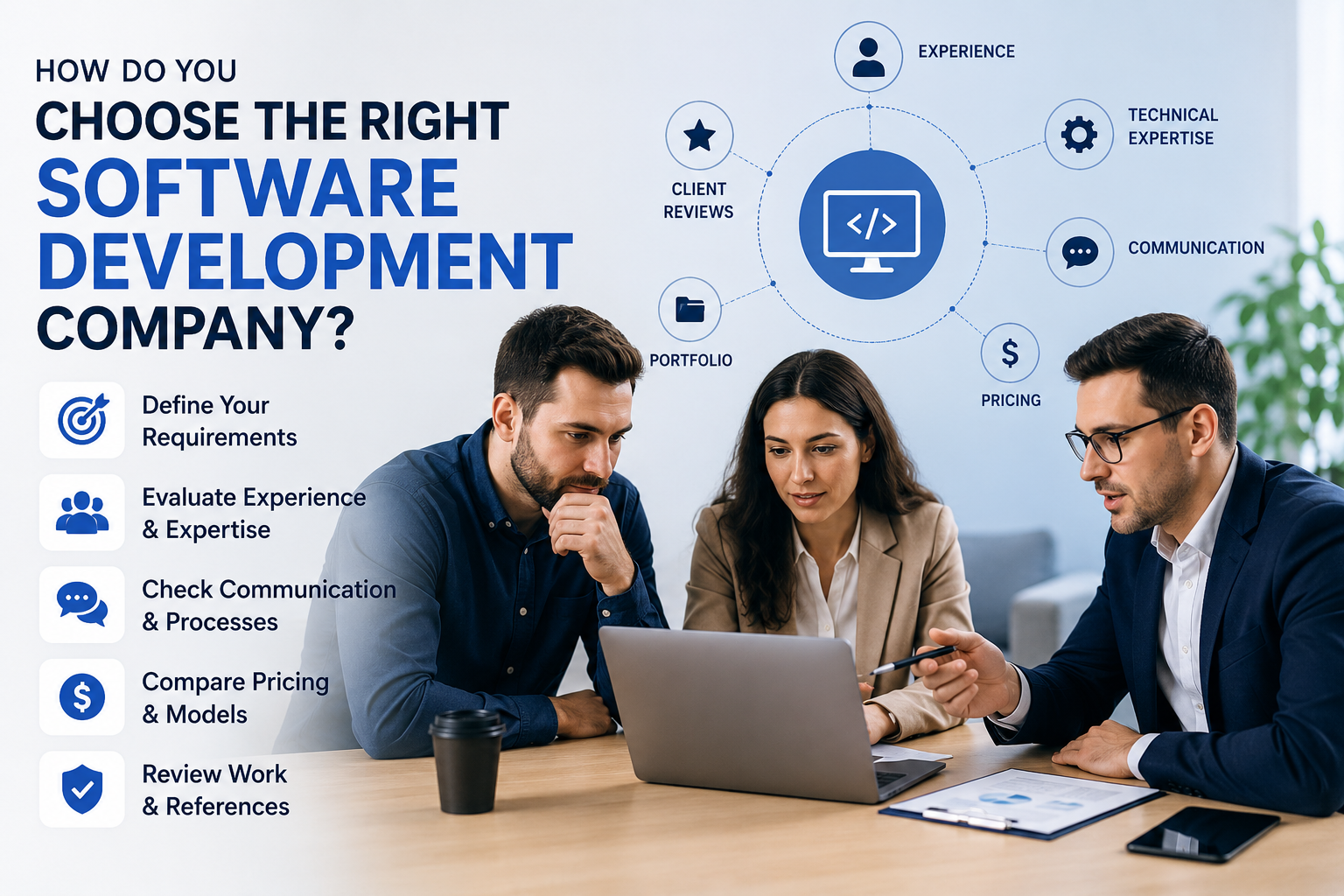
The best way to choose an AI company is to define your business problem first, then match it to a provider with relevant experience, a clear delivery process, and responsible data practices.
Follow these steps:
1. Define the Problem, Not the Technology
“We want AI” is too vague. Try framing it as a measurable goal, such as reducing support response time, improving forecast accuracy, or automating document processing. A clear problem helps providers give realistic proposals.
2. Check Your Data Readiness
Most AI projects depend on the quality and availability of data. Ask yourself:
- Do we have enough relevant data?
- Is it clean, labeled, and accessible?
- Are there privacy or compliance restrictions?
A good partner will assess this early rather than promise results before seeing your data.
3. Look for Relevant Experience
Ask for case studies or examples in your industry or with a similar use case. Experience in healthcare analytics does not automatically translate to retail personalization.
4. Evaluate the Team and Process
Find out who will actually work on your project. Ask about:
- Team composition (data scientists, ML engineers, domain experts)
- Project methodology and communication cadence
- How models are tested, monitored, and improved after launch
5. Review Security and Data Handling
Confirm how the company stores, protects, and processes your data. Ask about access controls, data ownership, and what happens to your data when the project ends.
6. Start with a Pilot
A small proof of concept lets you test the partnership, the technology, and the business value before committing to a larger budget.
7. Compare Several Providers
Never rely on a single proposal. Compare at least three providers on scope, timeline, pricing model, and references. Directories like GoFirms can help you research and compare technology service providers in one place before you reach out.
Questions to Ask Before You Hire
Use this checklist during discovery calls:
- What similar AI projects have you delivered, and what were the outcomes?
- How do you handle data security and confidentiality?
- Who owns the models, code, and training data?
- How will you measure success, and which metrics matter?
- What does support look like after deployment?
- What are the key risks, and how will you manage them?
- How do you handle bias, accuracy, and model drift?
Clear, specific answers are a good sign. Vague or overly polished responses deserve a follow-up.
Common Mistakes to Avoid
- Choosing by brand name alone. A large company is not always the best fit for a focused, small-scale project.
- Skipping the data audit. Poor data is one of the most common reasons AI projects stall.
- Expecting instant results. AI work involves experimentation, testing, and iteration.
- Ignoring total cost. Consider infrastructure, maintenance, and retraining, not just development fees.
- Overlooking change management. Even good AI fails if your team does not adopt it.
Trends Shaping Artificial Intelligence Companies in India
A few themes are worth watching as you evaluate providers:
- Generative AI adoption. Many companies now offer copilots, content automation, and knowledge assistants for business use.
- Indian language AI. Voice and text tools for regional languages are getting more attention as businesses reach wider audiences.
- Responsible AI. Buyers increasingly ask about governance, transparency, and risk controls.
- Industry-specific solutions. Providers are moving from generic tools toward solutions for banking, healthcare, retail, and manufacturing.
Because this space moves quickly, review each provider’s latest offerings and announcements directly before making a decision.
Frequently Asked Questions
Which are the top artificial intelligence companies in India?
Well-known names include TCS, Infosys, Wipro, HCLTech, Tech Mahindra, Fractal Analytics, Tredence, LatentView Analytics, Haptik, Yellow.ai, Sarvam AI, and Krutrim. There is no single “best” company. The right choice depends on your use case, budget, industry, and the level of customization you need.
How do I choose an AI development company in India?
Start by defining your business problem and checking your data readiness. Then shortlist providers with relevant case studies, review their team and security practices, and compare at least three proposals. A small pilot project is a practical way to test the partnership before committing to a larger investment.
What services do AI companies in India offer?
Common services include machine learning development, predictive analytics, computer vision, natural language processing, chatbots and voice assistants, generative AI solutions, data engineering, and AI consulting. Some companies offer ready-made platforms, while others build custom solutions based on your requirements.
Are Indian AI startups a good option for businesses?
They can be, especially when you need specialized expertise or faster, more flexible engagement. Startups often work well for focused use cases. For large, complex programs, check their capacity, financial stability, support model, and references before committing.
How can I compare AI companies before hiring one?
Compare them on industry experience, technical expertise, client references, delivery process, data security, pricing model, and post-launch support. Business directories such as GoFirms let you research and compare technology providers, which can make shortlisting faster and more organized.
What should I prepare before approaching an AI company?
Prepare a clear problem statement, success metrics, a rough budget range, a timeline, and an overview of the data you have. Knowing your compliance requirements and existing systems also helps providers give more accurate recommendations and realistic proposals.
Conclusion
India offers a wide range of artificial intelligence companies in India, from established IT services firms to analytics specialists, conversational AI platforms, healthcare startups, and builders of Indian-language models. The names in this guide are a useful starting point, but the best partner is the one that fits your specific problem, data, and budget.
Define your goal, check your data, ask pointed questions, and run a pilot before scaling. When you are ready to build a shortlist, you can research and compare relevant AI and technology service providers on GoFirms.
.