Introduction
A tenant who has already lived in your PG for six months or a year is worth more than a new one. They know the rules, they pay on a routine and they don’t need a room tour, a KYC check or a settling-in period. Yet most owners only think about renewal when the notice arrives, which is usually too late to change anyone’s mind.
Good PG tenant renewal starts months before the end date. It depends on how the stay has gone, how early you talk, and how easy you make it to say yes. This guide covers each step, with a timeline and a simple cost example you can adapt. If you use PG and hostel management software, you can keep stay dates, rent records and complaints in one place and see who’s coming up for renewal.
Why Renewal Matters More Than Most Owners Think
Every tenant who leaves creates a gap. The bed sits empty while you list it, show it, clean it and wait for the right person. Meanwhile your building rent, salaries and electricity keep running.
Here’s a simple example with assumed figures. A bed rents for ₹6,000 a month. If it stays empty for 20 days between tenants, you lose around ₹4,000 in rent, before counting your time and any listing costs. Multiply that by several move-outs a year, and renewals start to look like a real source of income, not just a courtesy.
Renewals also make your PG calmer. Long-staying tenants tend to know the routine, which means fewer surprises for you and for the people around them.
Step 1: Earn the Renewal Every Day, Not at the End
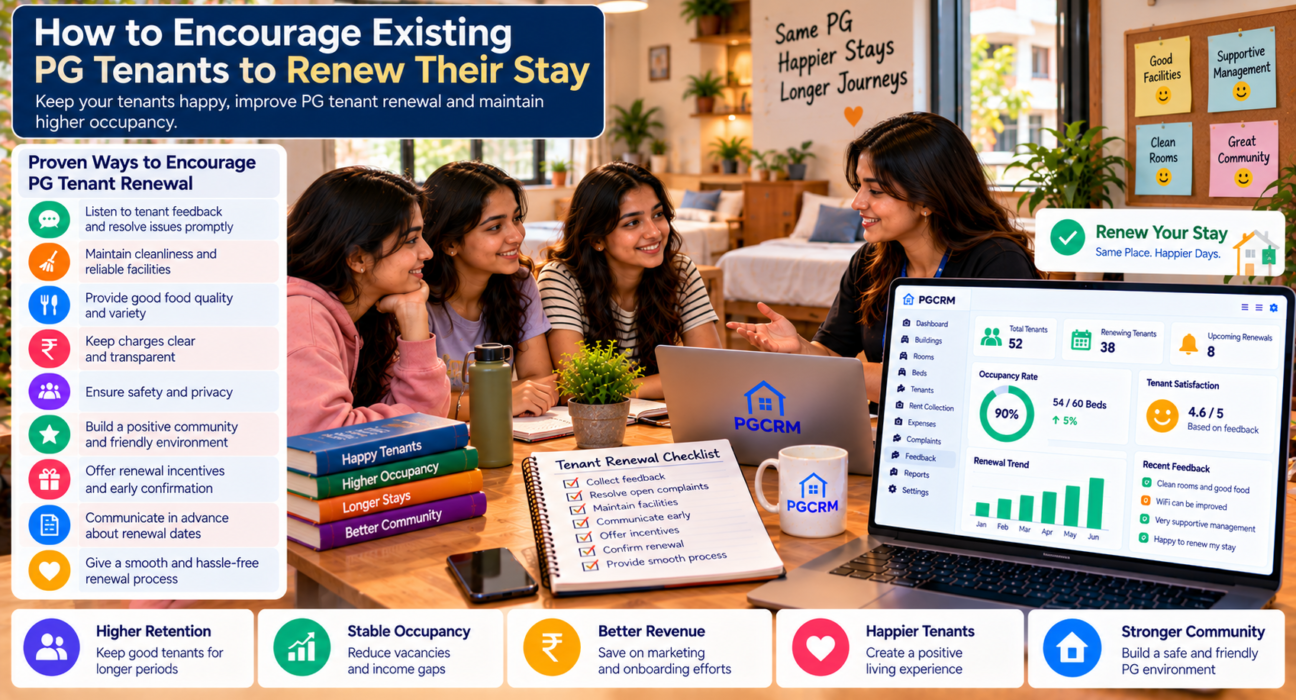
You can’t talk someone into staying if the last few months have been frustrating. Renewal is mostly the result of ordinary things done well.
The basics tenants care about:
- Complaints fixed quickly and closed with a note
- Reliable water, power and WiFi
- Clean washrooms and common areas
- Food that’s consistent, if you serve meals
- Clear charges and no surprise bills
- Respectful staff who knock before entering
If you’ve been reading about why tenants move out, you’ll recognise this list. The reasons people leave and the reasons they stay are mostly the same things.
PGCRM lets you log complaints with a priority and a status trail, which makes it easier to see whether a tenant’s issues were handled before you ask them to stay.
Step 2: Know Who Is Due and When
You can’t plan renewals if you don’t know when stays end. This sounds obvious, but many PGs keep joining dates in a notebook or in someone’s memory.
For every tenant, record:
- Joining date
- Agreement or planned stay length, if you use one
- Rent and any extra charges
- Notice period you agreed
- Open complaints
- Any special requests, such as a room change
Then make a simple list every month of tenants whose stay ends in the next two to three months. That’s your renewal list.
PGCRM stores each tenant with their joining date and full stay history, plus monthly or join-date billing cycles. It doesn’t list a dedicated renewal reminder on its site, so you’ll need your own monthly check against those dates.
Step 3: Start the Conversation Early
The best time to ask about renewal is about four to six weeks before the stay ends. That’s early enough for the tenant to decide calmly and for you to plan if they say no, but not so early that they forget. Adjust it to your agreement and notice period.
A simple renewal timeline
| When | What to do |
|---|---|
| 2–3 months before | Add the tenant to your renewal list and check their complaint history |
| 6 weeks before | Have a friendly check-in conversation and ask how things are going |
| 4 weeks before | Make the renewal offer, with terms stated clearly |
| 2 weeks before | Follow up if there’s no answer, and finalise paperwork |
| End date | Confirm the new term, or begin the move-out process |
Keep the first conversation casual. Ask about their stay before you ask about their plans. If something’s bothering them, you’d rather hear it now.
Step 4: Make Renewal Easy
A surprising number of tenants stay in theory but drift away because the process is annoying. Remove every bit of friction you can.
- Keep documents on file. If you already hold KYC and details, don’t ask for them again. Only update what’s changed.
- Use simple paperwork. A short renewal note or updated agreement is enough, as long as it follows your original terms and local practice.
- Offer a quick answer path. A message saying “Reply YES to continue at the current terms” is easier than a long discussion.
- Handle everything in one place. Rent, deposit and room details should be easy for you to pull up on the spot.
Your tenant’s deposit is already with you. Explain clearly that it continues to be held under the same terms, so they don’t feel they must pay again or lose it.
Step 5: Offer Something Worth Staying For
You don’t need to slash rent to keep tenants. Often small, thoughtful gestures work better, and cost you less.
Options to consider:
- A rent freeze. Holding rent for another term is a real benefit when other PGs are raising theirs.
- A room upgrade or preferred bed. A quieter room, a window bed or an upgrade when one becomes available.
- A small fixed perk. Free laundry for a month or a priority choice of room, if it suits your PG.
- A loyalty gesture. A modest, one-off benefit after a long stay, if you can afford it.
- Flexible terms. A shorter or longer renewal period, whichever the tenant prefers.
Do the maths before you discount
Check that any offer costs less than the vacancy it prevents. Using the same assumed figures: if a gap would cost you around ₹4,000 plus time and listing effort, a rent freeze that costs you ₹500 a month over a six-month term (₹3,000 in total) may still come out ahead, especially if it keeps a reliable tenant. If the offer costs more than the vacancy would, think twice.
Don’t offer discounts to some tenants and not others without a reason. Word travels fast in a PG.
Step 6: Handle Rent Increases With Care
Costs go up, and sometimes rent has to as well. How you do it decides whether tenants stay.
- Give plenty of notice. Check your agreement and local practice for notice requirements.
- Explain why. “Our electricity and maintenance costs have gone up” is better than silence.
- Keep it modest and fair. A small, explained increase is easier to accept than a big jump.
- Compare with nearby PGs. If you’re still in line with the market, say so.
- Consider tying it to something. Freshly painted rooms, a better mattress or improved WiFi make an increase easier to accept.
- Treat everyone consistently.
If a tenant pushes back, listen before you respond. Sometimes a small adjustment is better than losing them, especially if you’ve done the vacancy maths.
Step 7: Understand “No” and Respond Well
Some tenants won’t renew, and that’s fine. Many leave for reasons unrelated to you, such as a job transfer, graduation or a move closer to work. Treat the conversation as useful either way.
When a tenant says no:
- Ask why, once, without pressure. A casual “What could we have done better?” is enough.
- Note the reason in a log, so you can see patterns.
- Offer a smooth exit. A fast, fair deposit settlement leaves a good last impression.
- Ask them to recommend you if they had a good stay.
If the reason is something you can fix, such as slow repairs or noisy rooms, fix it. A single honest answer can improve your retention for every other tenant.
Step 8: Ask Renewing Tenants for Referrals
A tenant who has chosen to stay is telling you something good about your PG. Ask them if they know a friend or colleague who needs a bed. Referrals often bring tenants who already have a recommendation behind them. You could say thanks with a small gesture, but check that it’s sustainable before you promise it.
How Software Helps With PG Tenant Renewal
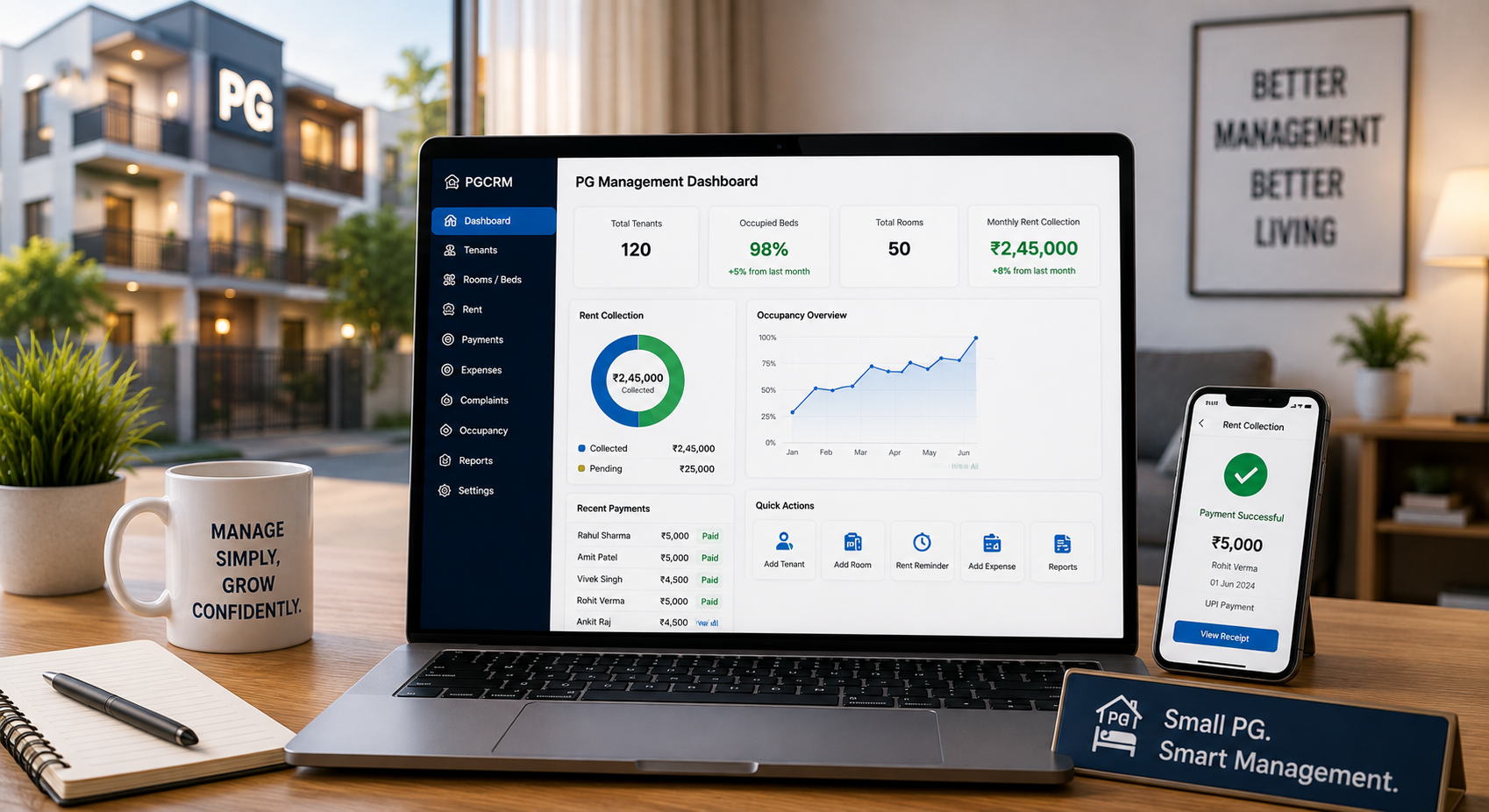
Renewal is a record-keeping job as much as a people job. You need to know who is due, how their stay has gone and what they owe. PGCRM can help with the information side: tenant records with joining date and full stay history, pending rent, complaint status and occupancy reports. That gives you what you need before a renewal conversation. It won’t send renewal offers or track renewal dates automatically, so keep your own monthly renewal list.
| Notebook or memory | PG management software | |
|---|---|---|
| Finding a tenant’s joining date | Flip through pages | Open the tenant’s record |
| Checking rent and pending dues | Count and recall | See paid and pending |
| Reviewing past complaints | Scroll through chats | Check the complaint status trail |
| Seeing how full you are | Count beds | Occupancy reports |
Common Mistakes in PG Tenant Renewal
- Asking too late. Last-minute requests feel rushed and give tenants no time.
- Only talking about rent. Lead with how their stay has gone.
- Ignoring open complaints. Fix them before you ask for commitment.
- Offering discounts without doing the maths. A perk should cost less than a vacancy.
- Treating tenants differently without reason. It creates resentment.
- Making paperwork painful. Reuse documents you already hold.
- Forgetting to log why people leave. Without that, you can’t improve.
FAQ
How do I get PG tenants to renew their stay?
Start by providing a good stay: quick repairs, reliable basics, clear charges. Then check in four to six weeks before the end date, make a clear offer and keep paperwork simple. A small perk, like a rent freeze or a room upgrade, can also help.
When should I ask a PG tenant about renewal?
Ask about four to six weeks before their stay ends, depending on your agreement and notice period. That gives them time to decide and gives you time to plan if they leave. Start tracking due dates two to three months ahead so you’re prepared.
Should I offer a discount to renew a PG tenant?
Only if it costs less than the vacancy you’d face otherwise. Work out the lost rent, listing effort and time for an empty bed, then compare. Small perks like a rent freeze or room preference often work better than a straight discount.
How should I handle a rent increase at renewal?
Give plenty of notice, keep the increase modest and explain why, such as higher electricity or maintenance costs. Compare with nearby PGs and treat everyone consistently. Check your agreement and local practice on notice, since rules and expectations vary.
What if a PG tenant doesn’t want to renew?
Ask once, politely, what you could have done better and note the answer. Settle the deposit fairly and on time, and ask them to recommend your PG if they had a good stay. Repeated reasons are a signal to fix something.
Can software help with PG tenant renewal?
It can help with the records: joining dates, stay history, pending rent, complaints and occupancy. PGCRM keeps these in one place. It doesn’t list an automatic renewal reminder, so you’ll still need a simple monthly list of tenants whose stays are ending soon.
Conclusion
Strong PG tenant renewal isn’t a sales pitch at the end of a stay. It comes from doing the everyday things well, knowing who is due, starting the conversation early, making it easy to say yes and offering something fair. Even tenants who leave can teach you what to fix.
Clear records make each of these steps simpler. If you’d like tenant details, rent, complaints and occupancy in one place, explore PGCRM to simplify your PG and hostel management.