Introduction
A poorly drafted or missing rent agreement is one of the most common sources of disputes between PG owners and tenants. Disagreements over notice periods, deposit refunds, or house rules often trace back to terms that were never clearly written down in the first place. A well-structured PG rent agreement protects both the owner and the tenant and sets clear expectations from day one.
This article explains what a PG rent agreement typically includes, why it matters, common mistakes owners make, and practical tips for creating and managing agreements more efficiently. You’ll also see how a PG and hostel management software can help owners keep tenant and agreement records organised as their property grows.
Note: This article provides general, practical guidance for PG owners. Rental laws and documentation requirements can vary by state and city in India, so owners should consult a local legal professional or check applicable state rent control and tenancy regulations before finalising agreement terms.
What Is a PG Rent Agreement?
A PG rent agreement is a written document between a PG owner (or manager) and a tenant that outlines the terms of stay, including rent amount, deposit, notice period, and house rules. Unlike a standard residential lease, PG agreements are often shorter in duration and may cover shared accommodation arrangements, such as multiple tenants sharing a room.
A clear agreement helps avoid confusion later by putting expectations in writing rather than relying on verbal understanding.
Why a Written PG Rent Agreement Matters
Some PG owners, especially those running smaller setups, rely on verbal agreements or informal understanding with tenants. While this may seem simpler initially, it creates risk for both parties.
A written agreement matters because it:
- Reduces disputes by clearly documenting rent, deposit, and rules in advance
- Protects deposit refunds by specifying deduction conditions upfront
- Clarifies notice periods, avoiding confusion when a tenant wants to leave
- Sets house rules formally, such as visitor policies or curfew timings
- Provides a reference point if a disagreement needs to be resolved later
- Builds trust with tenants who prefer transparency before moving in
Even a simple, one-page agreement is generally better than no documentation at all.
Key Elements of a PG Rent Agreement
A functional PG rent agreement doesn’t need to be overly complex, but it should cover the essential terms clearly. Here are the components most PG owners include.
1. Tenant and Owner Details
Full names, contact numbers, and permanent address of both the tenant and the PG owner or authorised manager.
2. Property and Room Details
The PG address, room number or bed number, and sharing type (single, double, triple, or dormitory-style sharing).
3. Rent Amount and Due Date
The monthly rent amount, the date by which rent is due each month, and the accepted payment methods (cash, UPI, bank transfer, etc.).
4. Security Deposit Terms
The deposit amount, conditions for refund, and any deductions that may apply, such as damages or unpaid dues.
5. Notice Period
The number of days’ notice a tenant must give before vacating, and similarly, the notice an owner must give before asking a tenant to leave (except in cases of rule violations).
6. Included Amenities and Services
Whether meals, Wi-Fi, housekeeping, laundry, or electricity charges are included in the rent or charged separately.
7. House Rules
Guidelines on visitor policies, curfew timings (if applicable), smoking or alcohol restrictions, and general conduct expected from tenants.
8. Termination Conditions
Circumstances under which the agreement can be terminated early by either party, such as repeated rule violations or non-payment of rent.
9. Duration of Stay
Whether the agreement is month-to-month, for a fixed minimum period, or renewable after a certain term.
Common Mistakes PG Owners Make With Rent Agreements
Even owners who do use written agreements sometimes make avoidable mistakes. Being aware of these can help you create stronger documentation.
- Vague deposit terms that don’t clearly explain when or how deductions apply
- No mention of a notice period, leading to confusion when a tenant leaves suddenly
- Missing signatures or dates, which can weaken the agreement’s validity
- Not updating agreements when rent or terms change over time
- Relying on WhatsApp messages instead of a signed document for important terms
- Using a generic template without adjusting it to PG-specific details like shared rooms or meal inclusions
- Not keeping copies accessible when a dispute arises later
Avoiding these mistakes starts with treating the agreement as a standard part of onboarding every tenant, not just a formality.
Verbal Agreement vs Written PG Rent Agreement
| Aspect | Verbal Agreement | Written PG Rent Agreement |
|---|---|---|
| Clarity of terms | Easily forgotten or misremembered | Clearly documented and referenceable |
| Dispute resolution | Difficult to prove either party’s claim | Provides a written reference point |
| Deposit refund clarity | Often unclear, leading to conflict | Deduction terms specified in advance |
| Tenant trust | Lower, especially with new tenants | Higher, due to transparency |
| Record-keeping | Not maintained systematically | Can be stored and organised |
| Legal standing | Weaker in case of disagreement | Stronger, especially if signed by both parties |
While a written agreement doesn’t eliminate every possible dispute, it significantly reduces ambiguity compared to relying on verbal understanding.
How to Create a PG Rent Agreement: A Practical Approach
- Start with a standard template covering the key elements listed above, and adjust it for your specific PG’s rules and services.
- Customise for each tenant where needed, such as room type, sharing arrangement, or specific amenities included.
- Review the terms with the tenant before signing, so both parties clearly understand the deposit, notice period, and house rules.
- Get signatures from both parties, along with the date of signing.
- Keep both physical and digital copies so records aren’t lost if paperwork is misplaced.
- Store agreements systematically, especially if you manage multiple tenants or properties, so they can be retrieved quickly if needed.
- Update agreements when terms change, such as a rent revision, rather than relying on informal verbal changes.
Managing Rent Agreements as Your PG Business Grows
For owners managing a handful of tenants, keeping physical copies of agreements in a folder might be manageable. However, as occupancy grows across multiple rooms or buildings, tracking individual agreements, renewal dates, and deposit terms manually becomes harder to sustain.
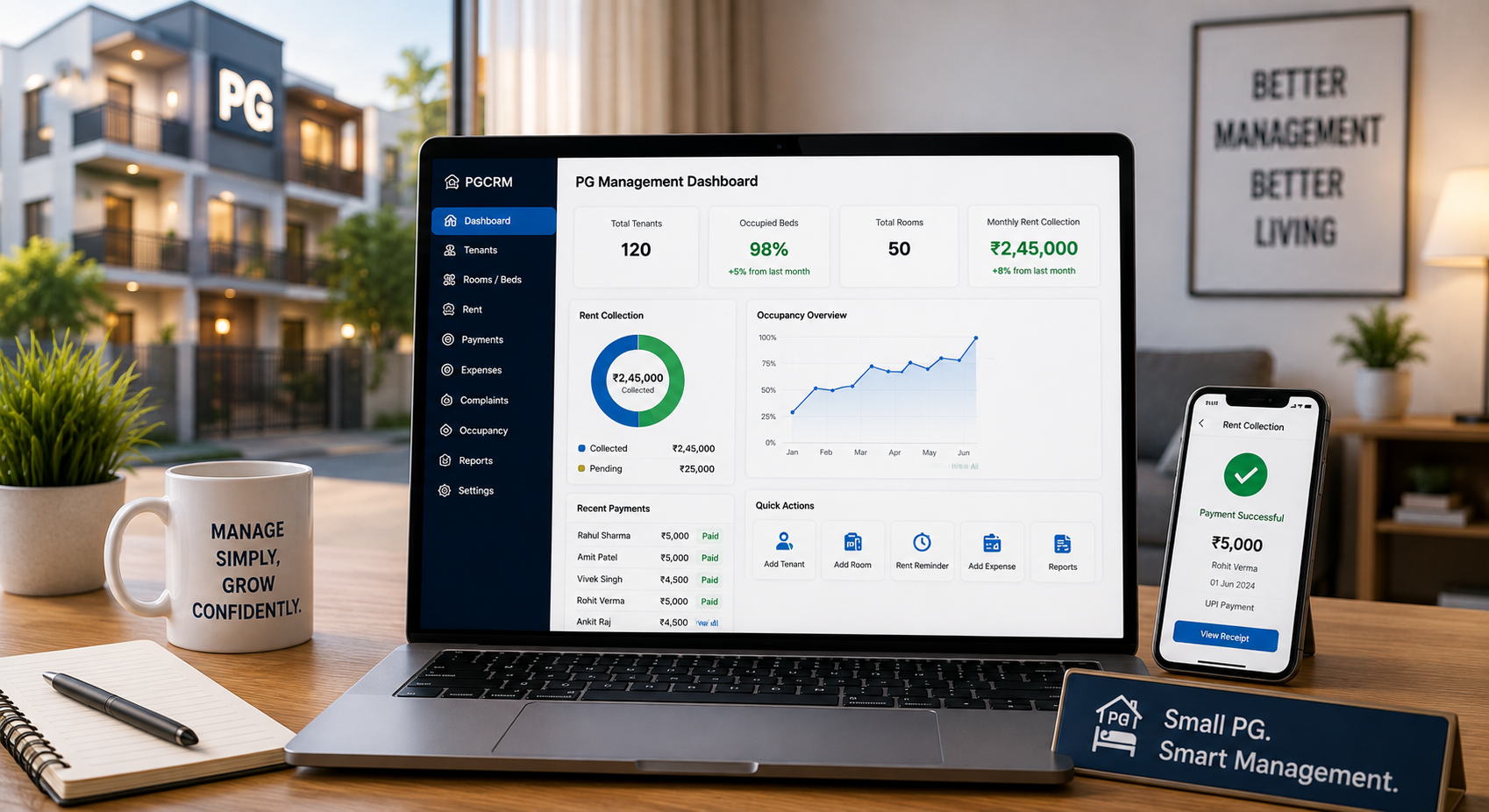
This is where using PG management software such as PGCRM can help owners centralise tenant records, rent tracking, KYC management, and occupancy information, making it easier to keep tenant-related documentation organised alongside daily operations.
PGCRM is a PG and hostel management platform that helps owners manage tenant details, rent tracking, and property information in one place, rather than relying on scattered paperwork or separate spreadsheets for each building.
Having tenant records, rent details, and KYC information centralised doesn’t replace the need for a signed rent agreement, but it does make day-to-day tenant management and record-keeping considerably easier, especially for owners managing multiple properties or a large number of rooms.
Tips for a Smoother Rent Agreement Process
- Explain house rules verbally too, in addition to including them in writing, so tenants clearly understand expectations from day one.
- Avoid ambiguous language in the agreement – be specific about amounts, dates, and conditions.
- Keep a standard checklist for onboarding new tenants, including agreement signing, deposit collection, and KYC verification.
- Set calendar reminders for agreement renewals or rent revisions, especially for long-staying tenants.
- Communicate changes in advance, such as rent increases, rather than surprising tenants at renewal time.
FAQ: PG Rent Agreement
Is a PG rent agreement legally required in India? Requirements vary by state, and specific rent control or tenancy laws may apply depending on your location. While a formal registered agreement may not always be mandatory for short-term PG stays, having a written and signed document is strongly recommended to avoid disputes. Consult local regulations or a legal professional for your specific city.
What should be included in a basic PG rent agreement? At minimum, include tenant and owner details, room and sharing information, rent amount and due date, security deposit terms, notice period, included amenities, and house rules. Clear, specific language reduces the chances of disagreement later.
How long should a PG rent agreement last? Many PG agreements are structured as month-to-month arrangements, while others specify a minimum stay period, such as three or six months. The right duration depends on your property’s typical tenant profile and your own preference for flexibility.
Can a PG owner change rent terms after signing an agreement? Rent or terms generally shouldn’t be changed mid-agreement unilaterally. Any revision, such as a rent increase, should ideally be communicated in advance and reflected in a renewed or updated agreement signed by both parties.
What happens if a tenant leaves without notice? This depends on the notice period clause in the agreement. Many owners retain part or all of the security deposit if a tenant leaves without providing the agreed notice period, though this should be clearly stated in the agreement beforehand.
Do PG agreements need to be notarised? Notarization requirements vary by state and are more common for longer-term residential leases than short-term PG stays. Since practices differ locally, it’s best to check with a local legal expert on whether notarization is advisable for your specific situation.
How can PG owners keep track of multiple tenant agreements? For a small number of tenants, physical folders or basic spreadsheets may work. As the number of tenants and properties grows, PG management software can centralise tenant records and rent details, making it much easier to track and retrieve agreement-related information when needed.
Conclusion
A clear, written PG rent agreement protects both owners and tenants by setting expectations around rent, deposits, notice periods, and house rules from the start. While specific legal requirements can vary by state, documented terms are a practical step every PG owner should prioritise, regardless of property size.
As your PG business grows, managing agreements alongside rent tracking, tenant records, and occupancy data becomes increasingly important. Exploring PGCRM can help simplify how you organise tenant information and daily operations as your property scales. Explore PGCRM to simplify your PG and hostel management.