You open a marketplace app to sell your old study table.
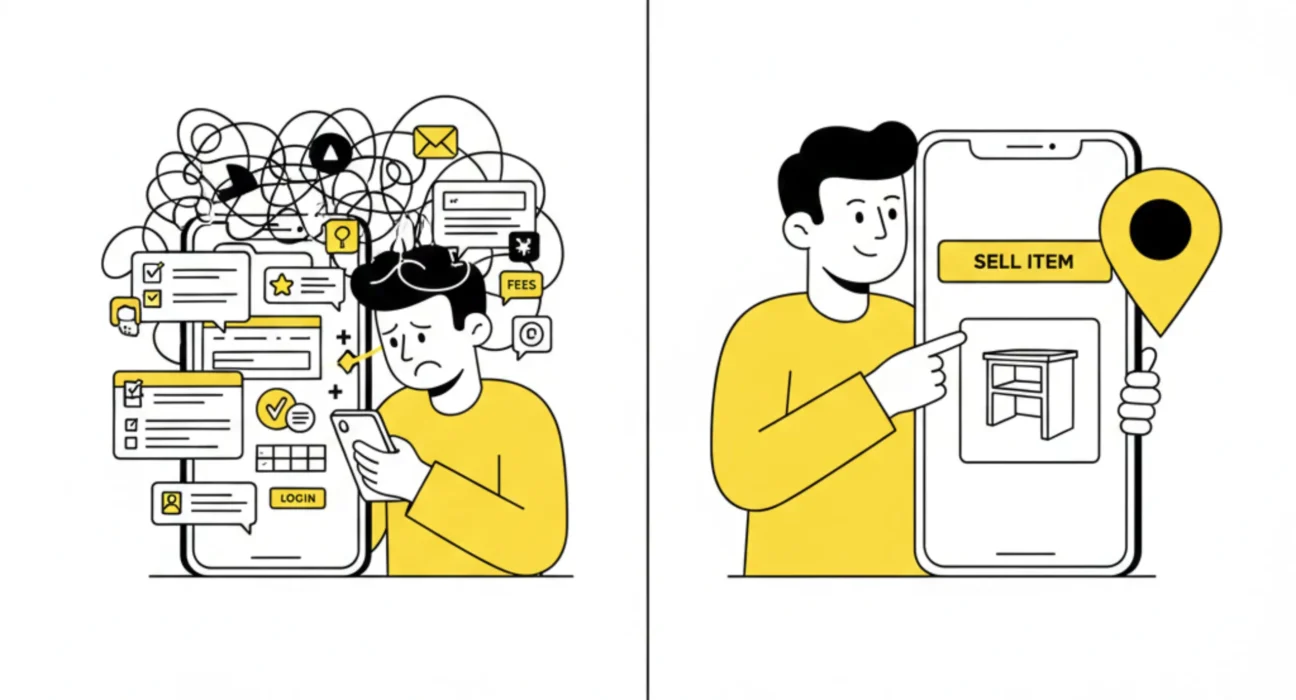
Before you can even post, you’re asked to create an account, verify your phone number, complete your profile, choose from 47 subcategories, add five photos, write a detailed description, set shipping preferences, and agree to payment terms.
Twenty minutes later, you’re exhausted and you haven’t even listed the item yet.
This is why people are walking away from complex platforms. They don’t want features. They want results. They don’t need dashboards and analytics. They need to sell items fast without jumping through hoops.
Platforms like Sympl are responding by stripping away unnecessary complexity. Simple classifieds that let you buy and sell locally are gaining ground because they focus on what actually matters: connecting nearby buyers and sellers quickly.
Why Complexity Became the Default
Marketplaces didn’t start out complicated. They evolved that way.
As platforms grew, they added features to compete with each other. Seller ratings, buyer protection programmes, advanced search filters, recommendation algorithms, promotional tools, analytics dashboards each addition promised to improve the experience.
But for everyday users selling a phone or buying a second-hand bike, these features became obstacles.
You don’t need a seller rating system when you’re meeting the buyer in person. You don’t need shipping integrations when everything is local. You don’t need promotional tools when your listing will be seen by people in your neighbourhood anyway.
The features designed to help large-scale sellers became burdens for regular people just trying to clear out their homes or find affordable deals nearby.
In Indian cities, where most transactions involve second-hand items, local pickups, and face-to-face verification, this complexity doesn’t add value it adds friction.
What Users Actually Need from a Marketplace
The gap between what platforms offer and what users need has never been wider.
Here’s what people actually want:
Quick listing process
Post an item in under two minutes. No lengthy forms, no mandatory fields that don’t matter for local sales.
Easy discovery
Buyers want to browse what’s available nearby without filtering through national listings or irrelevant categories.
Direct contact
Talk to the seller or buyer immediately. No waiting for platform notifications or messages lost in spam folders.
Simple pricing
Set a price and negotiate directly. No hidden fees, no platform commissions, no confusing payment gateways.
Local transactions
Meet in person, inspect the item, and complete the transaction on the spot. No shipping, no tracking, no returns process.
These aren’t advanced requirements. They’re basic expectations that modern platforms have overcomplicated.
Sympl and similar local classifieds are bringing things back to basics by focusing on these core needs.
How Simplicity Speeds Up Transactions
Every unnecessary step slows down a sale.
When platforms demand too much information, sellers give up halfway. When buyers face complicated search interfaces, they leave without finding what they need.
Here’s how straightforward platforms make transactions faster:
No registration barriers
Some local classifieds let you browse and even post without creating detailed accounts. Less setup time means you can list and sell the same day.
Minimal listing requirements
Item name, price, location, and one photo. That’s often enough for someone nearby to decide if they’re interested.
Location-first browsing
Buyers see items available in their area immediately. No scrolling through listings from other cities or states.
Instant communication
Click a phone number or WhatsApp link and talk to the seller directly. No waiting for messages to be delivered through the platform.
Cash transactions
Meet, verify the item, pay in cash or UPI, and leave. No wallet loading, no payment holds, no refund complications.
This approach works particularly well for low-cost buying. When someone’s spending ₹2,000 on a used phone or ₹5,000 on a bicycle, they don’t need the same infrastructure required for high-value ecommerce.
They just need to connect with a trustworthy seller nearby.
Real-Life Examples of Simple Transactions
Student selling textbooks
Priya listed her engineering books on Sympl during semester break. She added basic photos and her college area. Three classmates contacted her within hours. All three transactions happened on campus the next day. Total time spent: 10 minutes to list, 30 minutes to sell.
Working professional buying a washing machine
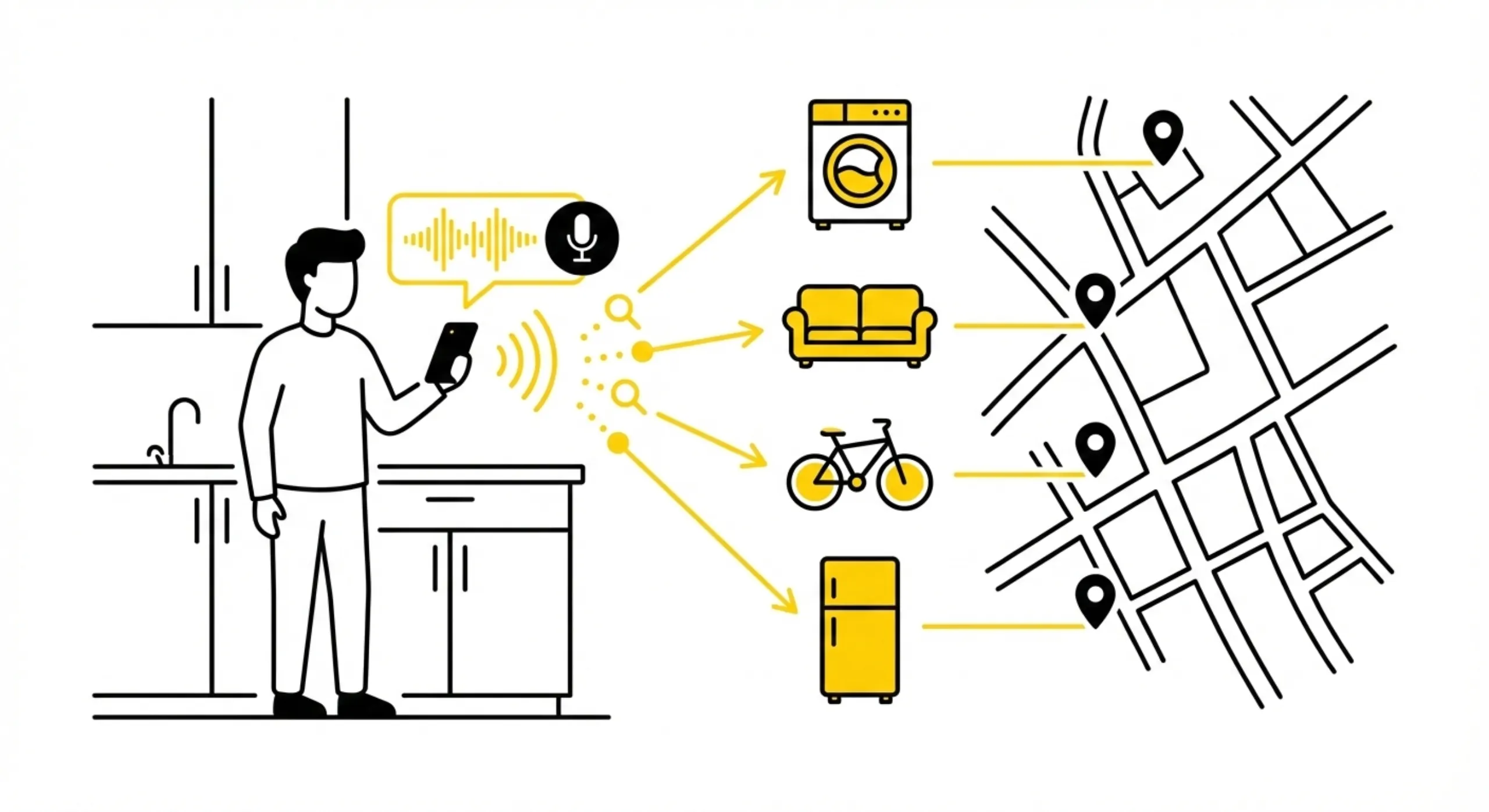
Rahul needed a washing machine for his new flat. He filtered “Home Appliances” in his locality, found one listed two kilometres away, called the seller, inspected it that evening, and bought it. The entire process took less than 24 hours.
Family selling old furniture
The Sharmas were moving to a smaller home and needed to sell a sofa set quickly. They posted it with basic details and photos. A neighbour saw the listing, visited the next morning, and bought it. No lengthy descriptions, no shipping arrangements, no complications.
In each case, simplicity enabled speed. The platforms didn’t get in the way—they just facilitated the connection.
Why Local Buyers and Sellers Prefer Straightforward Platforms
When transactions happen locally, most marketplace features become irrelevant.
You don’t need elaborate verification systems
Meeting face-to-face provides natural verification. You can see the item, judge the seller’s credibility, and make an informed decision on the spot.
You don’t need complex payment infrastructure
Cash or instant UPI transfers work perfectly for local deals. No need for escrow services or payment protection when you’re handing over money in person.
You don’t need shipping and logistics
Buyers pick up items themselves or sellers deliver within the neighbourhood. This eliminates the most complicated part of online marketplaces.
You don’t need return policies
Inspect before buying. If there’s an issue, discuss it immediately. No waiting for refund approvals or shipping items back.
These simplifications aren’t cutting corners, they’re acknowledging that local transactions work differently from national ecommerce.
Platforms built for local buying and selling don’t need to mimic Amazon or Flipkart. They need to make neighbourhood exchanges easy.
Cost Savings from Simplified Marketplaces
Complexity costs money. Simplicity saves it.
No platform fees
Straightforward classifieds often don’t charge listing fees, success fees, or commissions. You keep the full sale price.
No promotional costs
Your listing gets seen by nearby buyers without paying for ads or boosts. Proximity provides natural visibility.
No shipping expenses
Local pickups eliminate courier charges, packaging costs, and delivery fees. Buyers save. Sellers save.
No payment gateway charges
Direct cash or UPI transactions avoid the percentage cuts that payment processors take on other platforms.
For budget-conscious buyers and sellers, these savings matter. When you’re selling a ₹3,000 item, a 10% platform fee is ₹300 significant enough to reconsider using that marketplace.
Simple local classifieds keep more money in your pocket by removing these unnecessary costs.
Who Benefits Most from Simple Platforms
First-time sellers
People who’ve never sold anything online before find complex platforms intimidating. Straightforward interfaces lower the barrier to entry.
Older users
Parents and grandparents comfortable with basic technology but frustrated by complicated apps appreciate platforms that don’t require technical expertise.
Students
Limited budgets and busy schedules mean they need quick, easy transactions. Posting textbooks or electronics shouldn’t require learning a new system.
Working professionals
No time to navigate multi-step processes. I want to list something during lunch break and sell it the same evening.
Families
Selling outgrown items, old appliances, or furniture while managing household responsibilities. Need platforms that work quickly without demanding attention.
Anyone who values their time and money over unnecessary features benefits from this approach.
The Shift Away from Feature Overload
Users are rejecting platforms that prioritize features over functionality.
An app might boast AI-powered recommendations, advanced analytics, and integrated chat systems. But if it takes ten steps to list a bicycle, users will find a platform where it takes two.
This shift is happening across India. People are tired of downloading heavy apps, creating accounts they’ll never use again, and navigating interfaces designed for professional sellers.
They want neighbourhood-level marketplaces that feel human, not corporate.
Sympl represents this trend. By focusing on core functionality list, browse, connect, and transact it removes the friction that makes other platforms exhausting to use.
How Simplicity Builds Trust
Complicated platforms raise suspicions.
Why do they need so much information? Why are there so many steps? What happens to my data? Where is my money going?
Simple platforms answer these questions by not raising them in the first place.
When a platform asks for minimal information and facilitates direct transactions, users feel more in control. There’s less wondering what happens behind the scenes because there’s less happening behind the scenes.
This transparency builds trust, especially for local transactions where both parties are nearby and accountable.
In India, where trust is earned through personal interaction, face-to-face deals backed by simple platforms feel safer than anonymous transactions on complex marketplaces.
Comparing Simple and Complex Marketplace Models
Complex platforms
Account creation → Profile completion → Category selection → Detailed listing → Photo upload (multiple) → Shipping setup → Payment method selection → Listing review → Waiting for approval → Monitoring messages → Coordinating delivery → Managing returns.
Simple classifieds like Sympl
Basic listing → One or two photos → Direct contact → In-person meeting → Transaction complete.
The difference isn’t just fewer steps. It’s a fundamentally different philosophy.
Complex platforms try to control every aspect of the transaction. Simple platforms facilitate the connection and get out of the way.
For everyday items sold locally, the second approach is more practical.
Why Simplicity Works Better for Second-Hand Items
Most marketplace complexity exists to support new products, warranties, returns, and large-scale ecommerce.
Second-hand items don’t need this infrastructure.
A used phone sold locally doesn’t require a 30-day return policy. The buyer inspects it, tests it, and decides on the spot.
A second-hand bike doesn’t need shipping options. The buyer picks it up from the seller’s location.
A used dining table doesn’t need payment protection. Cash changes hands after both parties agree the condition matches the description.
Platforms like Sympl succeed because they’re designed specifically for these types of transactions. They don’t try to be everything to everyone. They focus on making local second-hand sales easy.
The Mobile Experience Factor
Most people access marketplaces through phones, not computers.
Complex platforms often struggle to translate their desktop experience to mobile. Too many menus, tiny text, cluttered interfaces it’s frustrating to use.
Simple classifieds work better on mobile because there’s less to display. Listings load faster. Navigation is clearer. Posting takes seconds, not minutes.
In India, where smartphone usage dominates and many people use entry-level devices with limited storage and processing power, lightweight platforms have a natural advantage.
Sympl’s approach fits this reality. A platform that works smoothly on any phone, doesn’t consume excessive data, and doesn’t drain battery life serves users better than feature-heavy alternatives.
Final Thoughts
Simplicity isn’t about offering less. It’s about focusing on what matters.
For local buying and selling, what matters is connecting nearby people who want to exchange items quickly, safely, and affordably.
Complex features don’t improve this process. They complicate it.
Platforms like Sympl succeed by removing obstacles instead of adding features. They make it easy to sell items fast without learning new systems, navigating complicated interfaces, or paying unnecessary fees.
This shift toward simplicity reflects what users have been saying all along: they don’t need marketplace platforms to do everything. They just need them to work.
For anyone tired of overcomplicated apps that waste time and money, straightforward local classifieds offer a practical alternative.