You’re cooking dinner when you remember you need to sell that old washing machine before the weekend. Your hands are messy, so you pick up your phone and say, “Find buyers for a washing machine near me.”
A few results pop up. Some are marketplace apps where you’d need to create an account, upload photos, and fill out forms. Others are classified sites cluttered with ads and outdated listings.
What you actually wanted was sympl: a simple way to post your item quickly and connect with local buyers without jumping through hoops.
Voice search is changing how people look for things to buy and sell locally. But most platforms haven’t caught up. They’re still designed for typed searches, long forms, and complicated filters, not for someone who just wants to say what they need and get it done.
Why Voice Search Matters When You Buy and Sell Locally
More people are using voice search than ever before. Not because it’s trendy, but because it’s faster.
Instead of typing “second hand refrigerator Bangalore under 5000,” you just ask, “Where can I buy a used fridge nearby?”
Voice searches are different from typed ones. They’re conversational. They’re longer. And they’re usually about immediate needs.
When someone uses voice search for buying or selling, they’re not browsing casually. They want results now. They want something close by. And they want the process to be straightforward.
The problem? Most classified listings aren’t written the way people actually talk. They use formal language, stuffed keywords, or vague titles that voice assistants struggle to match.
If your listing doesn’t align with how people naturally search, it simply won’t show up even if you’re offering exactly what someone needs.
How People Actually Search Using Voice
Voice searches follow natural speech patterns. People ask questions. They describe what they need in full sentences.
Here’s how typical voice searches sound:
- “Where can I sell my old bike quickly?”
- “Used sofa set near Whitefield”
- “Second hand iPhone in good condition around me”
- “Sell furniture fast before moving”
Notice the difference from typed searches like “bike sale Bangalore” or “iPhone used buy.”
Voice searches include:
Question words
Who, what, where, when, why, and how. People ask voice assistants the same way they’d ask a friend.
Location terms
“Near me,” “around here,” “in my area,” or specific neighbourhood names. Voice users want local results.
Descriptive phrases
“In good condition,” “urgent sale,” “barely used.” People add context when speaking that they skip when typing.
Action intent
“Buy,” “sell,” “find,” “looking for.” Voice searches are goal-driven; someone wants to complete a task, not just browse.
Understanding this helps you create listings that actually match what buyers are saying out loud.
Writing Listings That Match the Way People Talk
If you want your listing to show up in voice search results, write it the way someone would describe the item to a friend.
Use natural language in titles
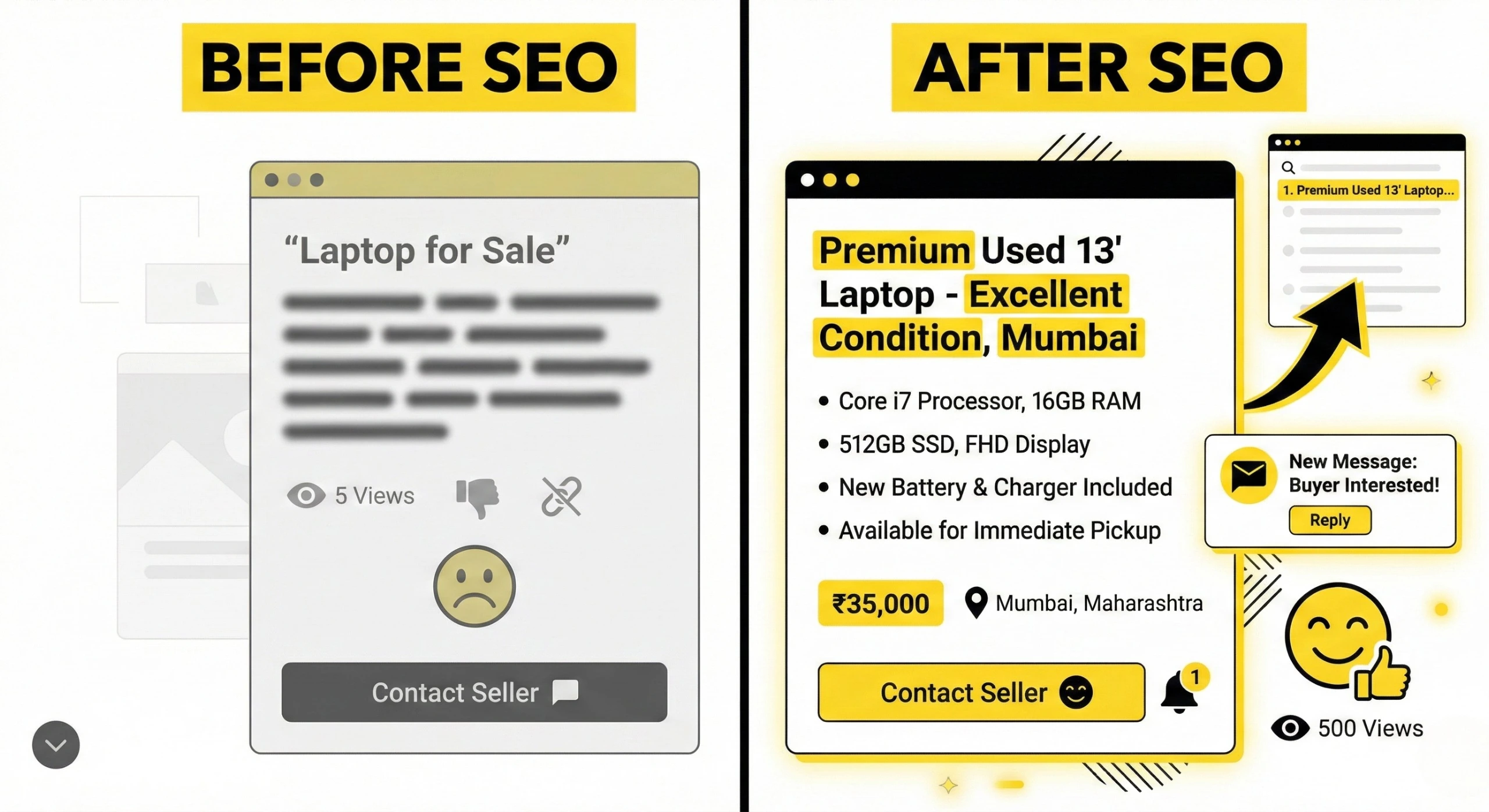
Instead of: “Sofa 3 seater brown leather 2022”
Try: “Three seater brown leather sofa in excellent condition”
The second version matches how someone would ask for it using voice.
Answer common questions in your description
Think about what buyers typically ask:
- Is it still available?
- What condition is it in?
- Why are you selling it?
- Where are you located?
Include this information upfront. Voice assistants pull answers from descriptions that directly address user questions.
Mention your area clearly
Don’t just rely on dropdown menus or tags. Write your location in the description itself.
“Available in Koramangala” or “Can deliver within Gurgaon” helps voice search understand geographic relevance.
Keep it conversational
Write like you’re explaining the item to someone who called you. Short sentences. Clear details. No jargon.
This approach works for any item: phones, bikes, furniture, appliances, books, gym equipment, or baby products.
Why Local Classifieds Work Better for Voice-Driven Searches
Voice search favours simplicity and relevance. That’s where local classifieds have an advantage over crowded marketplaces.
Focused local results
When someone searches by voice for “used dining table near me,” they don’t want results from across the country. They want nearby options.
Sympl classifieds that prioritize location naturally align with voice search intent.
Faster, direct communication
Voice searches are often made on the go while commuting, during a break, or between tasks. Users want quick answers and direct contact.
Local classifieds let buyers message or call sellers immediately, without navigating through multiple screens or approval processes.
Less competition for visibility
On massive marketplaces, thousands of similar listings compete for attention. Voice assistants struggle to differentiate between them.
With local classifieds, your listing has a better chance of appearing in results simply because the pool is smaller and more geographically relevant.
Clearer intent matching
Voice users tend to be specific about what they want. If your listing is straightforward and matches that intent, it gets prioritised no paid promotions needed.
This is how selling items fast happens in practice. The right buyer sees your listing at the right time, contacts you directly, and you close the deal.
Saving Time When Buyers Find You Through Voice Search
Voice search isn’t just changing how listings are discovered. It’s speeding up the entire buying and selling process.
Think about the traditional flow: a buyer types a search, scrolls through pages of results, opens multiple listings, compares, then maybe messages a seller.
With voice search, the process tightens. Someone asks a question, gets a few highly relevant results, and reaches out immediately.
For sellers, this means:
Fewer irrelevant inquiries
Voice searchers are specific about what they want. If they contact you, they’re genuinely interested.
Quicker responses
Buyers using voice are often making decisions on the spot. They’re more likely to act fast if your listing matches their needs.
Less waiting around
When the right buyer finds you quickly, your item doesn’t sit online for weeks. You sell faster and move on.
For buyers, the benefits are equally practical:
No endless scrolling
Voice search delivers focused results. You see a few strong matches instead of hundreds of mediocre ones.
Immediate action
You can call or message the seller right from the search results. No account creation, no form filling.
This is why low-cost buying often happens through voice-driven local searches. Buyers find nearby sellers, inspect items in person, and negotiate directly all without platform fees or shipping charges.
Who Benefits Most from Voice-Optimised Local Listings
Voice search isn’t just for tech-savvy users. It’s becoming the default for anyone who values convenience.
Students
Looking for affordable textbooks, gadgets, or hostel furniture while multitasking. Voice search lets them find deals without stopping what they’re doing.
Families
Searching for appliances, kids’ items, or furniture while managing household tasks. Speaking a search query is faster than typing.
Working professionals
Selling items before relocating or buying practical things during busy schedules. Voice search fits into their limited free time.
First-time buyers and sellers
People who find traditional classified platforms confusing. Voice search simplifies discovery; they just describe what they need.
Anyone who prefers quick, direct transactions
If you don’t want to navigate apps or fill forms, voice search offers a shortcut to local buyers and sellers.
These are everyday people solving everyday problems. They’re not looking for the biggest marketplace, they’re looking for the easiest path to a completed transaction.
Making Your Listings Work for How People Search Today
Voice search isn’t replacing typed searches entirely. But it’s becoming a significant part of how people look for things to buy and sell locally.
Adapting to this doesn’t require technical expertise. It’s about matching how you write listings with how people naturally speak.
Use clear, conversational language. Mention your location explicitly. Answer the questions buyers are likely to ask. Keep descriptions sympl and direct.
When you do this, your listing becomes easier to find not just through voice, but through any search method. Clarity always wins.
And when the right buyer finds you quickly, everything else falls into place. Direct communication. Fair negotiation. A completed deal.
That’s not marketing. That’s how local buying and selling is supposed to work.
Voice search just makes it easier for the right people to connect at the right time. And in a world where everyone’s busy, that matters more than ever.