Introduction
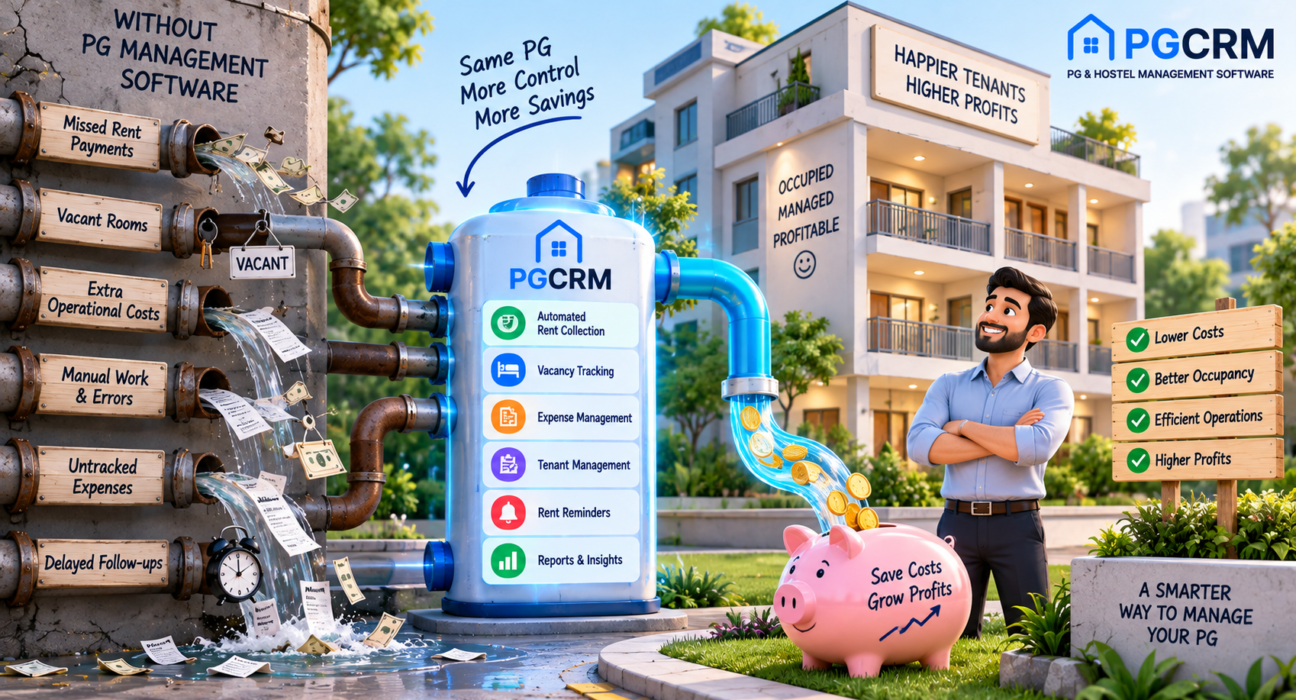
Most PG owners think about software cost in one direction only: what they’ll pay each month. Fewer stop to calculate what manual tracking is already costing them in missed rent, wasted time, and avoidable disputes. Understanding the full range of PG management software benefits means looking beyond convenience and recognising where real money gets saved. PG and hostel management software doesn’t generate revenue directly, but it closes the small, recurring leaks that quietly reduce a PG’s profitability over time.
This article walks through the specific ways PG management software can save money, with practical examples of where those savings typically come from.
Why Manual PG Management Often Costs More Than It Seems
Direct answer: Manual PG management often costs more than expected because losses happen gradually and invisibly, like a missed rent reminder here and an unnoticed vacancy there – rather than as one obvious expense that’s easy to notice and fix.
These costs rarely show up as a single line item, which is why many owners underestimate how much manual tracking is actually costing them each month.
Key PG Management Software Benefits That Save Money
1. Reduced Missed and Delayed Rent Payments
Direct answer: Rent tracking with automated reminders helps ensure tenants pay on time by prompting them before the due date, reducing the number of payments that get forgotten or delayed.
Without reminders, rent collection often depends on the owner remembering to follow up individually with each tenant. As occupancy grows, this becomes harder to manage consistently, and missed follow-ups directly translate to delayed cash flow.
2. Fewer Unnoticed Vacancies
Every day a bed sits vacant without the owner realising it is a day of lost rental income. Clear, real-time occupancy tracking helps owners spot vacancies immediately, rather than discovering them during a periodic manual check, allowing faster turnaround and less lost revenue.
3. Lower Risk of Payment Disputes
Disputes over “I already paid” or unclear deposit deductions can be time-consuming and sometimes result in owners accepting a loss just to resolve the issue quickly. A centralised, timestamped payment record reduces these disputes by giving both parties a clear reference point.
4. Time Saved on Manual Reconciliation
Time spent manually cross-checking notebooks, spreadsheets, or messages to confirm who has paid is time not spent on higher-value tasks like tenant acquisition or property improvements. Centralised rent tracking removes much of this manual reconciliation work.
5. Better Expense Visibility
Tracking expenses alongside rent income makes it easier to see which costs are eating into margins. Without this visibility, it’s common for recurring costs like maintenance or utilities to go unexamined for months, delaying opportunities to control them.
6. Reduced Tenant Turnover from Poor Complaint Handling
Complaints that go untracked or unresolved are a common reason tenants choose not to renew. Structured complaint management helps ensure issues are addressed and resolved, which can reduce turnover-related costs like vacancy periods and remarketing efforts.
Where the Money-Saving Impact Is Most Visible
| Area | Manual Management Risk | Cost-Saving Impact of Software |
|---|---|---|
| Rent collection | Missed or delayed payments | Reminders reduce missed rent. |
| Occupancy | Vacancies noticed late | Faster turnaround, less lost income. |
| Disputes | Time-consuming, sometimes costly | Clear records reduce disputes. |
| Reconciliation | Hours spent manually cross-checking | Centralised tracking saves time. |
| Expenses | Costs go unexamined. | Clearer visibility supports cost control. |
| Tenant retention | Unresolved complaints drive turnover. | Tracked resolution improves retention. |
A Practical Way to Estimate Your Own Savings
Rather than relying on generic figures, it helps to estimate savings based on your own PG’s patterns:
- Count how many rent payments were late or missed last month. Even a few delayed payments affect cash flow timing.
- Estimate how many bed-days were lost to vacancies that took longer than necessary to notice and fill.
- Track how many hours per week go into manual rent reconciliation or searching for tenant records.
- Note any disputes in the last few months that required time or concessions to resolve.
Comparing these patterns against the cost of software gives a clearer, property-specific picture of potential savings — rather than assuming a fixed percentage improvement.
How PG Management Software Supports These Savings
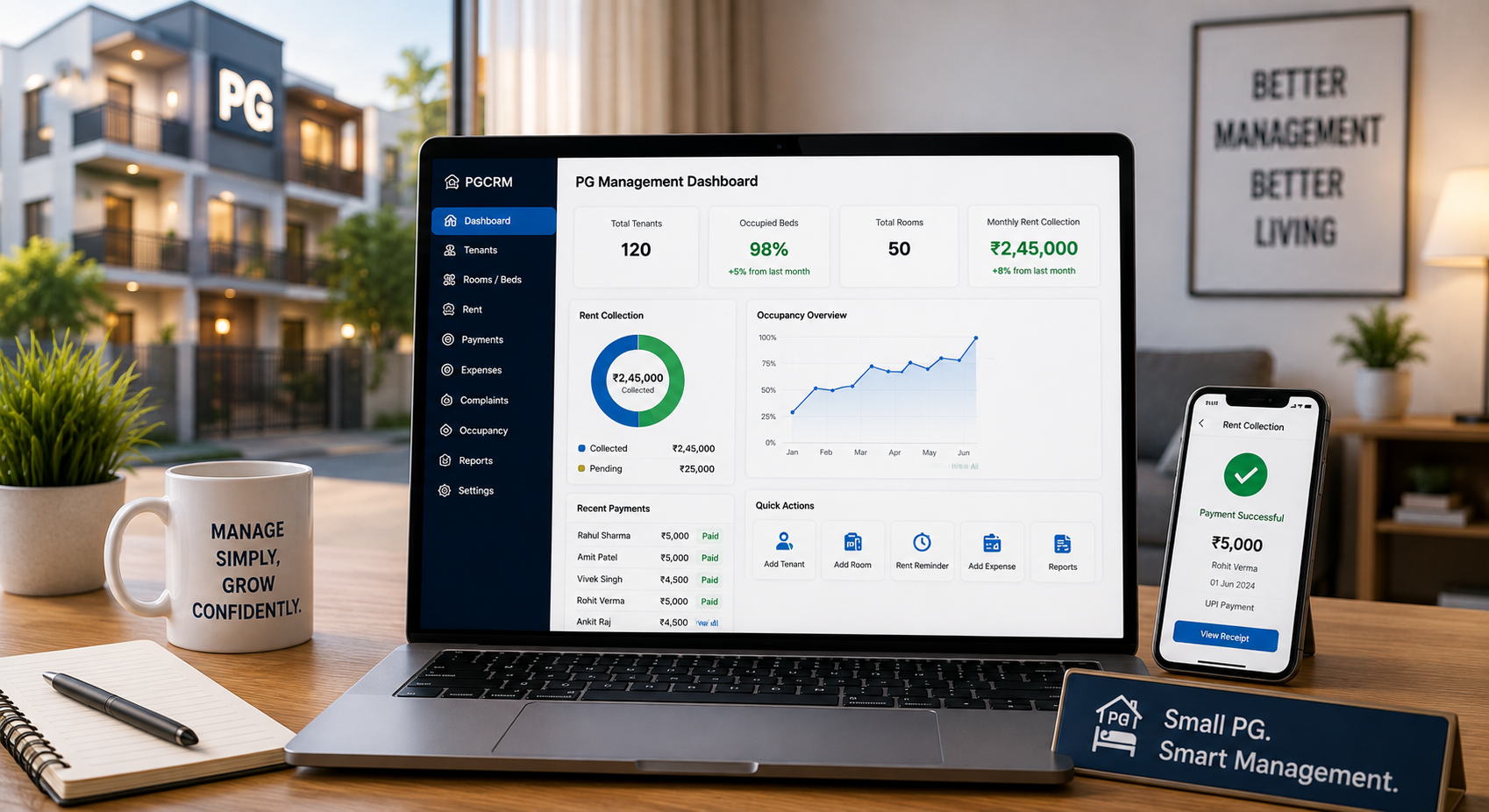
Using PG management software such as PGCRM can help owners centralise tenant records, rent tracking, occupancy information, and daily operations, directly addressing the areas where manual tracking tends to create financial leaks.
Relevant capabilities that commonly contribute to savings include:
- Rent tracking and rent reminders to reduce missed or delayed payments.
- Room and bed management, to catch vacancies faster.
- Complaint management, to reduce tenant turnover from unresolved issues.
- Expense tracking, to give clearer visibility into recurring costs.
- Reports and analytics, to help spot patterns that would otherwise go unnoticed.
The savings come from consistent use of these features together, rather than any single feature working in isolation.
Common Mistakes That Reduce Potential Savings
- Not using reminder features consistently, missing one of the most direct cost-saving benefits.
- Ignoring vacancy tracking, allowing beds to sit empty longer than necessary.
- Failing to review expense reports regularly, missing opportunities to control recurring costs.
- Underusing complaint tracking, allowing avoidable tenant turnover to continue.
- Choosing software but not adjusting existing habits, which limits how much value the tool can actually provide.
Frequently Asked Questions
How much money can PG management software actually save? The exact savings vary by property, depending on current issues like missed rent, unnoticed vacancies, and manual reconciliation time. Rather than a fixed number, savings are best estimated by comparing your own operational patterns before and after adopting software.
Does PG management software reduce missed rent payments? Yes, primarily through automated rent reminders and clear payment tracking, which reduce the chances of a payment being forgotten or overlooked compared to manual follow-ups handled individually for each tenant.
Can software help reduce tenant turnover costs? Indirectly, yes. Structured complaint tracking helps ensure maintenance issues are resolved rather than ignored, which can improve tenant satisfaction and reduce turnover-related costs like vacancy periods and re-marketing.
Is the cost of PG management software justified for small PGs? It depends on current operational gaps. If missed rent, unnoticed vacancies, or disputes are already occurring even with a small number of tenants, the software’s cost may be justified by the losses it helps prevent.
How does PG management software help with expense control? By tracking expenses alongside rent income, owners get clearer visibility into recurring costs that might otherwise go unexamined. This visibility supports better decisions about where to control spending.
What’s the fastest way to see savings from PG management software? Consistently using rent reminders and occupancy tracking tends to show the fastest impact, since these directly address the most common sources of lost income — missed payments and unnoticed vacancies.
Conclusion
The financial benefits of PG management software come from reducing the everyday leaks that manual tracking often misses: missed rent, unnoticed vacancies, disputes, and unresolved complaints. These savings build up gradually but meaningfully over time. Explore PGCRM to simplify your PG and hostel management, and evaluate how closing these operational gaps could improve your property’s profitability.