Introduction
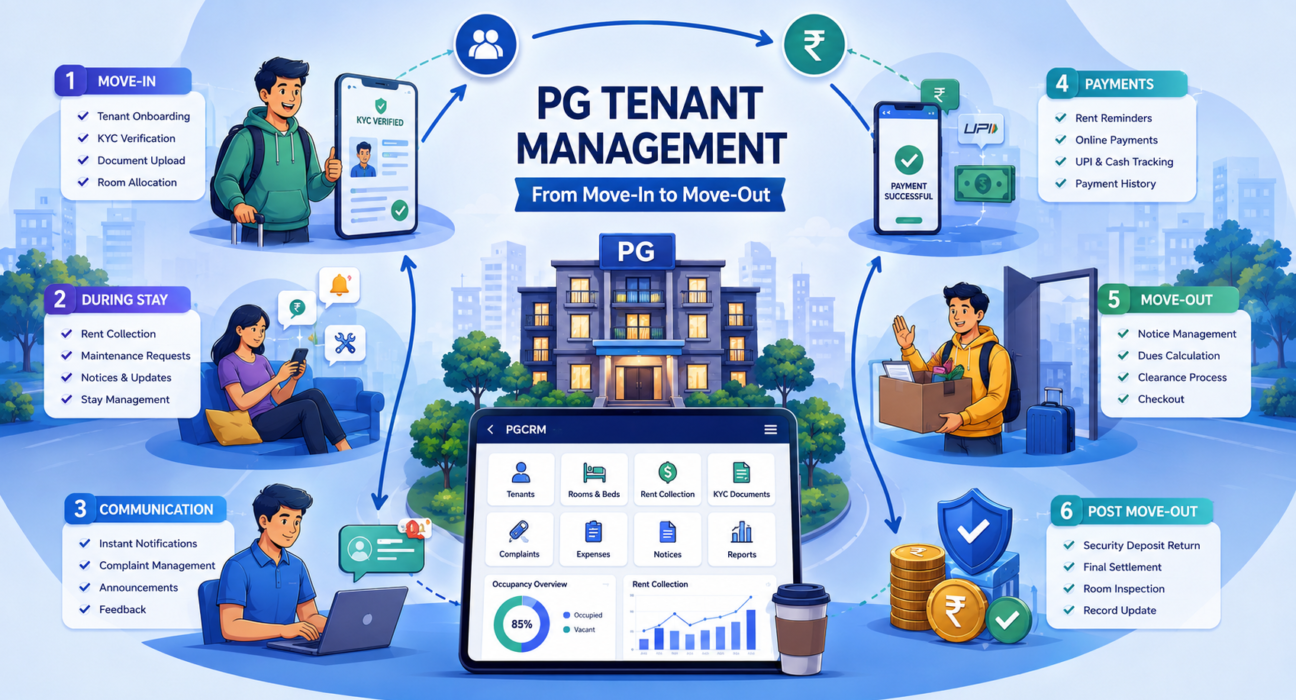
A tenant’s stay in a PG isn’t a single event it’s a sequence of stages, each with its own details to track: inquiry, move-in, monthly rent, complaints, and eventually move-out. Good PG tenant management means having a clear process for each stage, instead of handling everything reactively as issues come up.
This guide walks through what effective tenant management looks like at every point in a tenant’s stay, and how PG and hostel management software can help owners keep tenant details organised from the first inquiry to the final settlement.
What Is PG Tenant Management?
PG tenant management is the process of handling everything related to a tenant’s stay – from initial inquiry and move-in, through rent collection and day-to-day requests, to move-out and settlement – in a consistent and organised way.
It covers:
- Collecting and verifying tenant details and KYC documents
- Assigning rooms and beds
- Tracking rent and dues throughout the stay
- Handling complaints and requests
- Managing move-outs, deposit settlements, and vacancy updates
Done well, tenant management means an owner can answer basic questions about any tenant – room, rent status, move-in date, pending issues – without digging through separate files or relying on memory.
Stage 1: Inquiry and Pre-Move-In
What Happens at This Stage
Before a tenant moves in, there’s usually a period of inquiry: checking room availability, discussing rent and terms, and confirming a move-in date. This stage sets the foundation for everything that follows.
What to Track
- Prospective tenant’s contact details
- Room or bed preference and availability
- Agreed rent, deposit, and move-in date
- Any specific terms discussed (notice period, house rules, meal plans if applicable)
Keeping a simple record of inquiries – even ones that don’t convert to a move-in – helps owners see occupancy demand and follow up with prospects when a bed becomes available later.
Stage 2: Move-In
What Happens at This Stage
Move-in is where tenant management formally begins. This is when KYC documents get collected, the tenant gets assigned to a specific room and bed, and the terms of stay get documented.
Move-In Checklist
- Collect ID proof and KYC documents (Aadhaar, PAN, passport, or other government-issued ID)
- Take a photograph, if required by your process
- Record emergency contact details
- Assign the tenant to a specific room and bed
- Confirm rent amount, due date, and deposit collected
- Have the tenant sign the agreement or house rules acknowledgement
- Update occupancy status so the room or bed no longer shows as vacant
Handling this checklist consistently for every tenant – rather than skipping steps during busy periods – prevents gaps that are difficult to fix later.
Move-In vs. Move-Out: What to Track at Each Stage
| Stage | Key Records | Common Mistake if Skipped |
|---|---|---|
| Move-in | KYC, room/bed assignment, deposit, agreement | Incomplete tenant file, unclear terms later |
| During stay | Rent payments, complaints, any changes to terms | Disputes over what was agreed or paid |
| Move-out | Notice date, dues cleared, deposit settlement, room condition | Deposit disputes, vacancy not updated |
Stage 3: Managing Tenants During Their Stay
Rent Tracking
The core of ongoing tenant management is knowing, at any point, who has paid and who hasn’t. This means recording each payment against the tenant, noting the mode (cash or UPI), and flagging overdue rent clearly rather than discovering it weeks later.
Handling Complaints and Requests
Tenants report issues throughout their stay – maintenance problems, questions about house rules, or requests related to their room. Logging these consistently, with a clear status (open, in progress, resolved), gives both the tenant and the owner a reliable record instead of relying on remembered conversations.
Updating Tenant Details When They Change
Contact numbers, emergency contacts, or even room assignments can change during a tenant’s stay. Good tenant management includes updating these records promptly rather than letting the original move-in details go stale.
Managing Renewals and Extended Stays
For tenants who stay beyond an initial agreed period, track renewal dates and any updated terms clearly, so there’s no ambiguity about whether an agreement has been extended, changed, or is coming up for review.
Stage 4: Move-Out
What Happens at This Stage
Move-out involves confirming the tenant’s departure, clearing any pending dues, settling the security deposit, and updating occupancy so the vacated bed becomes available for a new tenant.
Move-Out Checklist
- Record the tenant’s notice or move-out date
- Confirm all rent dues are cleared before move-out
- Check the room and any provided furniture or equipment for damage
- Calculate and settle the security deposit, deducting any agreed charges
- Update the room and bed status to vacant
- Retain the tenant’s record for future reference, based on your retention practice
Skipping steps here – particularly deposit settlement or occupancy updates – is one of the most common sources of disputes and unnoticed vacancies in PG management.
Common Mistakes in PG Tenant Management
- Treating each stage in isolation. Move-in details, rent history, and move-out records often end up scattered across different files instead of connected to one tenant profile.
- Inconsistent KYC collection. Skipping documentation during busy move-in periods creates gaps that are hard to fill later.
- Delayed occupancy updates. A vacated bed that isn’t marked available promptly sits empty longer than necessary.
- No clear complaint trail. Relying on memory or verbal reports for tenant complaints makes it difficult to track what’s actually been resolved.
- Unclear deposit calculations at move-out. Without a documented process, deposit settlements can become a point of dispute between tenant and owner.
How PGCRM Supports PG Tenant Management
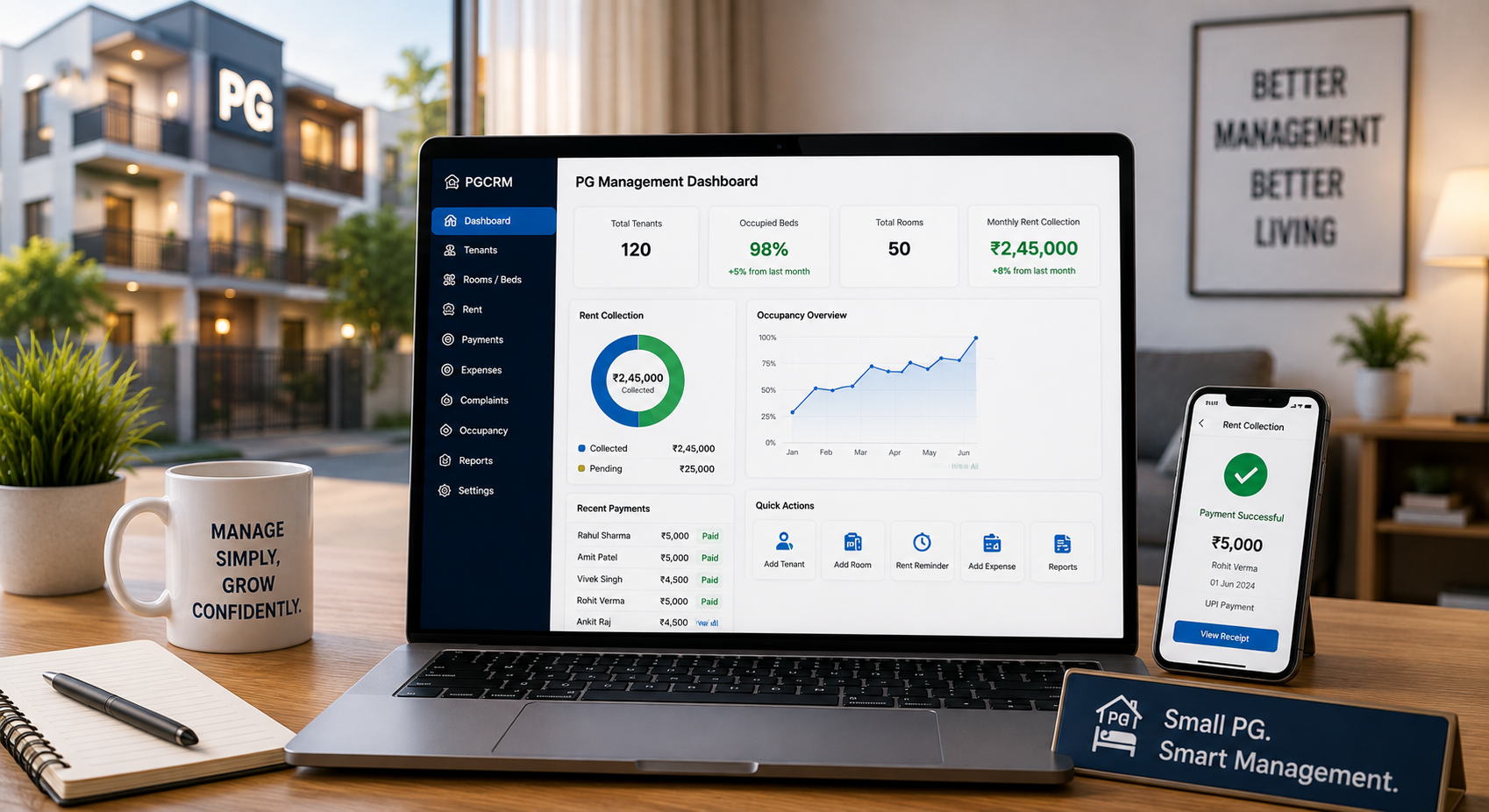
PGCRM keeps tenant records connected across the entire stay – KYC details, room and bed assignment, rent history, and complaints – in one profile per tenant, rather than scattered across separate systems. Using PG management software such as PGCRM can help owners manage the full tenant lifecycle, from move-in through move-out, with occupancy status, rent tracking, and complaint records all tied to the same tenant profile.
FAQ
What is included in PG tenant management?
PG tenant management covers the full tenant lifecycle: inquiry and move-in, KYC documentation, room and bed assignment, rent tracking throughout the stay, complaint handling, and move-out with deposit settlement. Managing all these stages consistently, rather than reactively, is what distinguishes organised tenant management from ad hoc tracking.
What documents should I collect when a tenant moves in?
Typically, government-issued ID proof (such as Aadhaar, PAN, or passport), a photograph, emergency contact details, and a signed agreement or house rules acknowledgement. Collecting the same set of documents from every tenant, rather than varying by who handles check-in, keeps records consistent.
How should I handle PG tenant move-outs?
Confirm the move-out date, ensure all rent dues are cleared, check the room for any damage, settle the security deposit based on your agreed terms, and update the room or bed status to vacant. Handling these steps in order reduces the chance of disputes or an unnoticed vacancy afterwards.
What’s the most common mistake in managing PG tenants?
Treating each stage of a tenant’s stay as separate rather than connected. When move-in details, rent history, and complaints aren’t linked to one tenant record, owners end up checking multiple places to understand a single tenant’s status, which slows down day-to-day management.
How can I avoid deposit disputes when a tenant moves out?
Document the deposit amount, any conditions for deductions, and the room’s condition at move-in, so there’s a clear reference point at move-out. Calculating and communicating the final settlement transparently, based on documented terms rather than memory, reduces the chance of disagreement.
Should I track tenant complaints as part of tenant management?
Yes. Complaints are a normal part of a tenant’s stay, and tracking them with a clear status – open, in progress, resolved – gives both the tenant and the owner a reliable record. This also helps identify recurring issues, like a maintenance problem that keeps coming up in the same room.
Conclusion
PG tenant management works best when it’s treated as one continuous process, not a series of disconnected tasks handled separately at each stage. Tracking a tenant consistently from inquiry through move-in, their stay, and eventual move-out reduces disputes, prevents unnoticed vacancies, and gives owners a clearer picture of their property at any given time. If tenant details currently live across separate registers, messages, and memory, explore PGCRM to see how a PG and hostel management platform can bring the full tenant lifecycle into one organised system.