Supply chains today run through dozens of hands before a product reaches a customer – factories, freight carriers, distributors, customs agents, and retailers all touch the same shipment. Every handoff creates a chance for data to get lost, altered, or disputed. That’s the traceability problem, and it’s why blockchain in supply chain management has become one of the most talked-about solutions in logistics and manufacturing circles.
If your business has ever struggled to answer a simple question – “Where exactly did this product come from, and can we prove it?” – you already understand why traceability matters. Blockchain doesn’t fix every supply chain issue, but it directly addresses the trust and visibility gap that traditional systems leave open. This article breaks down what blockchain in supply chain actually means in practice, how it improves traceability, what it costs to implement, and how to decide if it’s right for your business.
What Does Blockchain in Supply Chain Actually Mean?
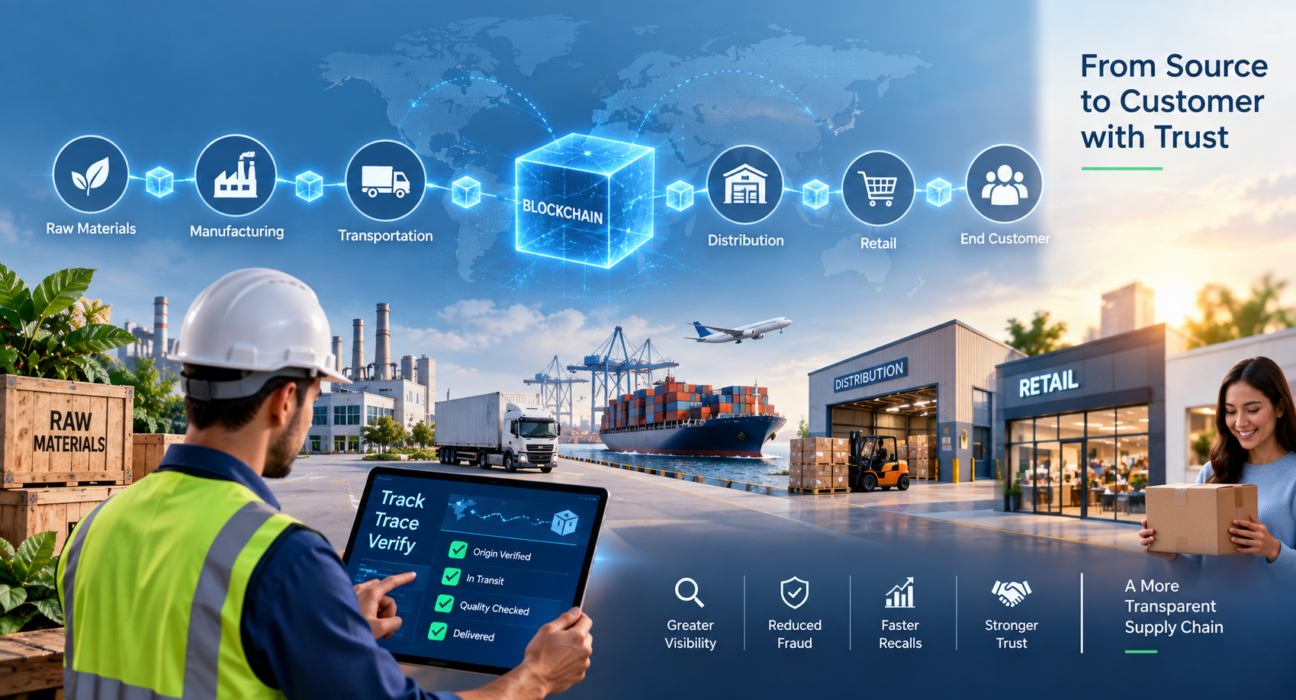
Blockchain in supply chain refers to using a shared, tamper-resistant digital ledger to record every step a product takes – from raw material sourcing to final delivery – so that every participant in the chain can view the same verified data.
Instead of each company keeping its own spreadsheet or database (which can be edited, lost, or disputed), a blockchain-based system creates a single shared record. Once a transaction or event is logged – a shipment leaving a warehouse, a temperature reading during transit, a customs clearance – it can’t be quietly altered afterward. Every party with access sees the same version of events.
This matters because most supply chain disputes and delays come down to one thing: no one can agree on what actually happened, or when.
Why Traceability Is a Growing Problem for Businesses
Traceability issues aren’t new, but they’ve become more visible and more costly for a few reasons:
- Global sourcing means products often cross five or more organizations before reaching a customer.
- Consumers and regulators increasingly want proof of origin, ethical sourcing, and authenticity.
- Recalls and fraud are expensive when companies can’t quickly pinpoint where a problem started.
- Paper-based or siloed digital systems make it slow and difficult to verify claims across partners.
For industries like food, pharmaceuticals, luxury goods, and electronics, weak traceability isn’t just inconvenient – it can lead to safety risks, regulatory penalties, and reputational damage.
How Blockchain Improves Supply Chain Traceability
1. It Creates a Single Source of Truth
Every participant – supplier, manufacturer, shipper, retailer – writes to the same ledger. There’s no need to reconcile conflicting records from different systems, which reduces disputes and speeds up audits.
2. It Makes Records Tamper-Resistant
Once data is added to a blockchain, altering it requires changing every subsequent record in the chain, which is deliberately difficult by design. This gives businesses more confidence that shipment histories, certifications, and quality checks haven’t been quietly edited after the fact.
3. It Enables Real-Time Visibility
When paired with IoT sensors, barcodes, or RFID tags, blockchain systems can log location, temperature, humidity, or handling events automatically as goods move. Businesses can see where a product is and what condition it’s in without waiting for manual updates.
4. It Supports Faster Recalls and Root-Cause Analysis
If a batch of products has a defect or contamination issue, a traceable blockchain record can help identify the exact source and affected batches quickly, instead of pulling entire product lines out of caution.
5. It Helps Verify Authenticity and Ethical Sourcing
For industries dealing with counterfeiting or sourcing claims (organic, conflict-free, fair trade), a blockchain record tied to physical goods gives buyers a verifiable history rather than a printed label they have to take on faith.
Common Use Cases of Blockchain in Supply Chain
| Industry | Traceability Challenge | How Blockchain Helps |
|---|---|---|
| Food & Beverage | Contamination sources, freshness claims | Tracks farm-to-shelf journey, speeds up recalls |
| Pharmaceuticals | Counterfeit drugs, cold-chain compliance | Verifies authenticity, logs temperature data |
| Luxury Goods & Fashion | Counterfeiting, resale verification | Confirms product origin and ownership history |
| Electronics | Component sourcing, warranty fraud | Tracks parts through multiple manufacturers |
| Automotive | Parts recalls, supplier compliance | Links components to specific batches and suppliers |
How to Implement Blockchain in Your Supply Chain: A Practical Approach
Adopting blockchain isn’t a plug-and-play upgrade. It typically involves rethinking parts of your data infrastructure and getting supply chain partners on board. Here’s a realistic step-by-step approach:
Step 1: Identify the Specific Traceability Problem You’re Solving
Don’t start with “we should use blockchain.” Start with the actual pain point – slow recalls, supplier fraud, compliance reporting, counterfeit risk – and evaluate whether better data-sharing (blockchain or otherwise) would solve it.
Step 2: Map Your Current Supply Chain Data Flow
Understand where data currently lives, who owns it, and where the gaps or blind spots are. This shows you exactly which handoffs need to be brought onto a shared ledger.
Step 3: Choose the Right Blockchain Model
Businesses generally choose between:
- Private/permissioned blockchains – access is restricted to known supply chain partners. Common for enterprise use cases.
- Consortium blockchains – shared and governed by a group of companies in the same industry.
- Public blockchains – open networks, less common for supply chain due to privacy and scalability concerns.
Step 4: Integrate with Existing Systems
Blockchain works best paired with IoT sensors, ERP systems, and existing inventory software. This is usually the most technically demanding part of the project, and it’s where working with an experienced software development or IT services partner makes a real difference.
Step 5: Onboard Supply Chain Partners
Blockchain traceability only works if your suppliers, logistics providers, and distributors also participate. Plan for training, change management, and phased rollouts rather than expecting full adoption overnight.
Step 6: Pilot Before Scaling
Test the system with a single product line, region, or partner group before rolling it out across the entire supply chain. This limits risk and surfaces integration issues early.
Benefits and Limitations: A Balanced View
Benefits:
- Improved transparency across multi-party supply chains
- Faster, more targeted recalls
- Reduced fraud and counterfeiting risk
- Stronger compliance documentation
- Better trust between business partners
Limitations:
- Implementation cost and complexity, especially for smaller businesses
- Requires cooperation from all supply chain partners to be effective
- Blockchain only verifies what’s recorded – it can’t independently confirm that physical goods match the data entered
- Integration with legacy systems can be time-consuming
Blockchain is a strong tool for data integrity, but it doesn’t replace the need for proper quality control at the point where physical goods are entered into the system.
How to Choose the Right Technology Partner for Blockchain Supply Chain Projects
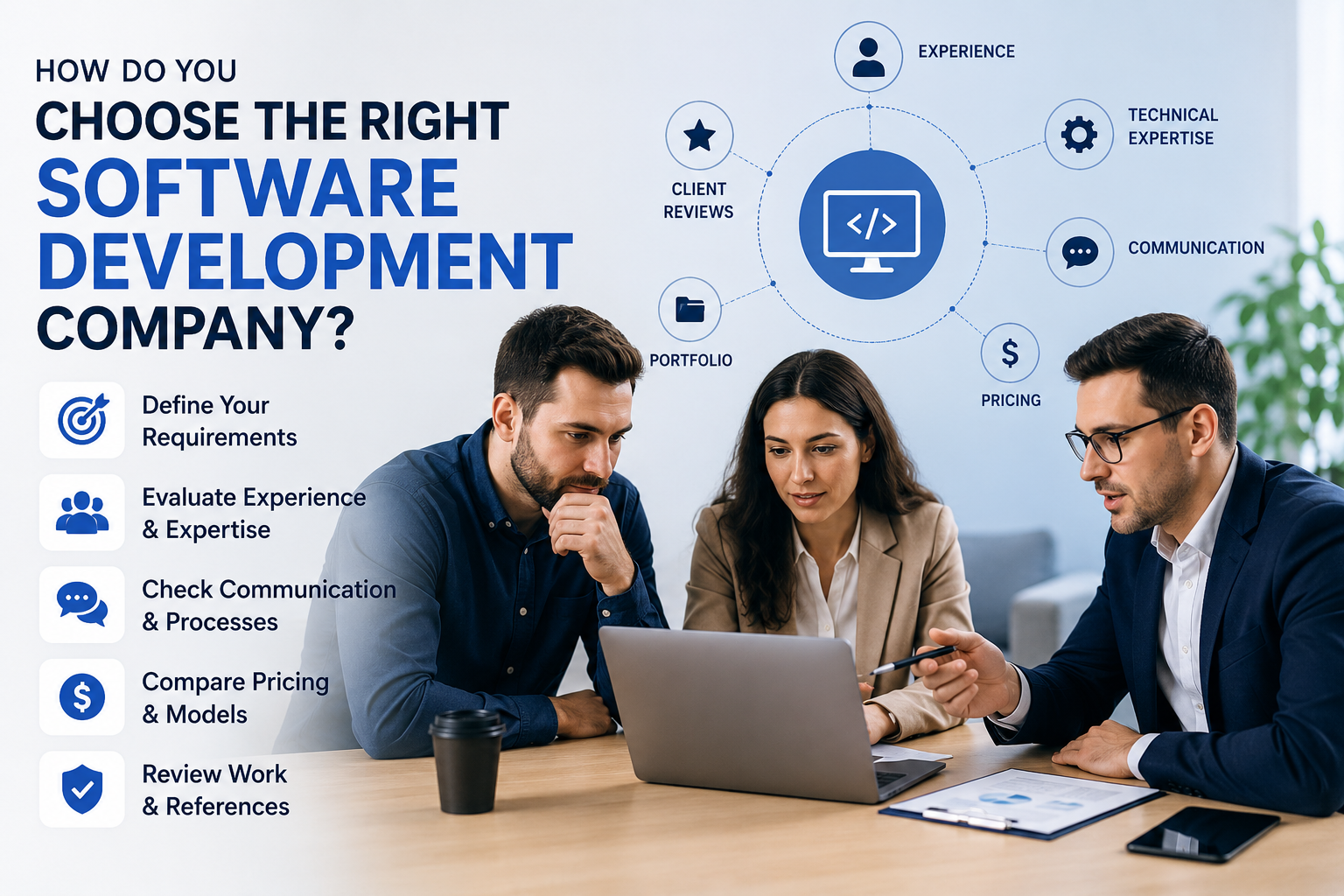
Because blockchain supply chain projects involve custom development, systems integration, and often IoT hardware, choosing the right technology partner matters as much as choosing the right blockchain platform. When evaluating potential partners, look for:
- Prior experience with supply chain or logistics software, not just blockchain in general
- Ability to integrate with your existing ERP, WMS, or inventory systems
- Clear communication about realistic timelines and costs
- Case studies or references relevant to your industry
Businesses researching potential development partners can use a platform like GoFirms to compare software development companies and IT service providers with relevant blockchain or supply chain experience, side by side, before making a decision.
FAQs
What is blockchain in supply chain management? Blockchain in supply chain management is the use of a shared, tamper-resistant digital ledger to record and verify each step a product takes, from sourcing to delivery. It gives all participants access to the same verified data, reducing disputes and improving transparency across the chain.
How does blockchain improve supply chain traceability? Blockchain improves traceability by creating a permanent, shared record of each transaction or movement in the supply chain. Because entries can’t be altered without detection, businesses can verify product origin, condition, and handling history with greater confidence than with traditional siloed systems.
Is blockchain expensive to implement in a supply chain? Costs vary widely based on scale, industry, and integration needs. Smaller pilot projects are more affordable, while enterprise-wide rollouts involving IoT sensors and multiple partners require more investment. It’s best to start with a defined pilot before committing to full-scale implementation.
Can blockchain stop counterfeit products? Blockchain makes it harder for counterfeit products to enter a verified supply chain undetected, since each authentic item is tied to a traceable record. However, it doesn’t physically prevent counterfeiting on its own – it works best alongside proper verification at each handoff point.
Do small businesses need blockchain for their supply chain? Not always. Blockchain tends to deliver the most value for businesses with complex, multi-party supply chains, high fraud or compliance risk, or strict regulatory requirements. Smaller businesses with simpler supply chains may get similar benefits from better data-sharing tools without the added complexity of blockchain.
What industries benefit most from blockchain in supply chain? Food and beverage, pharmaceuticals, luxury goods, electronics, and automotive industries tend to benefit the most, since they face higher risks around contamination, counterfeiting, recalls, and regulatory compliance.
How do I find a company to help build a blockchain supply chain solution? Look for a technology partner with proven experience in blockchain development and supply chain or logistics software specifically. Platforms like GoFirms allow businesses to research and compare software development companies with relevant experience before choosing a partner.
Conclusion
Blockchain in supply chain isn’t a buzzword solution – it’s a practical answer to a very real problem: the difficulty of trusting and verifying data across multiple companies and handoffs. Done well, it improves traceability, speeds up recalls, reduces fraud, and builds trust between supply chain partners. Done poorly, it becomes an expensive project with low adoption.
The businesses that get the most value from blockchain start with a clear problem, pilot on a small scale, and choose technology partners with real supply chain experience – not just blockchain buzzwords. If you’re evaluating vendors for a project like this, comparing software development companies and IT service providers through a platform like GoFirms can help you make a more informed decision before you commit.