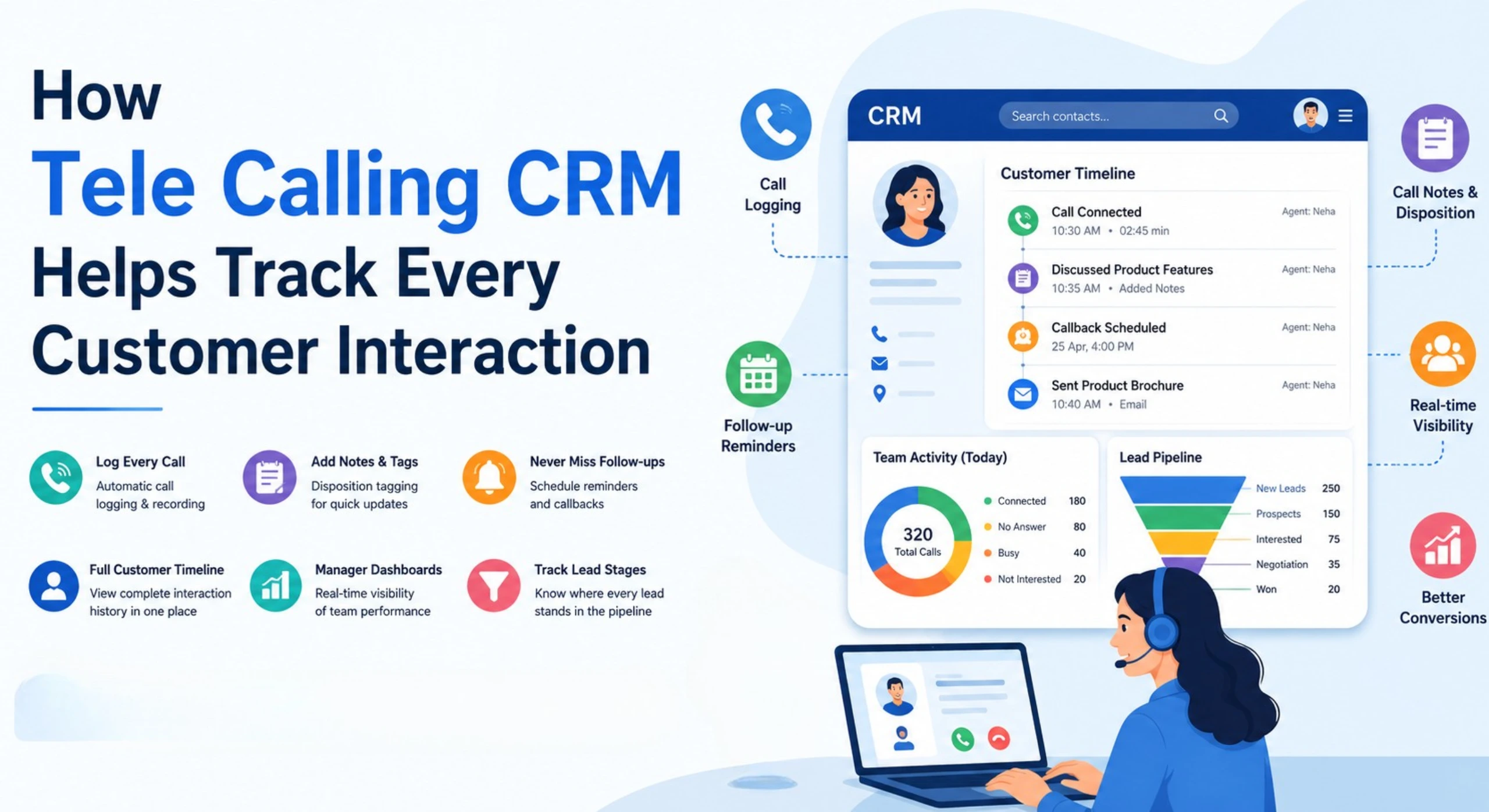
How to Reduce Missed Follow-Ups in Sales Teams
A lead asks a question, shows real interest, maybe even asks about pricing. Then nothing happens for three days. By the time someone remembers to call back, the prospect has already gone with someone else.
It’s one of the most common problems in sales, and one of the least discussed. Most missed follow-ups aren’t a motivation problem. They happen because there’s no dependable system telling agents who to call, when, and why. That’s really what sales follow up management comes down to — replacing memory with a process, often backed by lead follow-up software that tracks callbacks automatically instead of leaving them to chance.
Below, we’ll look at why follow-ups slip through in the first place, what a working follow-up process actually looks like, and how teams in real estate, finance, education and beyond are fixing this without piling on extra manual work.
What Is Sales Follow-Up Management?
At its core, it’s the discipline of tracking every lead that needs a callback, scheduling that callback for the right moment, and making sure it actually happens — not “probably happens.”
That means logging what was said last time, setting a reminder tied to that specific lead, assigning someone to own it, and recording what came of the call. Get this right and no one has to rely on sticky notes or a vague mental list of “people I should call back.”
Why Follow-Ups Get Missed
A few patterns show up again and again.
Leads scattered everywhere. Spreadsheets, WhatsApp threads, a notebook by someone’s desk. When there’s no single answer to “who do I need to call today,” things fall through.
No reminder tied to the lead itself. An agent might genuinely mean to call back tomorrow. But without something nudging them at the right moment, tomorrow quietly becomes next week.
Call volume simply outpaces memory. Someone handling 80 calls a day cannot mentally hold every promised callback. Older ones get buried under whatever feels urgent today.
Nobody clearly owns the lead. When a lead sits in a shared group chat instead of being assigned to one person, everyone assumes someone else has it covered.
Managers can’t see what’s overdue. If there’s no visibility into how many follow-ups are late, the problem stays invisible — until a lead complains, or just stops answering.
Leads arrive from too many places at once. A business running ads across Facebook, Google, and portals like 99acres or MagicBricks often gets leads in different formats from different sources. Without something pulling them into one place, some never even make it onto a call list.
Direct Answer: How to Prevent Missed Follow-Ups
Reducing missed follow-ups usually comes down to three things working together: one lead pipeline instead of several, reminders attached to each individual lead, and clear ownership for every follow-up. Manual tracking can work at small scale, but it tends to break down once call volume grows — which is why most teams eventually move to structured tracking or CRM-based reminders.
Building a Reliable Follow-Up Process
Bring every lead into one place. Whether it comes from a website form, a phone call, WhatsApp, or a property portal, it should land in a single pipeline. This is essentially what lead management software is for — pulling scattered leads into one list rather than leaving them spread across five tools.
Give every lead a named owner. A follow-up with no clear owner is a follow-up that quietly gets skipped. Assigning leads — manually or through automated rules — removes the ambiguity.
End every call with a specific next step. Not “I’ll call again soon,” but an actual date, a time, and a reason. This one habit alone prevents most missed follow-ups.
Let reminders do the remembering. Reminders should live on the lead record, not in someone’s head or personal to-do list. That way, even if an agent is on leave or switches roles, nothing gets lost.
Keep overdue follow-ups visible on their own. A good process surfaces late callbacks immediately, rather than letting them sink to the bottom of a long list. Teams that check overdue follow-ups daily tend to catch problems before a lead goes cold.
Review the numbers, not just the habit. Managers should be able to glance at how many follow-ups are pending, overdue, or done across the whole team. That turns this from a personal habit into something measurable.
A Simple Follow-Up Workflow
| Step | Action | Why It Matters |
|---|---|---|
| 1 | Lead enters the system | One entry point means nothing slips in unnoticed |
| 2 | Lead assigned to an agent | Removes confusion over who’s responsible |
| 3 | Call made, notes logged | Keeps context for the next conversation |
| 4 | Follow-up date set | Turns a vague intention into a scheduled action |
| 5 | Reminder fires on the due date | Takes the burden off memory |
| 6 | Outcome logged | Keeps the pipeline accurate |
| 7 | Manager checks the overdue list | Catches leaks before a lead is lost |
Real-World Examples
Take a real estate buyer who asks to be contacted after visiting a competing project. If there’s no reminder set for that specific date, the agent may simply forget — and lose the deal to whoever calls first.
Or a parent enquiring about school admissions who wants to discuss it with their spouse first. Without a follow-up date on record, the counsellor might only remember once the admission window is already closing.
In insurance and finance, prospects often compare two or three options before committing, so a callback that arrives a few days late can mean losing the business to a competitor who called sooner.
Recruitment has a similar dynamic — a candidate asking for time to consider an offer, and simply accepting elsewhere because no one followed up in time.
These are illustrative scenarios, not accounts of specific customers.
Benefits of Strong Follow-Up Management
- Fewer leads lost purely because of bad timing
- Clearer accountability across the team
- Managers get visibility into what’s actually pending
- A more consistent experience for the customer, since nothing is forgotten
- Easier onboarding for new agents, who inherit organised histories instead of scattered notes
Common Mistakes to Avoid
Relying on memory or a personal notebook instead of a shared system is probably the single biggest one. Close behind it: vague notes like “call again later” with no actual date attached, and no reminder mechanism at all, so everything depends on someone simply recalling it.
Leads without a clear owner cause their own mess — either duplicate calls or, more often, no call at all. And without a manager-level view of what’s overdue, the problem stays hidden until it’s already cost a deal. Treating every lead identically, regardless of interest level or deal size, is another common trap worth avoiding.
How Telecalling CRM Software Can Help
Manual tracking is fine for a handful of leads. It stops working once a team is making dozens or hundreds of calls a day from multiple sources — which is exactly the gap dedicated telecalling software is built to close, since it’s designed around the call-and-follow-up cycle rather than being a general contact list.
A proper telecaller CRM typically helps by:
- Pulling leads from ads, portals and forms into one pipeline automatically
- Scheduling follow-up reminders against each individual lead
- Surfacing overdue callbacks instead of letting them get buried
- Giving managers a live view of what’s pending and what’s done
- Keeping call notes and outcomes attached, so context isn’t lost between calls
Teams using CRM for telecallers that pairs auto-dialing with follow-up scheduling generally spend less time figuring out who to call next and more time actually on the phone. That won’t guarantee more closed deals on its own — but it does remove one of the more common, entirely preventable reasons deals get lost.
Frequently Asked Questions
What is the main cause of missed sales follow-ups?
Usually it’s relying on memory or scattered notes instead of something that schedules and reminds agents about each specific callback — a gap that only widens as call volume grows.
How often should a lead be followed up with?
It depends on the industry and how the last call went. A reasonable rule of thumb is to follow the timeline the lead themselves gave, rather than applying a fixed number of days to every lead regardless of context.
Can spreadsheets be used for follow-up management?
For a very small team with low lead volume, yes, they can work reasonably well. As volume rises, though, spreadsheets get hard to maintain — especially for reminders and overdue tracking — which pushes many teams toward dedicated software.
What’s the difference between a CRM and a telecalling CRM?
A general CRM manages customer relationships broadly. A telecalling CRM is built specifically around outbound calling, dialing, and follow-up scheduling for teams making high call volumes.
Does automation replace good sales habits?
Not really. Automation takes manual tracking off an agent’s plate, but they still need to set clear follow-up dates and communicate well on the call itself. The tool supports the habit — it doesn’t substitute for it.
How can managers cut down on missed follow-ups across a large team?
A shared, real-time view of overdue follow-ups helps far more than checking in with each agent individually. It makes gaps visible the moment they appear, instead of after a lead is already gone.
Conclusion
Missed follow-ups usually aren’t a sign of a weak sales team — they’re a sign of a weak process, one leaning on memory instead of a system. Centralising leads, setting real follow-up dates, and letting reminders do the remembering can prevent most of these losses before they happen.
Once a team is handling more than a handful of leads a day, investing in proper sales calling software that automates scheduling and reminders is often what separates a lead that converts from one that simply goes cold.