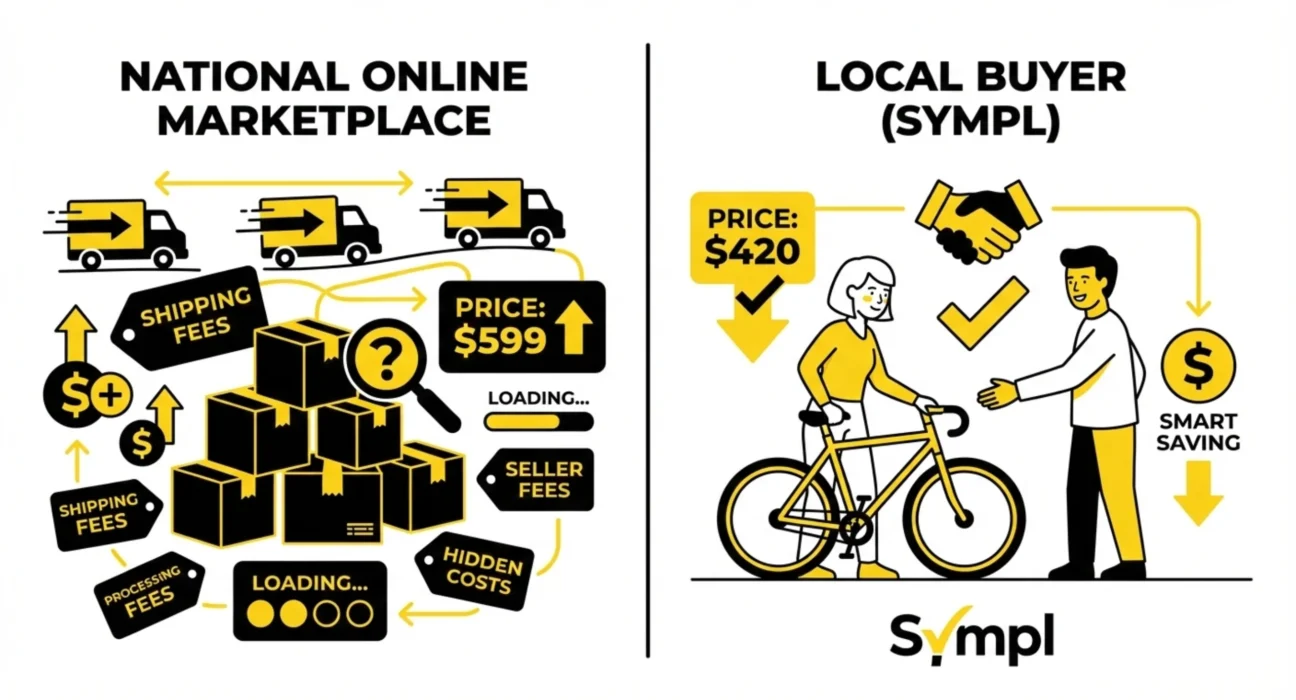
You’re browsing for a used bike online. You find several listings. One catches your eye good condition, reasonable price, located in your city. Then you notice another similar bike listed on a national marketplace. It’s in another state, slightly cheaper, but shipping costs ₹2,000. Add packaging fees and you’re back to the same price, maybe more. You contact the local seller. They’re open to a small negotiation. You arrange to meet, inspect the bike, test ride it, and settle on a fair price lower than what they initially listed. You ride it home the same day. No shipping. No waiting. No hidden costs. Just a straightforward transaction that saves you money and time.
This scenario plays out constantly. Buyers who shop locally consistently get better deals than those searching on crowded national platforms. It’s not luck. It’s how local transactions naturally work. When you buy and sell locally through simple classifieds like Sympl, several factors combine to create genuine cost advantages. Sellers save on logistics, buyers avoid inflated pricing, and direct negotiation leads to fair outcomes for both sides.
Why National Platforms Often Mean Higher Prices
The main issue is that larger marketplaces add layers between buyers and sellers, and each layer costs money.
Shipping and logistics
Heavy items like furniture or appliances cost significant amounts to ship. Even smaller electronics rack up delivery charges. These costs get passed to buyers either directly or built into the asking price.
Platform fees and commissions
Many marketplaces charge sellers listing fees, transaction fees, or take a percentage of the sale. Sellers compensate by pricing items higher.
Packaging requirements
Shipping items safely requires proper packaging materials and time. Sellers factor this effort and expense into their prices.
Less personal accountability
When selling to strangers across the country, some sellers inflate prices hoping someone unfamiliar with local rates will pay. There’s no community reputation at stake.
Competition with commercial sellers
Large platforms mix individual sellers with businesses and dealers. Dealers can afford aggressive pricing on some items while making profits on others. Individual sellers get lost in the noise and may overprice to compensate. These costs and complications don’t exist in local transactions, which is why local buyers consistently find better value.
How Local Transactions Eliminate Extra Costs
When you buy and sell locally, the economics work differently.
No shipping charges
You pick up the item yourself or the seller drops it off if they’re nearby. That alone can save hundreds or thousands of rupees depending on the item.
No packaging costs
Sellers don’t need to invest in boxes, bubble wrap, or packing materials. The item changes hands as-is.
No platform commissions
Simple classifieds typically don’t take a cut of the sale. What the buyer pays goes directly to the seller, allowing for lower overall pricing.
No payment gateway fees
Direct cash transactions or local digital payments avoid the processing fees that online marketplaces charge.
No insurance or shipping protection costs
When items ship across distances, sellers sometimes add insurance. Local transactions don’t need this.
These eliminated costs mean sellers can price lower while still getting fair value, and buyers save money without compromising on quality.
Direct Negotiation Creates Fair Pricing
Local transactions enable face-to-face negotiation, which benefits both parties.
Sellers set realistic expectations
Knowing they’ll meet buyers in person, sellers tend to price more honestly from the start. There’s less room for the inflated pricing common on anonymous platforms.
Buyers can point out issues in person
Seeing the item’s actual condition gives buyers leverage. Minor scratches or missing accessories become grounds for reasonable price reductions.
Both parties understand local market rates
People in the same city generally know what items should cost in their area. This shared knowledge leads to fairer negotiations than when buyers and sellers are in different markets with different pricing norms.
Trust builds through conversation
Meeting face-to-face creates rapport. Sellers are more willing to reduce prices slightly for buyers they feel comfortable with. Buyers are more willing to pay fair prices when they trust the seller.
Immediate closure
When both parties are in front of each other with the item right there, there’s motivation to reach agreement. This often results in mutually beneficial compromises.
Platforms like Sympl facilitate this by keeping things local and straightforward just connecting local buyers and sellers for direct, honest transactions.
Real Examples of Local Price Advantages
Furniture shopping
A sofa listed online for ₹8,000 plus ₹1,500 shipping versus the same quality sofa locally for ₹7,000 with free pickup. The local option saves ₹2,500 and you get it immediately.
Electronics
A laptop listed nationally at ₹25,000 with ₹500 shipping and ₹300 handling fees versus a similar local listing at ₹24,000 that you can inspect and negotiate down to ₹23,000. You save ₹2,800 and confirm it works before paying.
Bikes and scooters
Transportation costs for vehicles can be several thousand rupees. Buying locally eliminates this entirely. Plus, local test rides are easy to arrange.
Kitchen appliances
A mixer grinder at ₹2,500 locally versus ₹2,800 online after shipping. Small difference per item, but it adds up when furnishing a kitchen.
Books and study materials
Buying textbooks from local students at semester end means paying less than half the retail price with no shipping wait times. In each case, the local option provides better value through eliminated costs and direct negotiation.
Sellers Benefit From Local Sales Too
This isn’t just about buyer advantages. Sellers also prefer local transactions, which creates a win-win dynamic.
Faster sales
Items listed locally often sell quicker because buyers can inspect immediately and take the item home the same day.
No shipping hassles
Sellers avoid the time and effort of packing items, arranging courier pickup, and dealing with potential shipping damage claims.
No returns to manage
When buyers inspect before purchasing, they rarely want to return items. This saves sellers the headache of managing returns and refunds.
Keep full sale amount
Without platform commissions or payment processing fees, sellers receive the entire agreed price.
Less risk
No worries about items getting damaged in transit or buyers claiming they received something different than advertised. Because selling locally is easier and more profitable for sellers, they’re often willing to accept slightly lower prices than they would demand on platforms with higher overhead. This flexibility translates to better deals for buyers.
Time Savings Equal Money Savings
Local transactions save time, which has real financial value.
Immediate availability
Need a desk for work starting Monday? Buy locally on Saturday and set it up Sunday. No waiting for shipping.
No delivery uncertainty
You’re not waiting around all day for a courier or rearranging your schedule for delivery windows.
Instant problem resolution
If there’s any misunderstanding about the item, you can address it face-to-face immediately rather than through long email or chat exchanges.
Quick inspection and decision
See the item, decide on the spot, complete the transaction. This efficiency is especially valuable for busy professionals and families. For students on tight schedules, families managing multiple responsibilities, and working professionals with limited free time, these time savings matter as much as money saved.
Community Pricing Reflects Real Value
Local markets naturally regulate themselves toward fair pricing.
Sellers know overpriced items won’t sell
If something sits unsold for weeks in a local market, sellers adjust prices. This feedback loop keeps pricing realistic.
Buyers know the going rates
People in the same city see similar items regularly and understand local market values. This knowledge prevents both underpaying and overpaying.
Reputation matters locally
Sellers who price fairly build good reputations. Word spreads in communities. This encourages honest pricing.
Seasonal and demand patterns are visible
Local markets respond quickly to supply and demand changes. After college admissions, bike prices adjust. At semester end, textbook prices drop. Local buyers benefit from this responsiveness. When you buy and sell locally, you’re participating in a market with natural checks and balances that favor fair pricing over inflated costs.
Hidden Costs You Avoid With Local Buying
Beyond obvious savings, local transactions eliminate several hidden expenses.
No “handling charges”
Online platforms sometimes add vague handling or processing fees at checkout. Local transactions are straightforward.
No minimum order requirements
Some platforms offer free shipping only above certain amounts. Buying locally means no pressure to spend more than you need.
No last-mile delivery fees
Urban delivery sometimes includes extra charges for specific areas or difficult access locations. You avoid these entirely.
No failed delivery costs
If you miss a delivery and it gets returned, some platforms charge for redelivery. Local pickup prevents this.
No packaging disposal
Minor, but you don’t deal with disposing of large boxes and packaging materials after delivery. These small costs add up, especially for people making multiple purchases over time.
Low-Cost Buying Through Local Networks
The concept of low-cost buying works best in local markets because of reduced friction and overhead.
Direct transactions mean lower costs
Removing intermediaries naturally reduces prices. What you save on platform fees, shipping, and packaging stays in your pocket.
Flexibility in payment
Cash, local digital payments, even partial payments arranged through direct conversation. This flexibility can lead to better deals.
Ability to bundle purchases
Buying multiple items from the same seller? Easier to negotiate a package deal when meeting in person.
Access to urgent sellers
People moving cities or needing quick cash are more likely to accept reasonable offers. Local classifieds make it easier to find these time-sensitive opportunities.
This is why students, families on budgets, and anyone practicing mindful spending gravitate toward local buying it consistently delivers better value.
Who Benefits Most From Local Price Advantages
Students
Every rupee counts on student budgets. Saving on textbooks, furniture, and electronics through local buying means money available for other needs.
Young professionals setting up homes
Furnishing a first apartment locally can save tens of thousands compared to buying everything new or through national platforms.
Families with growing children
Kids constantly need new things as they grow. Buying toys, clothes, and equipment locally and reselling when done creates a cost-efficient cycle.
Senior citizens
For those on fixed incomes, local buying offers affordability and the comfort of dealing face-to-face with people in their community.
Anyone relocating
Moving cities means both selling locally (to avoid shipping costs) and buying locally in the new place (for immediate availability at better prices).
First-time buyers
People new to buying used items appreciate the transparency and value of local transactions.
Sympl Classifieds vs. Complex Marketplaces
Complicated platforms create unnecessary complexity that ultimately costs buyers money.
Algorithm-driven listings
Large marketplaces prioritize paid promotions, pushing organic listings down. This means seeing more expensive options first.
Too many sellers to compare
Hundreds of listings make price comparison exhausting. Local classifieds keep options manageable and relevant.
Difficult to judge seller credibility
On national platforms, you’re dealing with complete strangers. Locally, you can ask around or recognize neighborhoods, building more trust.
Complex return and refund policies
When things go wrong on big platforms, resolution takes time and effort. Local transactions resolve issues through direct conversation. When you buy and sell locally through straightforward platforms like Sympl, you avoid these complications. The focus stays on connecting nearby people for direct, fair transactions.
Building Local Buying Habits
Once you experience the price advantages of local buying, it becomes a natural first option. Before shopping online, you check what’s available locally. Often, you find better deals without the wait or added costs.You start recognizing good sellers in your area. Some people consistently price fairly and maintain items well. Repeat transactions become easier. You also begin selling items locally when you no longer need them, completing the cycle. Buy used, use well, sell when done. Very little value is lost in this process.
This shift in approach from defaulting to retail or online to checking local options first saves substantial money over time while maintaining quality of life.Local buyers consistently get better prices not through bargaining tricks or taking advantage of sellers, but because the structure of local transactions naturally eliminates costs that burden larger marketplaces.No shipping. No platform fees. No packaging. Direct negotiation. Immediate inspection. Community accountability.
These factors combine to create genuine value for buyers while still giving sellers fair returns and easier sales processes. When you buy and sell locally through platforms like Sympl, you’re participating in an economic model that works efficiently because it’s straightforward. Connect nearby people who have what others need, let them communicate directly, and fair pricing emerges naturally. The next time you need something, start with local options. The price advantage you’ll find isn’t a discount or a special deal, it’s just how local buying naturally works when unnecessary costs are removed from the equation.