Introduction: From Newspapers and Television to Smartphones
The way people consume news has changed dramatically over the last decade. For many Telugu-speaking households, newspapers were once the primary source of daily information, while television news channels dominated breaking news coverage. Morning routines often began with reading a newspaper, and evening discussions revolved around television headlines.
Today, smartphones have transformed that experience. News is no longer limited to a printed page or a scheduled television bulletin. Telugu audiences can now access updates anytime and anywhere through mobile devices. Whether it is politics, local events, business developments, sports, entertainment, or weather updates, information is available instantly with just a few taps.
This shift is not simply a change in technology. It represents a fundamental transformation in how people discover, consume, share, and engage with news. As digital platforms continue to evolve, Telugu audiences are becoming increasingly connected to real-time information in ways that were unimaginable just a few years ago.
The Growth of Mobile-First News Consumption
Smartphones have become the primary gateway to news for millions of people. The widespread availability of affordable mobile devices and low-cost internet plans has made digital news accessible to a broader audience across urban and rural regions.
Unlike traditional media, mobile news consumption fits seamlessly into daily life. People can check headlines during a commute, browse updates during breaks, or watch live coverage from virtually any location. News is no longer tied to a specific time of day.
Mobile-first behavior has also influenced how news is produced. Publishers now design content specifically for smartphone screens, prioritizing fast-loading pages, concise headlines, visual storytelling, and user-friendly navigation. Readers increasingly expect information to be available instantly and in formats that are easy to consume on smaller screens.
This shift has encouraged news organizations to invest heavily in digital platforms that deliver content quickly and efficiently to mobile users.
Why Telugu-Language Digital Content Matters
Language plays a critical role in news consumption. While English-language media remains influential, many Telugu speakers prefer receiving information in their native language because it feels more relatable, accessible, and culturally relevant.
The growth of Telugu-language digital content has expanded opportunities for readers across different age groups and educational backgrounds. News platforms can now reach audiences who may have previously faced language barriers when accessing information online.
Regional-language interfaces, Telugu keyboards, improved fonts, and better support for Indian languages have made digital experiences more comfortable for native speakers. As a result, readers spend more time engaging with content that reflects local issues, community concerns, and regional perspectives.
The demand for Telugu content also highlights the importance of preserving linguistic identity in an increasingly digital world. Technology is enabling news organizations to serve audiences without requiring them to switch to another language for information.
The Role of Social Media in News Discovery
Social media has become one of the most influential channels for news distribution. Platforms such as Facebook, Instagram, X, and YouTube allow users to discover stories as they happen and share them instantly with friends, family, and communities.
For Telugu audiences, social media often serves as the first point of contact with breaking news. A major event, political development, weather alert, or local incident can spread rapidly through posts, videos, and community groups.
The interactive nature of social media has also changed audience behavior. Readers are no longer passive consumers of information. They can comment on stories, participate in discussions, and contribute eyewitness accounts from their own locations.
At the same time, the speed of social media highlights the importance of responsible journalism. While information travels faster than ever, audiences increasingly rely on trusted news sources to verify facts and provide accurate context. Research on digital news ecosystems has shown that social platforms and traditional media are becoming increasingly interconnected in shaping public discussions.
Short-Form Video Is Reshaping News Consumption
One of the most significant trends in digital media is the rise of short-form video content. Audiences increasingly prefer visual formats that deliver information quickly and clearly.
Short videos can summarize complex stories in a matter of seconds while combining text, graphics, narration, and footage. This format appeals particularly to younger audiences who consume large amounts of content through mobile devices.
News organizations are adapting by producing video explainers, breaking-news clips, district updates, and visual summaries optimized for mobile viewing. These formats help audiences stay informed without requiring long reading sessions.
The popularity of short-form video also reflects changing attention patterns. Users often want quick updates before deciding whether to explore a story in greater depth. As a result, video has become a powerful entry point into broader news coverage.
How Telugu Digital News Platforms Are Adapting
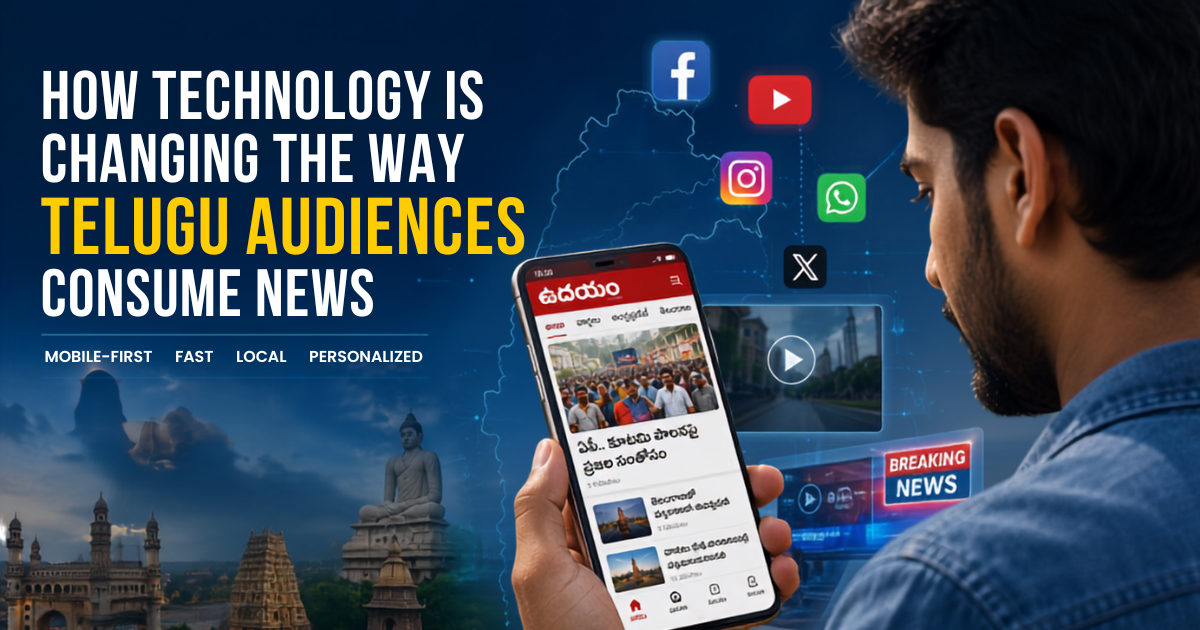
To meet the expectations of modern audiences, Telugu news platforms are increasingly embracing mobile-first strategies. Features such as responsive websites, dedicated news apps, real-time updates, personalized feeds, and instant notifications help readers stay informed throughout the day.
Platforms such as Udayam are part of a broader shift toward digital-first publishing, where content is designed for smartphone users who expect quick access to local, regional, and breaking news. Rather than relying solely on traditional formats, many Telugu news organizations now focus on delivering information through multiple digital channels that match changing audience habits.
The Growing Demand for Local and District-Level News
Technology has made it easier than ever to access hyperlocal information. In the past, local stories often received limited coverage because of space constraints in newspapers or time limitations on television broadcasts.
Digital platforms have changed that model. Readers can now follow updates from specific districts, towns, villages, and neighborhoods through dedicated sections and location-based news feeds.
For Telugu audiences, district-level news often holds greater relevance than national headlines because it directly affects daily life. Information about local governance, infrastructure projects, education, agriculture, weather conditions, employment opportunities, and community events attracts significant interest.
By expanding local coverage, digital platforms are helping communities stay informed about developments that matter most to them.
Speed, Accessibility, and Credibility in the Digital Era
Technology has increased expectations for speed. Audiences now expect breaking news updates within minutes rather than hours.
Push notifications have become a key part of this experience. Important alerts appear directly on mobile screens, allowing users to stay informed without actively searching for information. Live blogs, instant updates, and real-time reporting further enhance accessibility.
However, speed alone is not enough. Credibility remains one of the most important factors in modern journalism. As information circulates rapidly across social media and messaging platforms, audiences need reliable sources that verify facts before publication.
Trust is built through accuracy, transparency, and consistent reporting standards. News organizations that balance speed with credibility are more likely to maintain long-term audience loyalty.
Voice Search and Regional-Language Interfaces
Voice technology is creating new opportunities for news consumption. Many users now search for information by speaking into their smartphones rather than typing queries.
For Telugu speakers, voice search offers a convenient way to access news in their preferred language. Improvements in speech recognition and language processing have made it easier for users to find relevant content using natural conversations.
Regional-language interfaces further improve accessibility. Larger fonts, Telugu navigation menus, audio content, and voice-assisted experiences make digital news more inclusive for diverse audiences, including older readers who may be less comfortable with traditional digital interfaces.
As voice technologies continue to improve, they are likely to play a larger role in how Telugu audiences discover and consume information.
Future Trends: AI, Personalization, Voice Interfaces, and 5G
The next phase of digital news consumption will be shaped by emerging technologies.
Artificial intelligence is already helping publishers recommend relevant stories, organize content, and improve user experiences. Personalized news feeds can help readers discover topics aligned with their interests while reducing information overload.
Voice interfaces will continue to evolve, making hands-free news consumption more common. Users may increasingly receive news updates through smart speakers, connected devices, and voice assistants.
The expansion of 5G networks will further enhance digital experiences by enabling faster video streaming, smoother live broadcasts, and richer multimedia storytelling. News organizations will be able to deliver more immersive content without sacrificing speed or accessibility.
As these technologies mature, the relationship between audiences and news platforms will become even more personalized and interactive.
Conclusion
Technology has fundamentally transformed how Telugu audiences consume news. Smartphones, affordable internet access, social media, short-form video, push notifications, voice search, and regional-language interfaces have made information more accessible than ever before.
The shift from newspapers and television to mobile-first experiences reflects broader changes in audience expectations. Readers now want news that is fast, relevant, personalized, and available in their preferred language.
At the same time, the growing importance of credibility reminds us that technology is only a tool. The real value of journalism lies in delivering accurate, meaningful, and trustworthy information.
As innovations such as AI, voice technology, and 5G continue to develop, Telugu news consumption will keep evolving. What remains constant is the audience’s need for reliable information that helps them understand the world around them and stay connected to their communities.