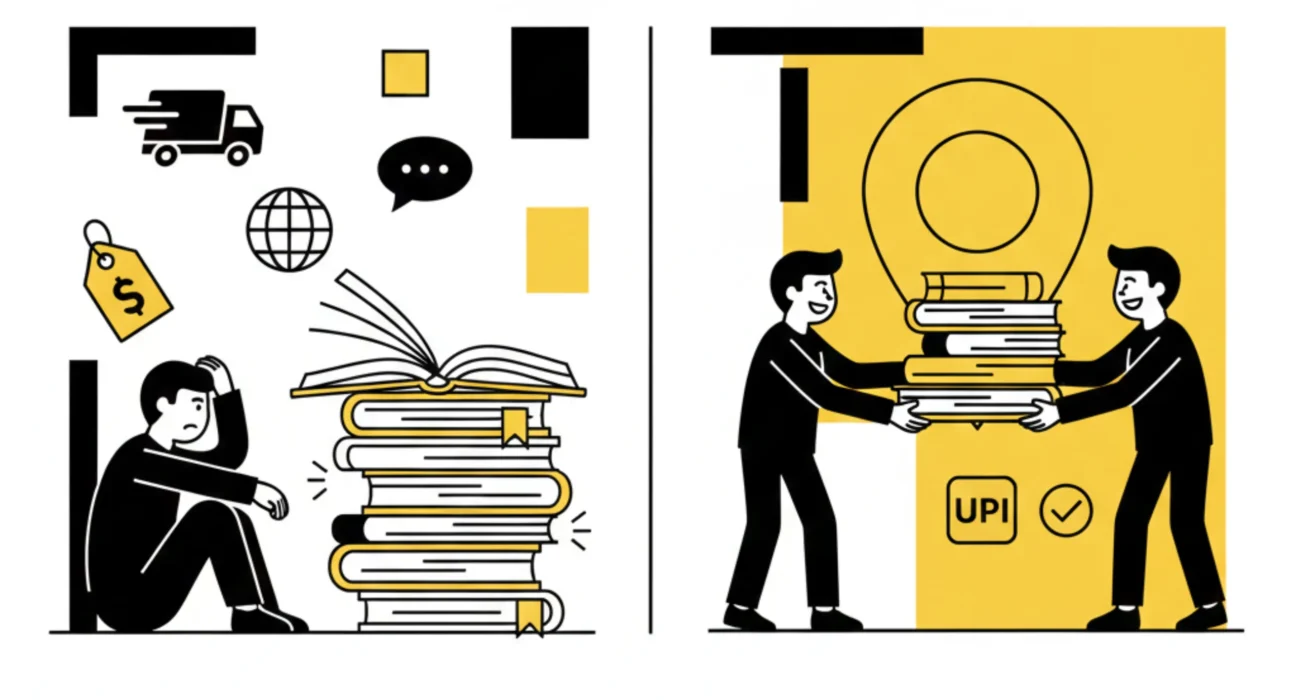
The semester just ended. Your shelf is stacked with textbooks you’ll never open again engineering references, medical guides, commerce books that cost thousands when new. They served their purpose, but now they’re just taking up space. You know other students will need these exact books next semester. They’d happily buy them at reasonable prices instead of paying full retail. But somehow connecting with them feels harder than it should. You try listing on a large marketplace. Your posts get lost among thousands of book listings from across the country. Shipping costs eat into already modest prices. Buyers ask if you’ll courier books to other cities, which means packaging hassle and delivery risks. Meanwhile, students in your own college or neighborhood are searching for the same books right now, willing to pick them up today.
This disconnect is frustrating but fixable. When you buy and sell locally through simple classifieds like Sympl, connecting with nearby buyers becomes straightforward. Students sell to students, readers find readers, and transactions happen quickly without shipping complications or platform fees.
Why Selling Books Takes Longer Than Expected
The main challenge is that books are location-specific items that work best through local exchange.
Low individual value makes shipping impractical
A textbook might sell for ₹300-500. Adding ₹100-150 for shipping makes it less attractive to buyers who can find similar books locally.
Books are heavy for their value
Shipping costs are based on weight. A stack of five textbooks becomes expensive to courier, reducing your profit and the buyer’s savings.
Condition matters but is hard to convey online
Photos don’t always show page yellowing, slight tears, or how much highlighting exists. Buyers prefer to flip through books before buying.
Timing is critical
Students need specific books at specific times semester starts, exam preparation periods. If your listing isn’t visible at the right moment, you miss buyers.
Edition and syllabus changes
Textbooks become less valuable when new editions are released or syllabi change. Selling locally to people in the same institution ensures relevance.
Competition from very cheap listings
Online marketplaces have books priced at ₹50-100 from bulk sellers or dealers. Individual sellers can’t compete on price alone without selling locally.
These factors make local selling the most practical option for books and study materials.
Preparing Books for Quick Sales
Before listing, spend a few minutes making books buyer-ready.
Clean and organize them
Dust off covers, remove sticky notes, take out any loose papers. Present books in the best possible condition.
Check for damage honestly
Note torn pages, water damage, heavy highlighting, or missing sections. You’ll need to mention these in your listing.
Verify edition and publication year
Buyers need to know they’re getting the right edition for their syllabus.
Gather related materials
If you have solution manuals, practice papers, or supplementary guides that go with the textbook, bundle them together.
Remove very personal markings if possible
Erase pencil notes if they’re distracting. Light highlighting is usually acceptable, but excessive scribbling reduces value.
Separate books by category or course
If selling multiple books, organize them logically first-year engineering, second-year commerce, competitive exam prep, etc.
Research current market prices
Check what similar books in similar condition sell for locally. This prevents overpricing or undervaluing.
Well-prepared books sell faster because buyers can see you’ve taken care of them.
Creating Effective Book Listings
Your listing determines whether serious buyers respond.
Write specific, searchable titles
“Engineering Mathematics by B.S. Grewal 43rd Edition” is better than “Maths book for sale.”
Include complete details
Author, edition, publication year, publisher, ISBN if available. Students often search for exact editions.
Describe condition accurately
“Good condition, minimal highlighting in 3 chapters, all pages intact” sets clear expectations.
Mention if it’s the latest edition
This matters significantly for textbooks where syllabi reference specific editions.
State your course or institution if relevant
“Used for Mumbai University B.Com Semester 3” helps buyers confirm it matches their needs.
List any extras included
Solution manual, practice CDs, supplementary booklets mention everything that comes with it.
Price realistically
Books typically sell for 30-50% of the original price, depending on condition and demand. Price competitively for your local market.
Specify pickup location generally
“Available for pickup in Andheri” or “Near Delhi University North Campus” helps buyers know if it’s convenient.
Detailed listings reduce unnecessary questions and attract buyers who actually need what you’re selling.
Taking Photos That Show Book Condition
Good photos help buyers assess conditions before asking questions.
Photograph the cover clearly
Front and back covers in good light. This confirms the edition and condition.
Show the publication details page
The page with ISBN, edition, and publication year verifies the book’s specifics.
Include a photo of a typical inside page
This shows the level of highlighting or notes, if any.
Capture any damage honestly
Torn pages, water stains, or excessive wear should be visible in photos.
For multiple books, show them together
A neat stack or spread shows quantity and makes bundling attractive.
Photograph book spines if selling many
This lets buyers see all titles at once, making it easier to identify what they need.
Use natural lighting
Bright, natural light shows true condition better than dim or artificial lighting.
Clear photos build trust and reduce the chance of disappointed buyers after meeting.
Pricing Books for Fast Sales
Books depreciate quickly, so realistic pricing is essential.
Consider original price and condition
A ₹800 textbook in excellent condition might sell for ₹400-500. Heavy highlighting or damage drops it to ₹250-350.
Account for edition relevance
Latest editions command higher prices. Older editions sell only if still used in current syllabi.
Bundle related books for better value
Selling an entire semester’s books together attracts buyers and moves stock faster.
Check local competition
If five people are selling the same book in your area, price competitively or highlight better conditions.
Price slightly higher if you’re flexible
Leave small room for negotiation. Many buyers expect to negotiate, especially students on tight budgets.
Don’t overprice hoping someone will pay
Books sitting unsold for months lose value as new editions approach. Price to sell within weeks, not months.
Offer small discounts for bulk buyers
If someone wants three or four books, a bundle discount encourages them to buy more.
When you buy and sell locally, competitive pricing matters because buyers can easily compare options from multiple sellers in the area.
Finding Buyers in Your Community
Books sell fastest when marketed to the right audience.
Target students in your institution
If you studied at a specific college, advertise to current students there through college groups or notice boards (if permitted).
Sell at the right time
List books at semester start when students are buying. Competitive exam books sell best 2-3 months before exam dates.
Use local college or university groups
Many institutions have WhatsApp groups, Facebook groups, or online communities where students buy and sell materials.
Mention your course and year
“Selling all MBA first-year books” immediately tells the right audience this is relevant to them.
Respond quickly to inquiries
Students often need books urgently. Fast responses increase chances of completing sales.
Be flexible with meeting times
Students have class schedules. Offering evening or weekend meetups increases buyer convenience.
Local selling works because you’re connecting with people who need exactly what you have, right when they need it.
Arranging Convenient Meetups for Book Sales
Books are easy to exchange, so meetings can be simple and quick.
Suggest campus or college-area locations
Near libraries, cafeterias, or main gates. Familiar, safe, convenient for student buyers.
Coffee shops or food courts work well
Public, comfortable spaces where buyers can quickly flip through books.
Metro stations or bus stops
If both parties use public transport, meeting at a transit point is convenient.
Be clear about what you’re bringing
If selling multiple books, confirm which ones the buyer wants so you bring the right stack.
Bring books in a bag or organized
Don’t fumble with loose books. Keep them neat and easy to hand over.
Give buyers time to examine books
Let them flip through pages, check for damage, verify it’s the right edition. This prevents disputes after sale.
Be ready to negotiate slightly
If a buyer points out damage you didn’t mention or wants multiple books, small price flexibility helps close deals.
Quick, easy meetups are one of the advantages of selling books locally. No packaging, no shipping, just hand over and receive payment.
Handling Payment for Book Sales
Books are usually low-value transactions, making payment simple.
Cash is most common
For ₹200-500 sales, cash is quick and final. No payment app delays or failed transactions.
Digital payments work well too
UPI transfers are instant and create a record. Both parties can verify payment immediately.
Get the right amount
If your price is ₹450, having change or asking buyers to bring the correct amount speeds things up.
For bulk sales, verify larger amounts carefully
If selling many books for ₹2,000-3,000, count cash or confirm digital payment before handing everything over.
Offer simple receipts for institutional buyers
Some students claim reimbursement from scholarships or education loans. A basic receipt with your signature helps them.
Payment for books is usually straightforward, especially with local, in-person transactions.
Bundling Books for Better Sales
Selling books in sets often works better than individual sales.
Group by semester or year
“Complete first-year engineering books” appeals to incoming students who need everything.
Bundle subject-related materials
All accountancy books together, all physics references together. Buyers studying that subject need all of them anyway.
Include practice materials with textbooks
A textbook plus solution manual plus practice papers creates a complete package worth more than individual items.
Offer small discounts on bundles
If individual books total ₹1,500, offering the bundle for ₹1,200 incentivizes buying everything at once.
Mention the bundle advantage in listings
“Save ₹400 by buying all three together” makes the value clear.
Be willing to split bundles if needed
Some buyers only want one or two books from a bundle. Be flexible to make sales.
Bundling helps you sell items fast by offering convenience and value to buyers.
How Local Selling Benefits Book Transactions
When you buy and sell locally through classifieds, book sales become much simpler.
Buyers can inspect before buying
They flip through pages, check highlighting, verify edition removing all uncertainty about condition.
No shipping complexity
Books are heavy and shipping costs hurt both buyer savings and seller profits. Local pickup eliminates this.
Immediate exchange
Meet, show books, receive payment, hand them over. Transaction completes in minutes.
Connect with people who actually need your books
Local selling focuses on nearby students and readers who can use the books right away.
Build trust through direct interaction
Face-to-face transactions create accountability. Both parties are more honest and straightforward.
Platforms like Sympl support this by focusing on local connections, making it easy for local buyers and sellers to find each other without complicated systems or national shipping.
Selling Competitive Exam Materials
Books for competitive exams have specific considerations.
Timing is crucial
Sell materials 2-4 months before major exam dates (JEE, NEET, UPSC, banking exams) when aspirants are actively preparing.
Highlight exam year and relevance
“UPSC 2024 materials, syllabus still current” assures buyers the content is up-to-date.
Bundle previous year papers
These are highly valuable to exam aspirants. Include them to make your listing more attractive.
Mention condition of answer keys
If solution books are included and unmarked, that’s a strong selling point.
Price considering coaching center costs
Students know these materials cost thousands at coaching centers. Pricing at 40-50% of original price is attractive.
Target local coaching hub areas
Areas near popular coaching centers (Kota, Mukherjee Nagar, T. Nagar) have concentrated demand.
Exam materials sell well locally because aspirants actively search for affordable alternatives to expensive coaching packages.
Cost and Time Benefits of Selling Books Locally
Local book sales save hassle and often yield better returns than online alternatives.
No shipping costs to pay or calculate
You don’t lose ₹100-150 per transaction to courier charges.
No packaging materials needed
Books are handed over as-is. No boxes, bubble wrap, or tape required.
Faster transactions
List today, meet tomorrow, money in hand. No waiting for shipping or payment processing.
No platform commissions
Simple classifieds don’t take cuts from your sales. You keep the full amount.
Less time dealing with distant buyers
Local focus means talking to people who can actually complete the purchase, not those who ask about shipping to far-off cities.
Ability to sell multiple books quickly
Meeting one buyer who wants several books is more efficient than separate transactions for each book.
These advantages make local selling the practical choice for books and study materials.
Who Benefits Most From Selling Books Locally
Students between semesters
Selling last semester’s books and buying next semester’s books creates a cost-efficient cycle.
Graduates clearing out college materials
After finishing degrees, selling all accumulated textbooks locally clears space and recovers some costs.
Competitive exam aspirants after clearing exams
Materials that helped them succeed can help the next batch of aspirants.
Parents of school children
When kids move to higher classes, selling old textbooks to younger students makes sense.
Book lovers upgrading collections
Readers who constantly buy new books sell older ones locally to make room and fund new purchases.
Anyone relocating
Moving cities with heavy books is impractical. Selling locally before moving is easier.
Why Simple Classifieds Work for Books
Crowded marketplaces make book selling harder than necessary.
Too many dealer listings
Large platforms are dominated by bulk book sellers. Individual sellers get buried in search results.
National reach doesn’t help
Showing your Mumbai University textbook to someone in Bangalore serves no purpose. They can’t use it.
Shipping expectations complicate things
Platforms built for shipping create unnecessary complications for simple local book exchanges.
Generic categorization
Books get lumped together without institution-specific or course-specific filters that local buyers need. When you buy and sell locally through straightforward platforms like Sympl, the focus stays on connecting nearby people who share the same educational ecosystem or reading interests. Selling books and study material locally is one of the simplest, most practical secondhand transactions you can make.
Clean your books, photograph them honestly, price them fairly, and connect with students or readers in your area. Meet in convenient public places, let buyers inspect everything, and complete quick exchanges. When you sell items fast through local classifieds, you avoid shipping hassles, platform fees, and complicated logistics. You simply connect with people nearby who need what you have. Books circulate naturally through local communities, students passing materials to the next batch, readers sharing favorites with fellow book lovers, exam aspirants helping future candidates. Local selling makes this natural circulation happen efficiently. Price fairly, communicate clearly, and trust that in any educational community or neighborhood, someone needs exactly the books you’re selling. Connect with them directly, and both parties benefit from a simple, practical transaction.