Every large enterprise runs on tickets. Service requests, incident reports, change approvals, access provisioning, and infrastructure alerts. These aren’t administrative details. They represent how work actually moves through your organization.
At a small scale, ticketing systems are straightforward. Install a platform, configure some workflows, and train the team. The system works because the volume is manageable and the processes are simple. But at enterprise scale, with thousands of employees, multiple business units, legacy integrations, and complex approval chains, the same approach breaks down quickly.
The challenge isn’t finding a ticketing platform. The challenge is making it work reliably across a complicated environment while maintaining control, visibility, and speed.
What Enterprise Ticketing Systems Actually Do
A ticketing system creates structure around requests and incidents. Someone needs something, they create a ticket, the system routes it to the right team, work gets done, and the ticket closes. That basic flow exists in every implementation.
What changes at enterprise scale is everything around that flow. You’re not managing one queue. You’re managing dozens of teams, each with different tools, different priorities, and different service level agreements. You have regulatory requirements that demand audit trails. You have executives who need real-time visibility into service delivery. You have procurement workflows that cross multiple departments and require formal approvals.
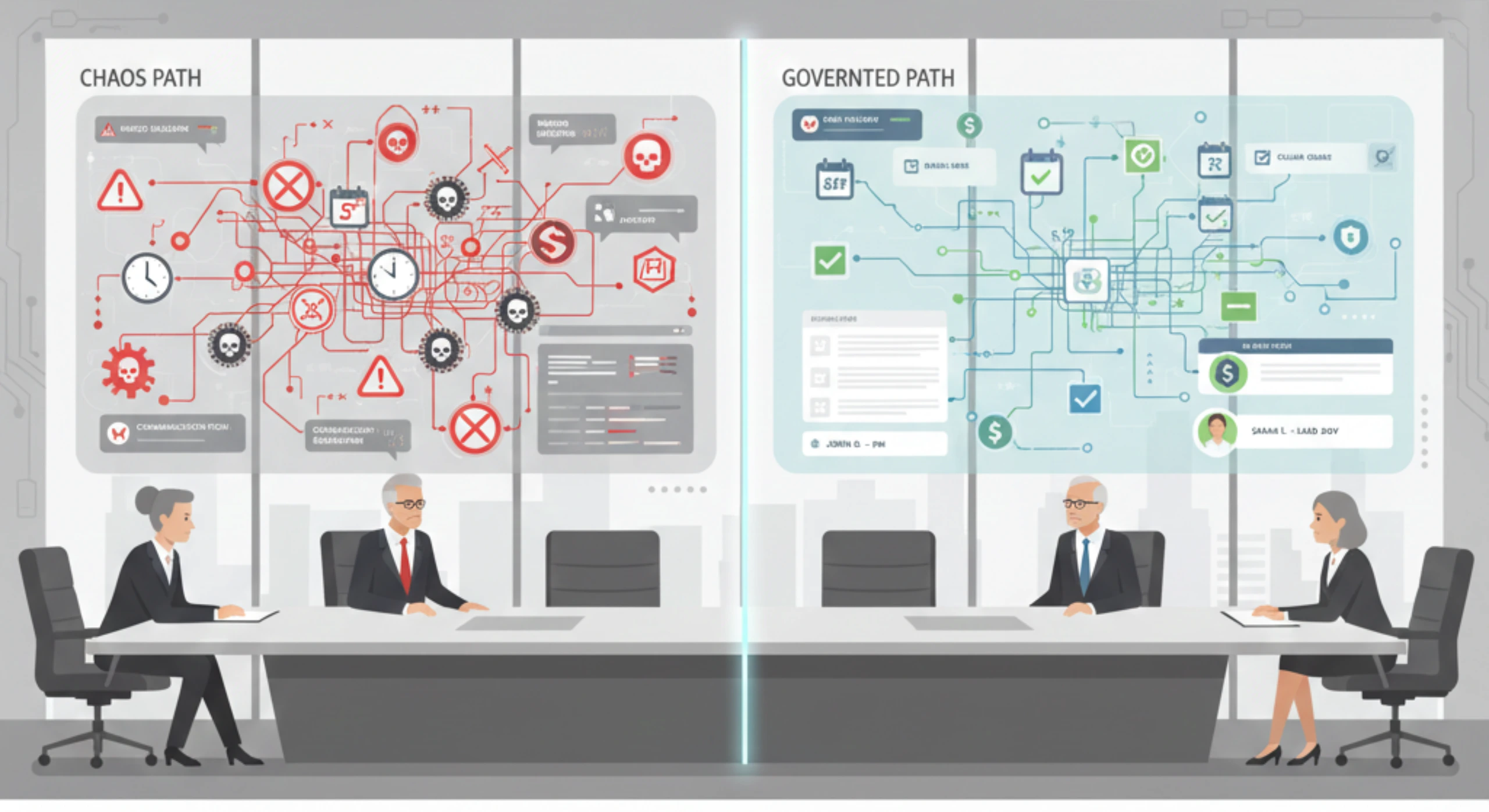
The system needs to handle all of this without becoming a bottleneck. It needs to enforce governance without slowing everything down. That balance is where most implementations struggle.
The Features That Actually Matter
Basic ticketing features are table stakes. Ticket creation, assignment, status tracking, and search functionality. Every platform has these. What separates a working enterprise system from one that frustrates everyone is how it handles complexity.
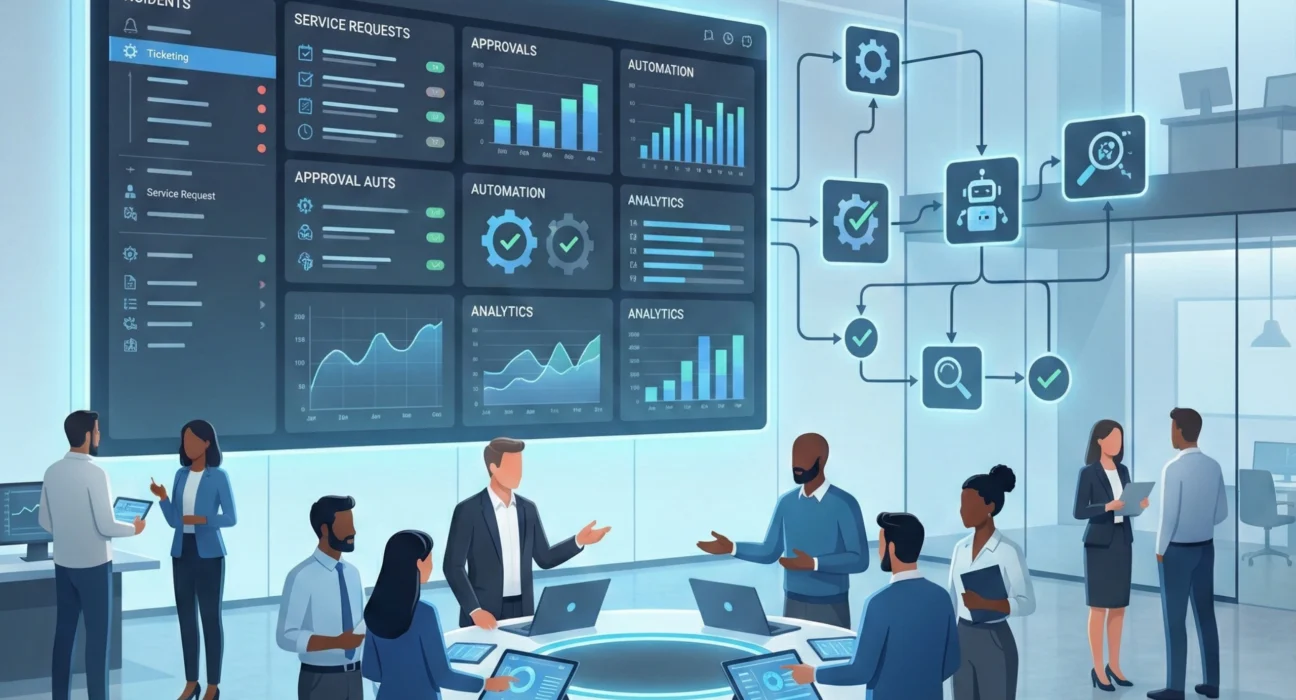
Workflow automation is critical. Not because automation is trendy, but because manual routing doesn’t scale. When a ticket arrives, the system should know where it goes based on clear rules. Service type, priority level, requesting department, and affected systems. The routing happens automatically, correctly, every time. This isn’t about eliminating human judgment. It’s about eliminating manual triage for routine requests so your teams can focus on work that actually requires expertise.
Integration capability matters more than most organizations initially realize. Your ticketing system doesn’t operate in isolation. It needs to connect with your CMDB, your monitoring tools, your identity management platform, and your change management system. When an incident ticket is created, the system should automatically pull configuration data from the CMDB, check for related alerts in your monitoring platform, and identify which teams own the affected services. Without proper integration, your staff spends half their time gathering context instead of solving problems.
Reporting and analytics sound generic until you’ve dealt with poor visibility. Leadership needs accurate data on service performance, team utilization, resolution times, and recurring issues. Finance needs cost allocation data. Compliance needs audit trails. The system should produce this information without requiring someone to manually compile reports every week.
Self-service portals reduce ticket volume, but only if they’re properly designed. Employees should be able to reset passwords, request standard access, check ticket status, and find answers to common questions. The portal needs to be genuinely useful, not just a form that creates another ticket. Done right, self-service handles 30 to 40 percent of routine requests without involving support staff.
Why Enterprise Implementations Fail
The technical features exist in most modern platforms. Failures happen during implementation and operation.
The most common problem is over-customization. Organizations try to replicate every existing process exactly as it works today. They build complex approval chains with eight levels of sign-off because that’s how things have always been done. They create custom fields for every possible data point someone might want someday. The system becomes so tailored to current state processes that it’s rigid, slow, and nearly impossible to maintain.
The second problem is poor integration planning. Teams treat the ticketing system as standalone software. They don’t map out how it needs to connect with existing tools, what data needs to flow between systems, or what happens when one system is unavailable. Then they go live and discover that tickets can’t be automatically created from monitoring alerts, or that change management approvals don’t sync properly, or that reporting requires manual data exports.
The third problem is inadequate change management. The technical implementation might be solid, but if users don’t understand the new workflows, or if managers don’t enforce the new processes, or if teams keep using old workarounds, the system never delivers its intended value. This isn’t a training problem. It’s an organizational change problem that requires senior leadership attention.
How Automation Changes Enterprise Ticketing
Automation in ticketing isn’t new. Auto-routing, SLA monitoring, escalation rules. These have existed for years. What’s different now is the scope of what can be automated and the intelligence behind it.
Modern systems can classify incoming tickets based on content, not just form fields. They can suggest solutions based on historical data. They can automatically assign priority based on affected services and business impact. They can trigger remediation workflows without human intervention for known issues.
The value isn’t eliminating people. The value is eliminating routine work so people can focus on complex problems. When a standard access request arrives, the system should verify eligibility, route it through appropriate approvals, provision the access, and close the ticket. All automatically. Your support team shouldn’t touch it unless something goes wrong.
AI and machine learning add intelligence to these automations. The system learns which tickets tend to be resolved quickly and which require escalation. It identifies patterns in recurring incidents. It predicts which issues are likely to breach SLA based on current queue conditions. This isn’t futuristic speculation. These capabilities exist in production systems today.
The implementation challenge is knowing where automation adds value and where it creates risk. Not every process should be fully automated. Some approvals genuinely require human judgment. Some incidents need immediate expert attention. The goal is thoughtful automation that improves outcomes, not automation for its own sake.
Enterprise-Grade Support and Reliability
Once your ticketing system is live, it becomes critical infrastructure. If it goes down, your entire service organization stops working. Tickets can’t be created. Work can’t be assigned. Status can’t be tracked. The system needs to be reliable, and when issues occur, they need to be resolved quickly.
This is where platform choice matters, but vendor support matters more. You need 24/7 support with actual technical experts who understand enterprise environments. Not first-level agents reading from scripts. Engineers who can diagnose integration issues, performance problems, or configuration conflicts.
You also need a partner who understands operational continuity. System upgrades need to happen without disrupting service. Changes need to be tested properly. Rollbacks need to be possible if something goes wrong. These aren’t technical niceties. They’re operational requirements for systems that can’t afford downtime.
How Ozrit Approaches Enterprise Ticketing
Ozrit’s work on enterprise ticketing systems starts with understanding your actual operating model, not just your technical requirements. The conversations involve your service delivery leaders, not just IT. The goal is understanding how work really flows, where bottlenecks exist, what governance requirements you face, and what reporting you actually need.
Implementation follows a structured approach with clear ownership. A senior delivery lead owns the program from start to finish. You’re not handed off between sales, implementation, and support teams. The team includes enterprise architects who have implemented these systems at scale before, integration specialists who understand complex environments, and change management professionals who know how to drive adoption.
The implementation timeline is realistic. For a typical enterprise deployment, expect four to six months from kickoff to production. That includes discovery, design, development, testing, training, and cutover. Not because the work is slow, but because doing it properly takes time. Rushing an enterprise ticketing implementation creates technical debt and operational problems that cost far more to fix later.
Ozrit maintains support teams across time zones to provide genuine 24/7 coverage. When you have an issue, you reach engineers who know your environment because they’ve been involved since implementation. Response times are measured and enforced. Escalation paths are clear. This isn’t outsourced support. It’s direct access to the team that built and maintains your system.
The team size for a typical enterprise program is eight to twelve people at peak implementation, then three to five for ongoing support and enhancement. These aren’t inflated numbers designed to maximize billing. They reflect what’s actually required to deliver complex enterprise systems properly.
Making the System Work Long Term
Getting your ticketing system live is the beginning, not the end. The system needs to evolve as your organization changes. New business units get added. New services come online. Regulatory requirements shift. Team structures change.
This requires ongoing governance. Someone needs to own the system’s operation and evolution. Metrics need to be reviewed regularly. Process improvements need to be evaluated and implemented. Training needs to be updated. This isn’t full-time work, but it requires consistent attention from senior technical and operational leaders.
The organizations that get lasting value from their ticketing systems treat them as operational infrastructure that requires investment and attention. The ones that struggle treat them as software that runs itself once implemented.
Your ticketing system reflects how your organization delivers service. If it’s slow, complicated, and frustrating, that’s probably how your employees experience your entire service delivery model. If it’s fast, clear, and reliable, that becomes the standard people expect. The system matters because service delivery matters, and at enterprise scale, informal processes don’t work.