Most enterprise applications fail long before their intended lifespan ends. Not because of poor initial design, but because the assumptions that shaped them become outdated faster than anyone expected. The technology changes. The business evolves. The team that built it moves on. What seemed like solid architecture in year one becomes a maintenance burden by year four and a genuine liability by year seven.
Large organizations invest millions in enterprise applications expecting them to serve the business for a decade or more. Yet the reality is that many of these systems require major rework or replacement well before that timeline completes. The gap between intent and outcome isn’t usually caused by technical failure. It’s caused by not designing for the full lifecycle from the start.
The Problem Isn’t the First Year
Building an enterprise application that works on launch day is the easy part. Modern frameworks, cloud platforms, and development tools make it possible to stand up sophisticated systems relatively quickly. The real challenge emerges in years three through ten, when the application must adapt to changes it couldn’t have predicted.
Business priorities shift. Regulatory requirements change. User expectations evolve. The vendor you relied on gets acquired or discontinues a product. The integration partner changes their API. Security standards tighten. Performance requirements grow as user volumes increase. None of these changes are exceptional, they’re the normal operating environment for any large enterprise.
Applications designed only for today’s requirements accumulate technical debt rapidly. Each change becomes harder and more expensive to implement. The codebase becomes fragile. Testing cycles lengthen. Dependencies multiply. Eventually, the organization faces a choice between continuing to prop up a deteriorating system or embarking on another expensive rebuild.
What Makes Long-Lifecycle Design Different
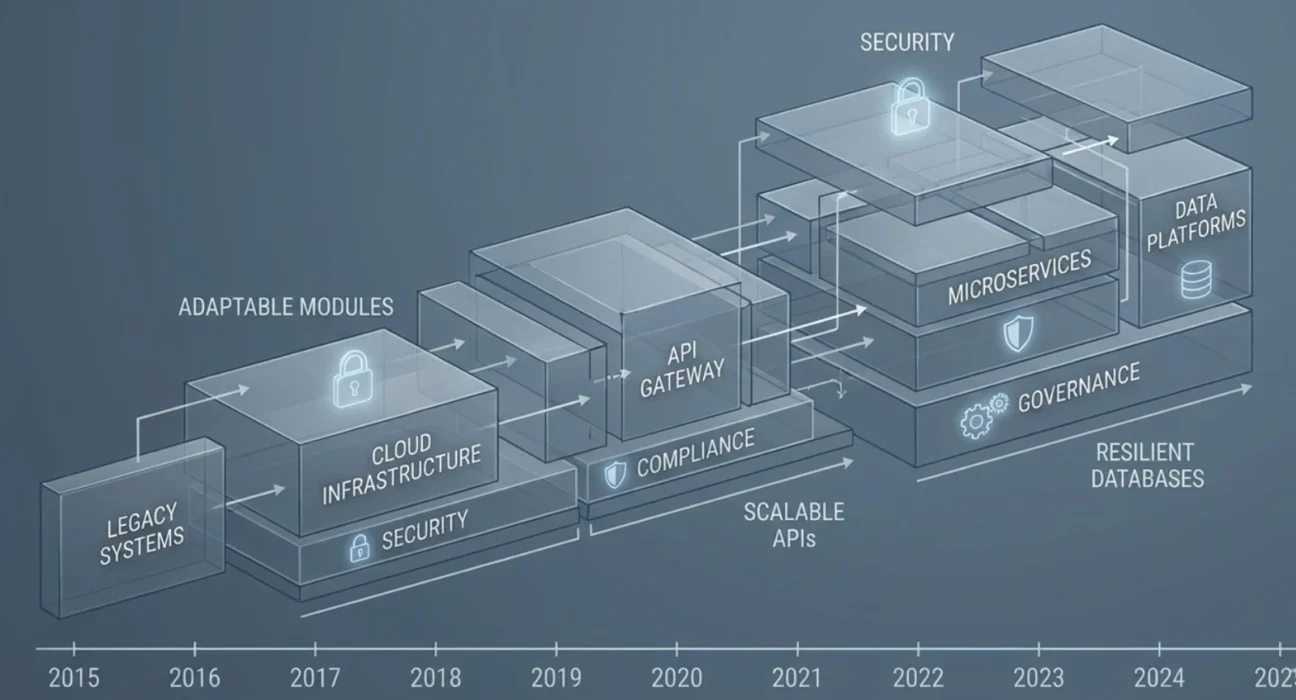
Designing for a ten-year lifecycle requires different thinking from the beginning. It means acknowledging that you cannot predict every future requirement, so the architecture must be built to accommodate change without requiring fundamental reconstruction.
This starts with deliberate separation of concerns. Business logic should be isolated from presentation layers and data access patterns. Integration points need clear contracts and versioning strategies. Configuration should be externalized so that behavior can change without code changes. These aren’t new concepts, but they require discipline to implement consistently across a large application.
Equally important is choosing technology that will remain supportable. This doesn’t mean avoiding new technologies, it means selecting foundations that have strong vendor backing, active communities, and clear migration paths. An enterprise can’t afford to build on a framework that might be abandoned in three years or a platform that only two developers on the team understand.
Documentation and knowledge transfer matter more than most organizations recognize during initial development. When the original architects leave, when the development team changes, when a critical integration breaks at 2 AM on a Sunday, having clear documentation of design decisions, architecture patterns, and operational procedures becomes the difference between a manageable incident and a crisis.
The Governance Challenge
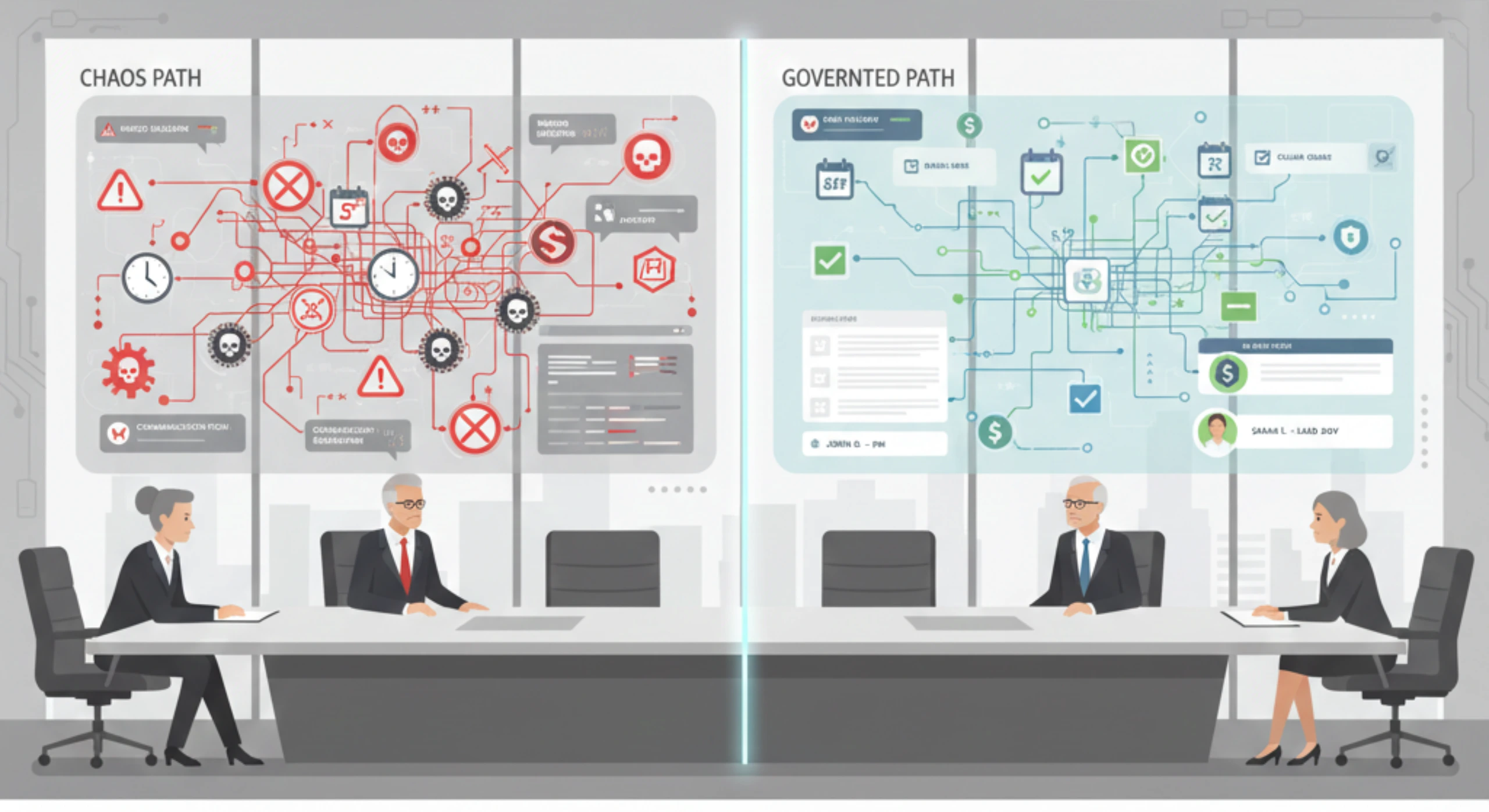
Large enterprises face a governance complexity that smaller organizations can ignore. Multiple stakeholders, budget cycles, approval processes, security reviews, compliance requirements, and change control boards all add necessary oversight that also slows response time.
An application designed for a long lifecycle must account for this reality. The architecture should make it possible to make changes in controlled, isolated sections without triggering enterprise-wide regression testing. Release processes need to support both emergency patches and planned enhancements. Monitoring and observability must be built in from day one, not added later when problems emerge.
This governance overhead makes it even more important to get foundational decisions right early. Changing database platforms, authentication systems, or integration patterns midway through an application’s lifecycle isn’t just technically difficult, it requires re-approvals, security re-certification, and coordination across multiple teams. These changes consume months and significant budget.
How Ozrit Approaches Long-Term Enterprise Delivery
Ozrit structures enterprise engagements around this reality of long-term application lifecycles. The difference starts with who leads the work. Senior architects and technical leads are involved from requirements gathering through production deployment and beyond. This isn’t a model where senior people sell the work and then hand it off to junior teams. The people who make architectural decisions remain accountable for those decisions throughout delivery and into production support.
This continuity matters because it changes how decisions get made. When the same people who choose the architecture will also be supporting it at 3 AM when something breaks, they design differently. They think about operational complexity, not just elegant technical solutions. They consider how future teams will understand and maintain the work, not just how to meet immediate deadlines.
Ozrit’s team includes more than 300 experienced engineers, which provides realistic capacity for enterprise-scale work without the quality compromises that come from rapidly scaling teams with junior resources. Large applications require sustained effort from people who have solved similar problems before. Having that depth means being able to maintain consistent delivery pace throughout multi-year programs.
The onboarding process is designed to reduce one of the biggest risks in enterprise delivery, the time it takes for new teams to become productive in complex environments. Ozrit’s approach includes structured knowledge transfer, documentation of existing systems, and pairing with client teams during initial phases. This typically shortens the learning curve from months to weeks, which matters significantly when deadlines are firm and budgets are fixed.
Realistic Timelines and Structured Delivery
Enterprise applications aren’t built in sprints alone. They require clear program structure, milestone planning, dependency management, and coordination across multiple workstreams. Ozrit organizes delivery around realistic timelines that account for enterprise governance processes, testing cycles, and integration with existing systems.
A typical enterprise application program runs 12 to 18 months from requirements through production deployment, depending on complexity and organizational readiness. Trying to compress these timelines usually just creates quality problems and technical debt. Ozrit’s delivery model accepts this reality and focuses on maintaining steady progress through proper planning and risk management.
This includes treating production support as part of the original delivery plan, not an afterthought. The 24/7 support structure is established before go-live, with team members who already understand the application because they built it. Response times and escalation procedures are defined clearly. This continuity from development through operations reduces the common failure mode where applications work fine until the first production incident reveals that nobody really knows how to fix problems.
Technology Choices That Age Well
The temptation to build with the newest technologies is strong, especially when vendors promise that their latest platforms will solve every problem. But enterprise applications that need to last a decade require more conservative technology choices combined with modern architectural patterns.
This means selecting proven databases, established frameworks, and cloud services that have demonstrated long-term vendor commitment. It means choosing platforms that have broad talent pools rather than niche technologies that only specialists understand. It means avoiding lock-in patterns that make future migration difficult.
At the same time, modern capabilities like containerization, API-first design, and infrastructure as code aren’t optional extras. They’re necessary foundations for applications that need to adapt to changing requirements while maintaining stability. The key is separating useful modern practices from temporary trends.
Artificial intelligence and automation fit into this picture where they solve specific problems, not as blanket solutions. Using AI for intelligent document processing, predictive maintenance, or automated testing can deliver measurable value. But adding AI capabilities just to claim the application is “AI-powered” creates maintenance complexity without corresponding benefit.
The Real Test Comes Later
The quality of enterprise application design reveals itself years after launch, when the business needs something the original requirements never anticipated. Can the application adapt? Can changes be made safely? Do people understand how it works? Is the team still available to support it?
These questions determine whether the organization got value from its investment or simply bought itself another expensive rebuild cycle. Designing for a ten-year lifecycle means accepting that you’re not building for known requirements alone. You’re building for organizational change, technology evolution, and business conditions that don’t exist yet.
This requires partnerships with firms that think about long-term outcomes, not just project completion. It requires architecture that values maintainability as much as functionality. It requires operational planning that extends beyond go-live. Most importantly, it requires honest conversations early about what long-term success actually looks like and what it takes to achieve it.
The organizations that get this right find themselves with systems that compound value over time rather than degrading. Their applications become platforms for new capabilities rather than constraints on what’s possible. That difference, more than any single technical decision, determines whether an enterprise application investment succeeds or simply creates the next problem to solve.