Choosing the wrong development partner for your online store is expensive. It costs you time, money, and often a launch date you’d already promised to stakeholders or customers. If you’re trying to evaluate ecommerce development companies and aren’t sure where to start, you’re not alone – most business owners compare a handful of agencies based on portfolios and price alone, then discover mid-project that those weren’t the right signals to look at.
This guide walks through what actually matters when you evaluate ecommerce development companies: the technical questions to ask, the red flags to watch for, and a simple framework you can use to compare vendors side by side. Whether you’re building a new store from scratch or replatforming an existing one, the goal is the same – find a team that can deliver a store that performs, scales, and doesn’t need to be rebuilt in two years.
Why Choosing the Right Ecommerce Development Partner Matters
An ecommerce site isn’t a brochure website. It handles payments, inventory, customer data, and – if it’s doing its job – a growing volume of transactions. Mistakes here don’t just look bad; they cost sales, create security risk, and can quietly cap your growth if the underlying architecture can’t handle scale.
The right partner brings more than coding skill. They bring platform expertise, an understanding of conversion and UX, experience with integrations (payment gateways, ERPs, CRMs, shipping providers), and a track record of shipping stores that actually perform after launch, not just on demo day.
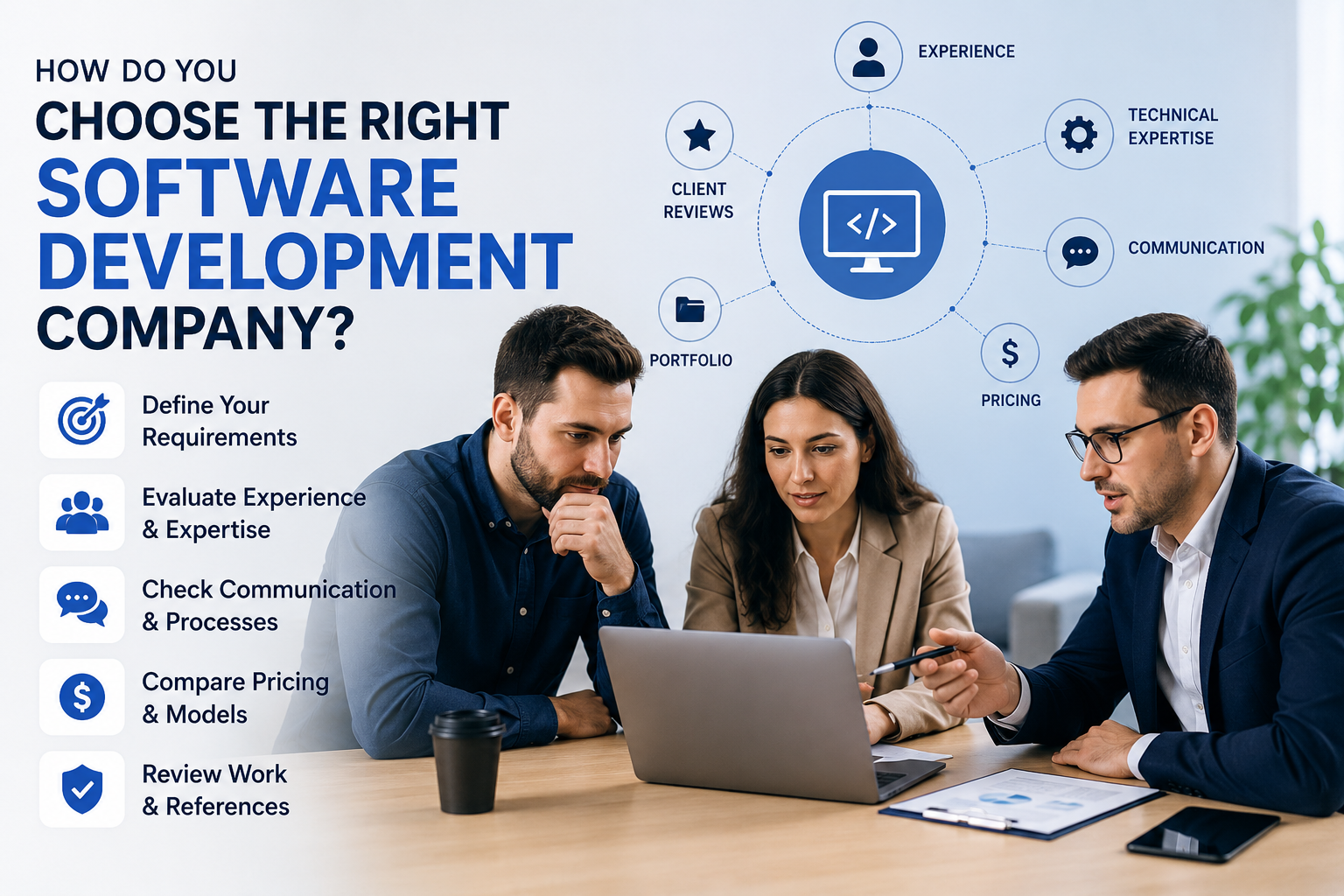
What to Look for When You Evaluate Ecommerce Development Companies
1. Relevant Platform Expertise
Ecommerce development isn’t one skill – it’s several, depending on the platform. A team that’s excellent with Shopify may not be the right fit for a complex Magento or headless commerce build, and vice versa.
Ask directly:
- Which platforms do they specialize in (Shopify, Shopify Plus, Magento/Adobe Commerce, WooCommerce, BigCommerce, headless/custom builds)?
- Have they worked on stores with a similar catalog size and complexity to yours?
- Do they have in-house expertise, or do they subcontract specialized work?
A company that’s honest about what it does and doesn’t specialize in is usually more trustworthy than one that claims to be equally strong at everything.
2. A Portfolio That Matches Your Use Case
Don’t just look at how polished a portfolio site looks. Dig into specifics:
- Can they show a live store they built, not just static screenshots?
- Does their past work include stores in your industry or with similar functionality (subscriptions, multi-currency, marketplace features, B2B pricing tiers)?
- Can they explain the technical decisions behind a past project, not just the visual design?
If an agency can walk you through why they made a specific architecture or integration choice on a past project, that’s a much stronger signal than a good-looking case study.
3. Technical and Architecture Depth
This is where a lot of businesses under-evaluate. A store that looks fine in a demo can still be slow, insecure, or difficult to maintain. Ask about:
- Page speed optimization practices and Core Web Vitals performance
- How they handle scalability during high-traffic periods (sales, holidays, launches)
- Security practices, including PCI compliance for payment handling
- Whether the codebase will be clean, documented, and maintainable by another team later if needed
4. Integration Capability
Most ecommerce projects aren’t standalone – they need to connect to other systems. Confirm the company has real experience integrating with:
- Payment gateways relevant to your market
- Inventory and order management systems
- ERP and accounting software
- Marketing tools, email platforms, and CRMs
- Shipping and fulfillment providers
Ask for a specific example of a similar integration they’ve completed, including any challenges they ran into.
5. UX and Conversion Understanding
A technically sound store that converts poorly isn’t a win. Good ecommerce developers think about checkout flow, mobile experience, page load speed, and merchandising – not just functionality. Ask how they approach UX decisions and whether design and development work together from the start of a project, rather than design being handed off as a finished file.
6. Communication, Process, and Project Management
Technical skill matters, but so does how a company works. Before committing, understand:
- What their project management process looks like (agile, sprints, fixed milestones)
- How often you’ll get updates and who your main point of contact will be
- What tools they use for communication and tracking progress
- How they handle scope changes and unexpected issues
Poor communication is one of the most common reasons ecommerce projects run over budget and past deadline — even when the development work itself is solid.
7. Post-Launch Support and Maintenance
Launch isn’t the finish line. Ecommerce stores need ongoing updates, security patches, performance monitoring, and occasional troubleshooting. Ask:
- What does post-launch support look like, and is it included or billed separately?
- What’s their typical response time for critical issues (like a broken checkout)?
- Do they offer ongoing optimization, or only bug fixes?
8. Pricing Structure and Transparency
Pricing models vary – fixed-price, hourly, or retainer-based. None is inherently better, but transparency matters more than the number itself. A trustworthy company will:
- Break down what’s included in a quote
- Explain what would trigger additional costs
- Avoid pressuring you into a decision with limited-time discounts
Be cautious of quotes that seem unusually low relative to others – this often signals corners will be cut on testing, security, or post-launch support.
Red Flags to Watch For
- Vague answers about which platforms or technologies they actually specialize in
- No willingness to share references or connect you with past clients
- Portfolios with no live, working examples
- Pressure to sign quickly without a detailed scope or proposal
- No clear post-launch support plan
- Communication that’s slow or unclear even during the sales process
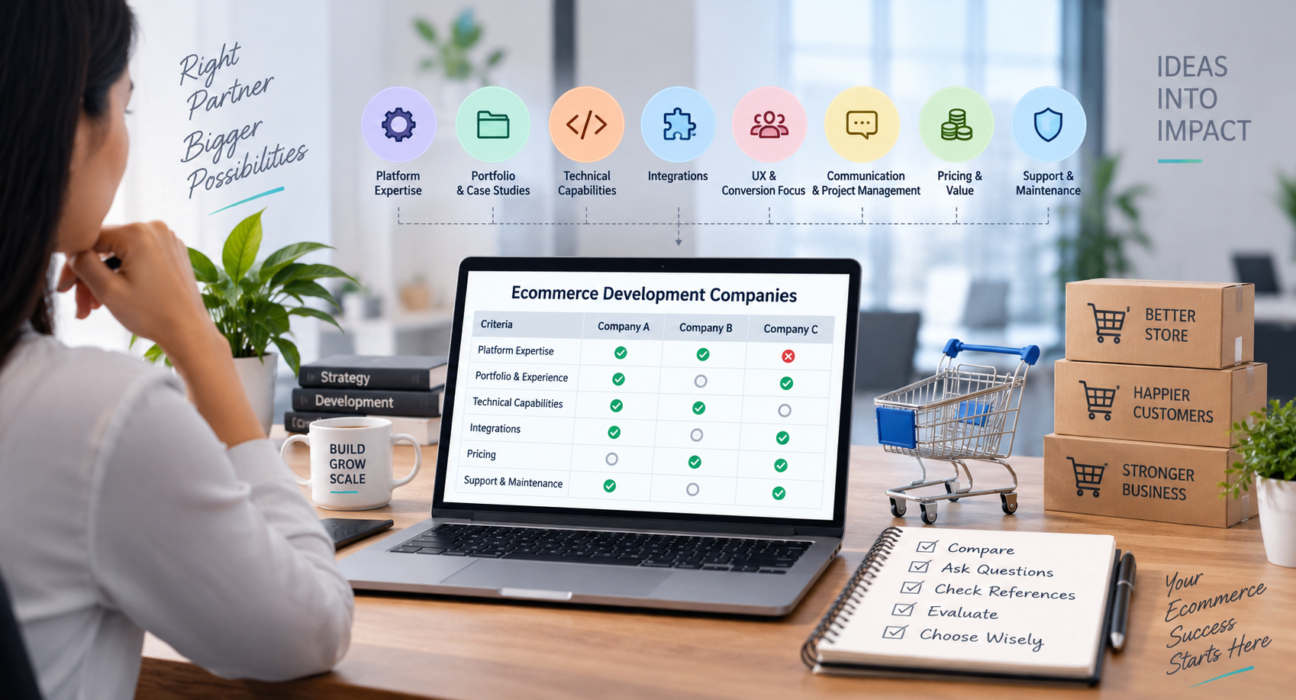
A Simple Comparison Framework
When you’re evaluating multiple ecommerce development companies, it helps to score them consistently rather than relying on gut feel alone.
| Evaluation Criteria | What to Check | Why It Matters |
|---|---|---|
| Platform expertise | Certifications, case studies, specialization | Ensures technical fit for your platform |
| Portfolio relevance | Live stores, similar industry/complexity | Shows real-world capability |
| Technical depth | Performance, security, scalability practices | Impacts long-term site health |
| Integration experience | Specific past integrations | Reduces post-launch technical issues |
| UX/conversion focus | Process for design and checkout optimization | Affects actual sales performance |
| Communication process | PM tools, update cadence, point of contact | Reduces risk of delays and scope creep |
| Post-launch support | SLA, response times, included services | Prevents downtime and unresolved issues |
| Pricing transparency | Detailed quote, clear scope | Avoids hidden costs later |
Score each company on these criteria (1–5) and compare totals. This turns a subjective decision into something more structured and easier to defend to stakeholders.
Where to Start Your Search
Finding qualified ecommerce development companies usually starts with referrals, industry directories, or platforms that help businesses research and compare technology and service providers. GoFirms is one place businesses use to explore and compare ecommerce development companies, web development agencies, and other technology partners based on their specific needs, rather than relying only on generic search results or cold outreach. Using a platform like this alongside direct reference checks and portfolio reviews gives you a broader, more informed shortlist before you start detailed conversations with vendors.
Frequently Asked Questions
How do I evaluate ecommerce development companies if I’m not technical? Focus on questions you can verify without coding knowledge: ask for live examples of past work, request references you can actually contact, and pay attention to how clearly they explain their process. A company that communicates well in the sales process usually communicates well during the project too.
What platform should my ecommerce developer specialize in? It depends on your business size and needs. Shopify and BigCommerce suit many small-to-mid-size stores needing speed to launch. Magento/Adobe Commerce and headless/custom builds suit larger catalogs or complex requirements. Ask candidates which platform they’d recommend for your specific case and why.
How much does it cost to hire an ecommerce development company? Costs vary widely based on scope, platform, and complexity – from a few thousand dollars for a simple store to six figures for complex, custom builds. Rather than comparing raw numbers, compare what’s included in each quote, since low bids often exclude testing, integrations, or support.
Should I choose an agency based only on their portfolio? No. A portfolio shows design capability but not technical depth, communication quality, or post-launch reliability. Combine portfolio review with reference checks, technical questions, and a clear understanding of their support process.
How long does it typically take to build an ecommerce store? Timelines vary based on complexity, but a straightforward store on an established platform often takes several weeks to a few months, while custom or highly integrated builds can take longer. Ask any company you’re evaluating for a realistic timeline based on your specific scope, not a generic estimate.
What’s the difference between hiring a freelancer and an ecommerce development company? A company typically offers a team with varied expertise (design, development, QA, project management) and more structured support, while freelancers may offer lower costs but less redundancy if availability changes. The right choice depends on project complexity and your need for ongoing support.
How can I check if a development company is trustworthy before signing a contract? Request direct references and actually contact them, ask to see live sites they’ve built, review their proposal for clear scope and pricing, and evaluate how responsive and specific their communication is throughout the sales process.
Conclusion
Evaluating ecommerce development companies comes down to looking past the surface – a polished pitch deck or attractive portfolio site isn’t proof of technical depth, reliable communication, or dependable post-launch support. Ask specific questions about platform expertise, integrations, and process. Request live examples, not just screenshots. And weigh communication and support as heavily as technical skill, since most project problems come from misalignment, not lack of coding ability.
Take your time on this decision. A rushed choice here tends to show up later as slow pages, awkward checkouts, or a rebuild you didn’t plan for. If you’re building your shortlist, resources like GoFirms can help you compare ecommerce development companies against your specific requirements before you commit to a partner.