You’re browsing listings for a used laptop. You find two options at similar prices.
The first seller has a detailed profile, previous transaction reviews, verified contact information, and clear photos with honest descriptions of minor wear.
The second seller has a blank profile created yesterday, vague descriptions, and responds to questions with one-word answers.
Which one do you buy from?
The choice is obvious. Even if the second seller’s laptop is identical and priced slightly lower, most people choose the first. Because in online marketplaces, trust has become more valuable than a small price difference.
Buyers have been burned before items not as described, sellers who disappeared after payment, products that broke immediately. They’ve learned to be cautious.
When you buy and sell locally through simple classifieds like Sympl, trust isn’t just a nice-to-have it’s what makes transactions happen. Sellers who build trust sell items fast. Buyers who demonstrate trustworthiness get priority. And platforms that facilitate trust create better experiences for everyone.
Why Trust Has Become Critical in Online Selling
A decade ago, online marketplaces were newer. Buyers were more willing to take chances. Scams existed but weren’t as widespread or sophisticated. Today, the landscape has changed. Everyone knows someone who’s had a bad experience buying or selling online.
Anonymity enables bad behaviour
On most large platforms, creating an account takes seconds. No verification, no history required. This makes it easy for scammers to operate. They create fresh accounts, run schemes, disappear, and repeat with new profiles. For honest buyers and sellers, this environment creates constant wariness. Every transaction starts with suspicion instead of good faith.
Information asymmetry creates risk
When you’re buying a used phone online, the seller knows everything about its condition. You know only what they choose to tell you.
This imbalance creates risk. Is the battery really fine, or will it die in two months? Does “minor scratches” mean barely visible marks or deep gouges?
Without trust, buyers assume the worst. They lowball to protect themselves or simply walk away.
Past bad experiences shape future behaviour
Once you’ve paid for a “like new” fridge that arrived with a broken compressor, or waited three hours for a seller who never showed up, you become cautious.
Buyers who’ve been scammed scrutinize everything. They demand more proof, ask more questions, and hesitate longer before committing.
Sellers who’ve dealt with payment fraud or aggressive buyers become defensive and suspicious too.
This mutual distrust slows down transactions and makes the entire process more stressful.
Platform size doesn’t guarantee safety
Just because a marketplace has millions of users doesn’t mean every transaction is safe.
Large platforms struggle to moderate effectively. Scammers exploit the volume and anonymity. Honest users get lost in the crowd.
Buyers have learned that popularity doesn’t equal trustworthiness.
When you sell items fast, it’s often because you’ve established trust quickly – through transparency, local presence, clear communication, or reputation mechanisms that signal you’re reliable.
What Trust Actually Looks Like in Practice
Trust isn’t abstract. In marketplaces, it shows up in specific, observable ways.
Complete, honest information
A trustworthy seller doesn’t hide flaws or exaggerate conditions.
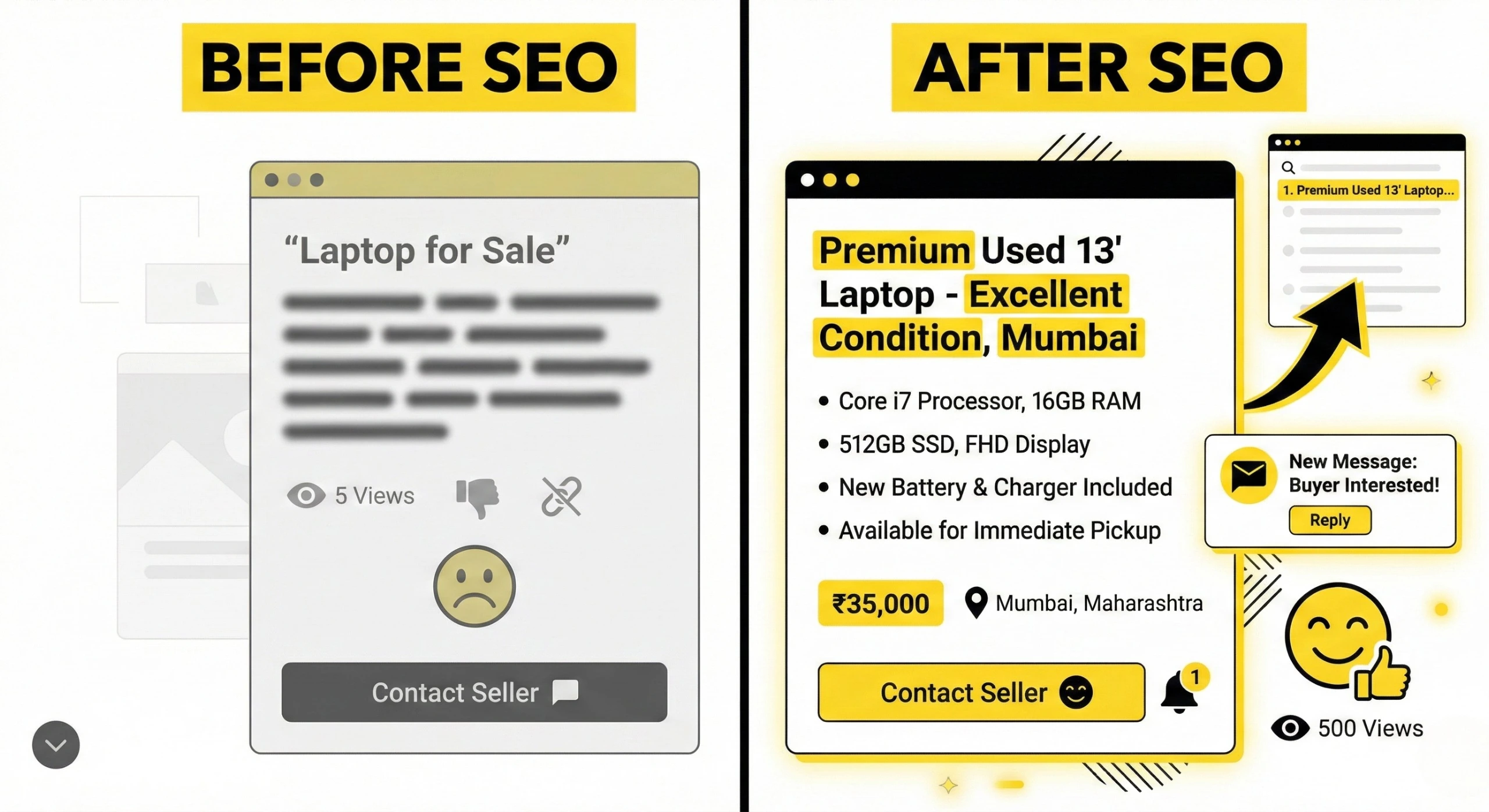
“Laptop works perfectly, small scratch on lid (see photo 4), battery lasts 4-5 hours, selling because I upgraded” builds trust.
“Laptop good condition” with one blurry photo does the opposite.
Buyers trust sellers who acknowledge imperfections because it signals honesty about everything else too.
Consistent, professional communication
When sellers respond promptly, answer questions clearly, and maintain respectful tone throughout, buyers feel comfortable.
When sellers are vague, slow to respond, or defensive about basic questions, red flags go up.
Communication style is often the first indicator of whether someone is trustworthy.
Verifiable identity and history
Profiles with real names, verified phone numbers, transaction history, and reviews signal legitimacy.
A seller who’s completed twenty transactions and has positive feedback from other buyers is demonstrably more trustworthy than someone with a blank profile.
This is why platforms that offer verification and history tracking help users transact more confidently.
Willingness to facilitate inspection
“Come see it before you buy” is one of the strongest trust signals a seller can send.
It says: I’m confident in this item’s condition, I have nothing to hide, and I respect your need to verify.
Sellers who resist inspection or make it difficult raise immediate suspicions.
Following through on commitments
Trust is built through actions, not words.
A buyer who shows up when they say they will. A seller who accurately describes the item. Someone who completes payment as agreed.
These small acts of reliability build reputations that carry into future transactions.
How Trust Affects Transaction Outcomes
When trust is present, everything becomes easier. When it’s absent, even simple transactions become complicated.
Trusted sellers get better prices
Buyers are willing to pay more to someone they trust.
Two identical phones listed at ₹15,000 – one from a seller with great reviews and transparent listings, one from an unknown seller with minimal information.
The trusted seller’s phone sells first, possibly at full price. The other sits unsold or requires price reductions to compensate for uncertainty.
Trust literally has monetary value in marketplaces.
Trust reduces negotiation friction
When buyers trust that the item is as described and fairly priced, they negotiate less aggressively.
“Your price seems fair, can you do ₹500 less?” is very different from “You’re asking ₹15,000 but I’ll give you ₹8,000 because I don’t know if this actually works.”
The first is normal negotiation. The second is distrust compensation.
Transactions close faster with trust
A trusted seller lists a washing machine. A buyer sees the detailed listing, checks reviews, messages with specific questions, gets clear answers, and schedules inspection for tomorrow.
Inspection confirms everything. Buyer purchases on the spot. Total time: less than 48 hours.
Without trust, this same transaction takes weeks of back-and-forth, missed appointments, and constant verification.
Trust enables repeat business and referrals
When a transaction goes well, buyers remember.
They return when they need something else. They recommend the seller to friends. They leave positive reviews that help future transactions.
This compounding effect makes trust incredibly valuable over time.
How Local Buying and Selling Rebuilds Trust
Interestingly, many trust issues that plague large online marketplaces are naturally addressed by local transactions.
Face-to-face interaction creates accountability
When you’re meeting someone in person, there’s inherent accountability that doesn’t exist in purely online transactions.
You can’t disappear after scamming someone if you both live in the same neighbourhood. Social consequences matter when transactions are local.
This natural accountability makes people more honest and reliable.
Inspection before purchase removes uncertainty
The biggest trust barrier in online buying – “Is this item really as described?” – disappears when you can inspect before purchasing.
You verify everything yourself. You test that the laptop works, check the bike’s condition, confirm the fridge cools properly.
This eliminates the information asymmetry that creates distrust.
Platforms like Sympl emphasize local connections specifically because inspection-based transactions build trust naturally.
Community dynamics reinforce good behaviour
In local marketplaces, reputation matters more because the community is smaller and more connected. Word spreads when someone is reliable or unreliable. People have mutual connections. Social reputation becomes a currency. This community dynamic encourages trustworthy behaviour in ways anonymous national platforms can’t replicate.
Shared local context builds common ground
When both parties are from the same city or area, there’s shared understanding – local market rates, neighbourhood dynamics, common reference points.
This common ground makes communication easier and creates a foundation of trust that strangers from different parts of the country don’t automatically have.
Direct communication avoids platform interference
When you’re messaging directly with a local buyer or seller, the conversation is straightforward.
No platform algorithms trying to extract fees, no promotional pressures, no complicated intermediary systems. This simplicity and directness feel more trustworthy to many people than elaborate platform mechanisms.
Practical Ways to Build Trust as a Seller
Understanding that trust is crucial is one thing. Building it is another.
Create a complete, genuine profile
Use your real name or business name. Verify your phone number. Add a brief description of why you’re selling (relocating, upgrading, clearing inventory).
These small details signal you’re a real person, not a scam account.
List items honestly and thoroughly
Multiple clear photos, accurate descriptions, honest acknowledgment of flaws, fair pricing based on real market rates. Every element of your listing either builds or erodes trust. Make sure each one is working in your favor.
Communicate professionally and promptly
Respond to inquiries within a reasonable timeframe. Answer questions completely. Be courteous even with difficult buyers. Your communication style signals reliability and professionalism.
Welcome and facilitate inspection
Make it easy for buyers to see items before purchasing. Offer convenient times, clear location information, flexibility where possible. This willingness to let buyers verify everything is one of the strongest trust signals you can send.
Follow through on every commitment
If you say you’ll hold an item until Saturday, do it. If you promise the bike works perfectly, make sure it does. Your reputation is built through consistent reliability in small actions.
Cost and Time Benefits of Trust-Based Selling
Higher selling prices
Trust allows you to maintain fair prices without desperate discounting to overcome buyer skepticism. You recover better value from your items because buyers aren’t demanding discounts to compensate for uncertainty.
Faster transactions
Trust eliminates the endless verification, questioning, and hesitation that slows sales.
Buyers move quickly when they trust you, meaning you sell items fast and can move on.
Less stress and conflict
When both sides trust each other, transactions are pleasant.
No accusations, no suspicion, no drama. Just straightforward commerce between reasonable people.
Long-term benefits through reputation
The trust you build today helps tomorrow’s transactions.
Repeat buyers, referrals, positive reviews these create ongoing value far beyond individual sales.
Who Benefits Most from Trust-Focused Selling
Regular sellers building reputation
If you sell items frequently, investing in trust-building pays dividends.
Your growing reputation makes each successive transaction easier and faster.
Small businesses establishing local presence
Local businesses benefit enormously from community trust.
Happy local customers become regulars and refer others, creating sustainable customer bases.
Buyers seeking reliable sellers
For buyers tired of scams and disappointments, identifying trustworthy sellers is incredibly valuable.
They’ll pay fair prices and return for future purchases when they find reliable sellers.
Anyone valuing straightforward transactions
Whether buying or selling, people who want honest, drama-free exchanges benefit from trust-focused marketplaces.
It’s simply a better experience when both sides can transact in good faith.
Conclusion:
In crowded, anonymous online marketplaces, trust is what separates successful transactions from failed ones. Price matters. Product quality matters. But without trust, none of it leads to completed sales.
When you buy and sell locally, trust becomes easier to establish and maintain. Face-to-face transactions, inspection before purchase, community accountability, and direct communication all build the trust that makes commerce work.
Platforms like Sympl support this by facilitating local connections where trust can develop naturally – through transparency, verification where helpful, and community dynamics that encourage good behaviour.
Whether you’re selling one item or managing regular inventory, understanding that trust is your most valuable asset changes how you approach every transaction.
Be honest. Communicate clearly. Follow through. Facilitate verification. Build reputation.
These aren’t optional extras – they’re the foundation of successful selling in today’s marketplace.